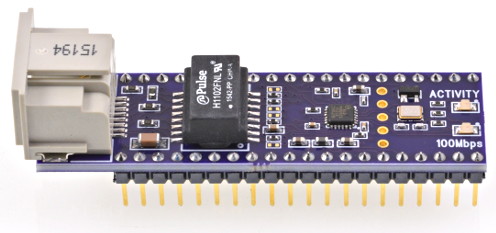
Ethernet PHY for Teensy 3.5 and 3.6

board-1

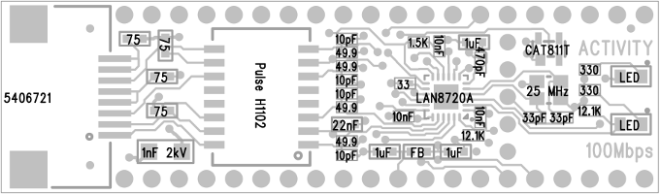
Paul Stoffregen of PJRC designed this shield as a Kickstarter reward earlier this year:

Ethernet Shield for Teensy 3.5 and 3.6

Please understand this shield has very limited software support at this time. However, Manitou’s early benchmarks show excellent performance we can someday hope to achieve as the software matures.

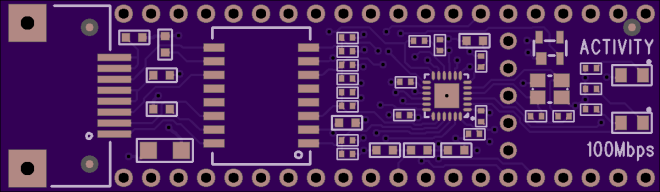
PaulStoffregen has shared the board on OSH Park:
650e9646875b0e22bc42fa630ebc0a6f

Order from OSH Park

The source code is available on GitHub:

images PaulStoffregen/k66_ethernet


placement-1

Bill of Materials:

Qty  Part                               Digikey
---  ----                               -------
1    LAN8720A                           LAN8720A-CP-CT-ND
1    CAT811T                            CAT811TTBI-GT3OSCT-ND
1    Crystal, 25 MHz                    535-13419-1-ND
1    Transformer, Pulse H1102FNL        553-2204-1-ND
1    Connector, RJ45                    A102068CT-ND
1    Capacitor, 1nF, 2000V              709-1036-1-ND
2    Capacitor, 33pF                    490-5936-1-ND
1    Capacitor, 470pF                   490-1297-1-ND
3    Capacitor, 10nF                    445-1260-1-ND
1    Capacitor, 22nF                    490-8022-1-ND
3    Capacitor, 1uF                     399-5090-1-ND
1    Resistor, 33, 1%                   311-33.0LRCT-ND
4    Resistor, 49.9, 1%                 RMCF0402FT49R9CT-ND
4    Resistor, 75, 1%                   RHM75.0HCT-ND
2    Resistor, 330, 1%                  311-330LRCT-ND
1    Resistor, 1.5K, 1%                 311-1.50KLRCT-ND
2    Resistor, 12.1K, 1%                P12.1KLCT-ND
1    Inductor, Ferrite bead             553-2387-1-ND
2    LED, Green                         475-1410-1-ND
Ethernet PHY for Teensy 3.5 and 3.6

MicroUSB powered ESP8266 Oled Board

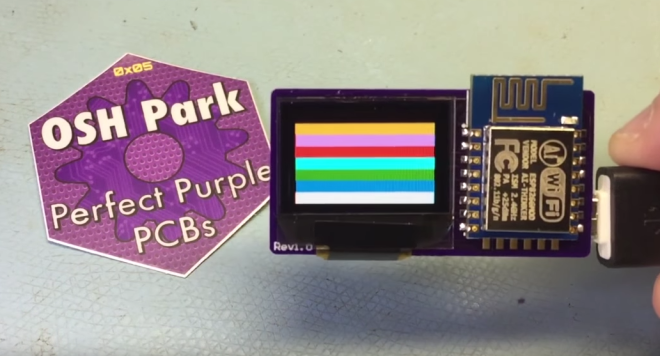
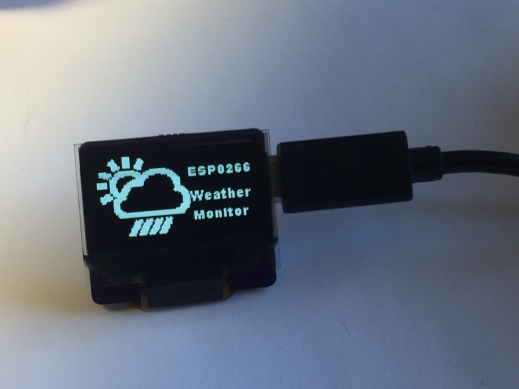
logo.jpgMike Rankin created this board with a tiny OLED display controlled by an ESP8266:

MicroUSB powered ESP8266 OLED Board

I created this design as a challenge to make a design under 1″ x 1″ in size.

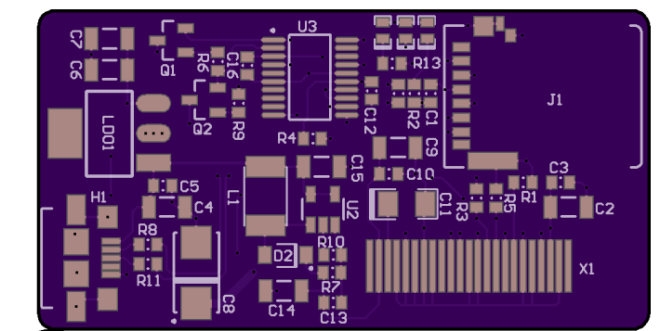
 The hardware is an ESP-01 ESP8266 Wifi module, linear power supply, microUSB connector and a few oled display parts.

The design files and source code are available on GitHub:

imagesESP8266_OLED


Here is a video of the assembly and operation:

miker has shared the board on OSH Park:

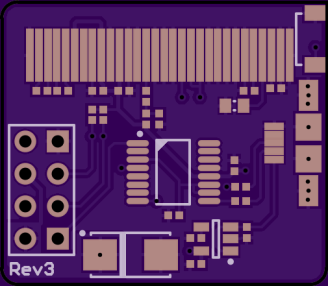
ESP8266 OLED Board Rev3

2387161476639855524
Order from OSH Park

MicroUSB powered ESP8266 Oled Board

Color OLED board with ESP8266 WiFi

Screenshot from 2016-10-20 13-34-36.png

Mike Rankin created this adorably small WiFi-connected color OLED board:

ESP8266 Color OLED

I’ve been keeping an eye on the SSD1331 library to see if it would eventually work with the ESP8266 wifi modules. I noticed the support for it appeared one day with the Adafruit library so I tried it out on my Adafruit Hazzah and success!

miker has shared the board on OSH Park:

ESP8266-12E_0.95_Color_Oled_Rev1

Screenshot from 2016-10-20 17-27-33.png

Order from OSH Park

Color OLED board with ESP8266 WiFi

Optical Convert Channels

screenshot-from-2016-10-17-18-40-14

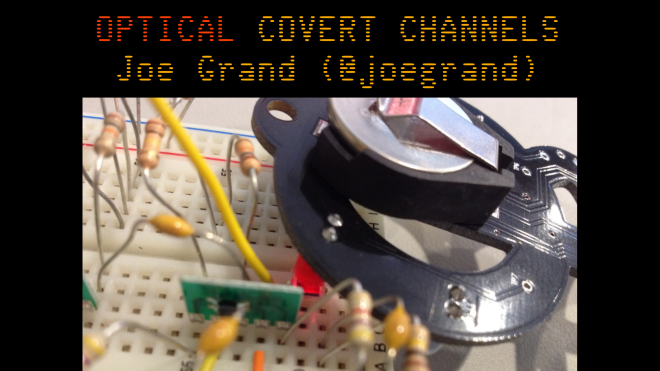
One of our favorite hardware hackers, Joe Grand, has shared slides and hardware designs from his recent B-Sides PDX talk:

Optical Covert Channels

Data exfiltration from a device is usually achieved over the network, via hardware implant, or by manipulating the characteristics of an internal electronic component. Optical covert channels transmit data using visible light in a method undetectable to the human eye.

This slideshow requires JavaScript.

Joe demonstrates using an optical receiver to capture data transmitted through a LED:

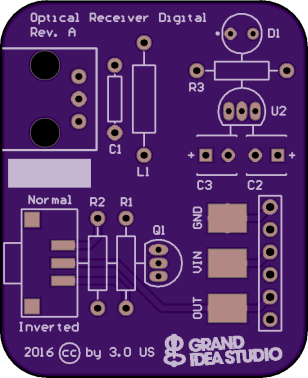
joegrand has shared the receiver boards on OSH Park:

OpticSpy Digital (Rev. A)

digital version using Everlight PLR135/T9 Fiber Optic Receiver

aca3acc8cd6682e3c6a071aa5d9d4a06
Order from OSH Park

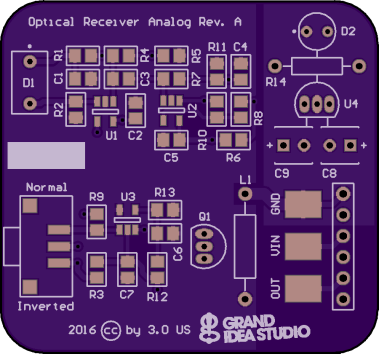
OpticSpy Analog (Rev. A)

analog version based on Maxim Integrated’s AN1117 application note:

c800709fe64f686c83f0183e80b94c0f
Order from OSH Park

Optical Convert Channels

Quad 7 Segment I2C LED backpack

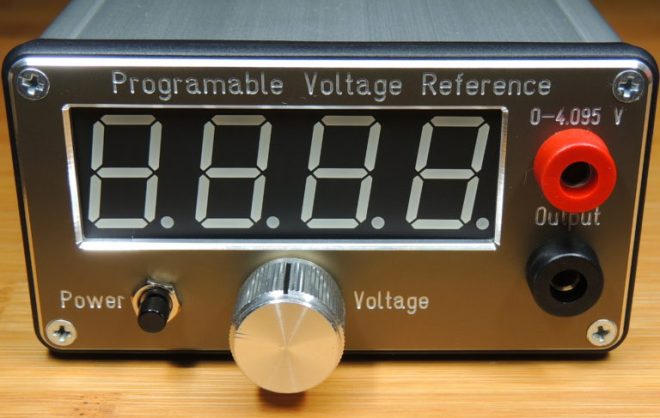
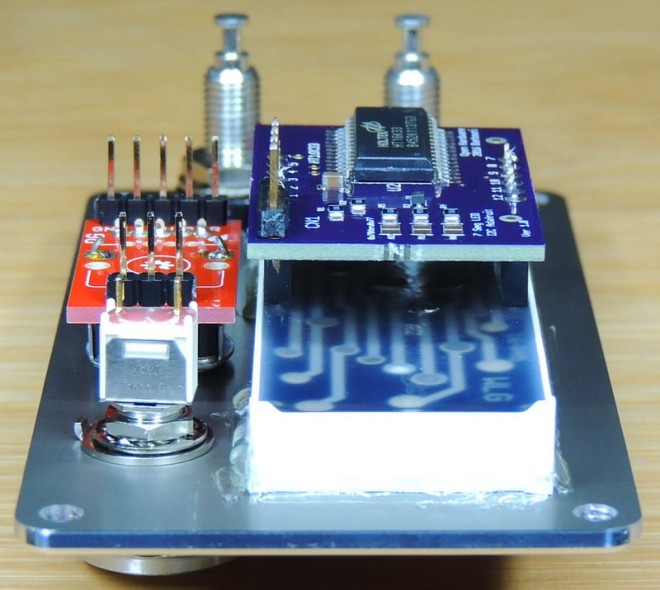
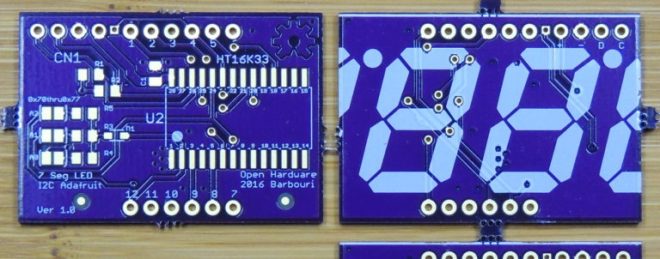
Barbouri created a quad 7-segment I2C LED backpack:

ProgramableVoltageReferenceFront01-768x487

Building a case for the Programmable Voltage Reference project

I put together an I2C interface board for these displays based on a design by Adafruit, using a Holtek HT16K33 RAM Mapping 16*8 LED Controller Driver chip.

A nice feature of this chip is a dimming command that provides display dimming in 1/16 increments.

27796903583_8ca6792f07_c

Barbouri has shared the board on OSH Park:

7 Segment X4 I2C LED backpack V1.0

7segmentLEDAdafruitI2CTopBottom01-768x302
Order from OSH Park

Quad 7 Segment I2C LED backpack

Garage Parking Sensor Board

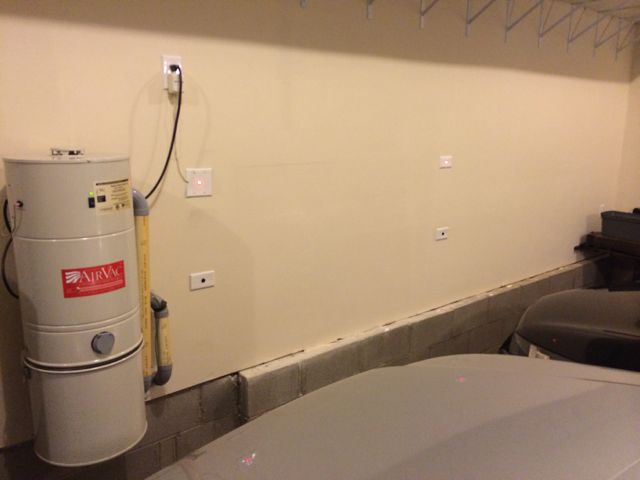
Chip McClelland created this visual aid for parking in a two car garage:

Finished-Product.jpg

Garage Parking Sensor Board

Let’s face it, garages are simply never big enough. There is always more you want to put into a garage than will fit and once you park your cars, things get tighter still. To get the most out of this space, your car needs to be parked correctly everytime. That is what this little device seeks to do.

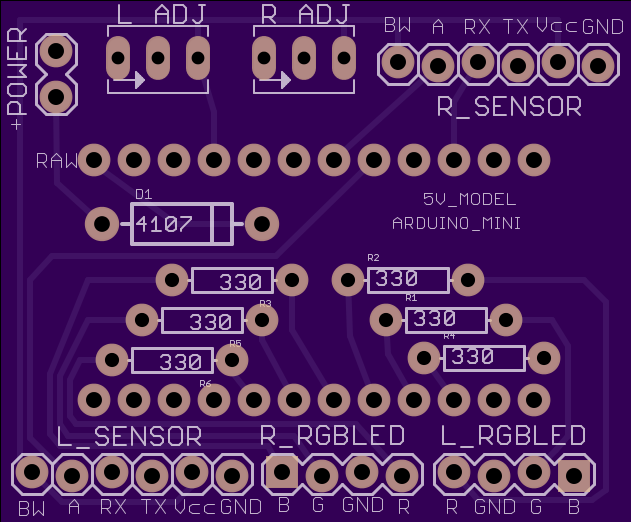
chipmc has shared the board on OSH Park:

Garage Parking Sensor Board

i.png
Order from OSH Park

Garage Parking Sensor Board

Drone Racing 5.8GHz Diversity Receiver

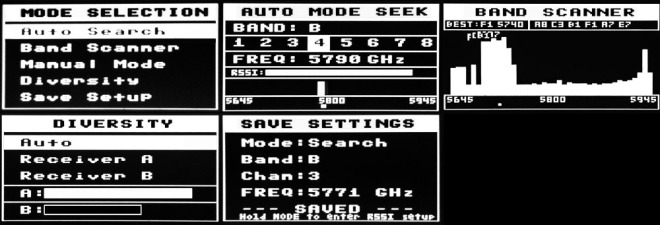
screens-tvout

Shea Ivey created this receiver for FPV (First Person View) Drone Racing:

DIY project to create your own 5.8ghz FPV diversity basestation – based off the rx5808 receiver module.

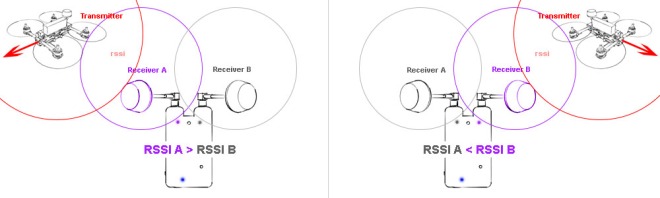
diversity-example

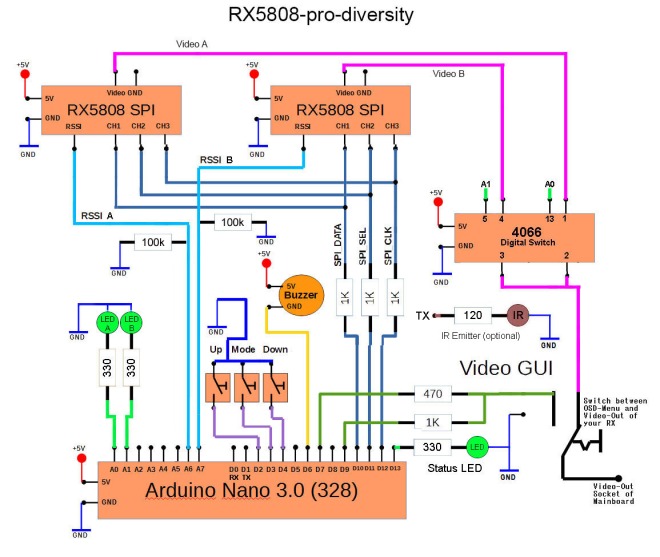
Project includes basic Arduino Nano implementation to advanced custom PCB board and introduction to digital switches 4066 chip.

rx5808-pro-diversity-schematic-simple

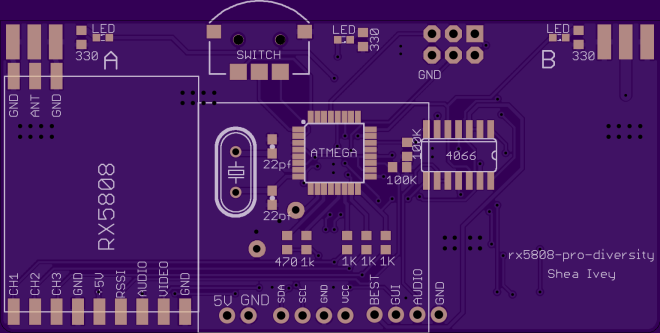
sheaivey has shared the board on OSH Park:

rx5808-pro-diversity-monitor

40a23550ca160e5715c0157ad545bdf4.png
Order from OSH Park

Drone Racing 5.8GHz Diversity Receiver

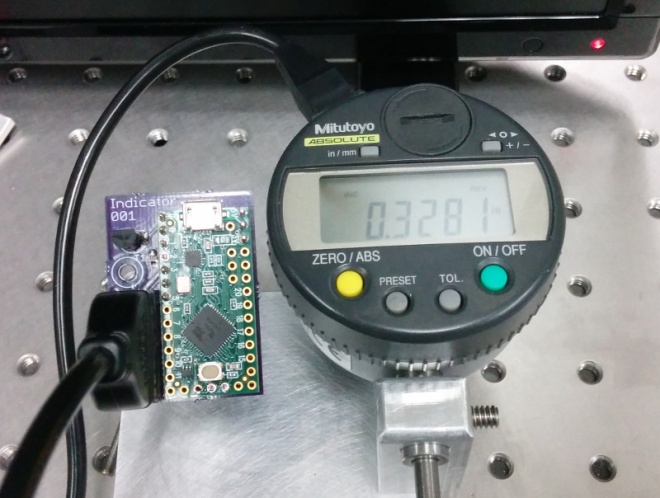
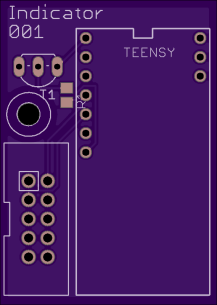
Teensy Mitutoyo Interface

The design files and source code are available on GitHub:

githubCatherineH/teensy-mitutoyo-interface


CatherineH shared the board on OSH Park:

Teensy Mitutoyo Interface

f9278979c2d858989488924caad8d26a.png

Order from OSH Park

Teensy Mitutoyo Interface

Atmel SAMD21G Sensor Board

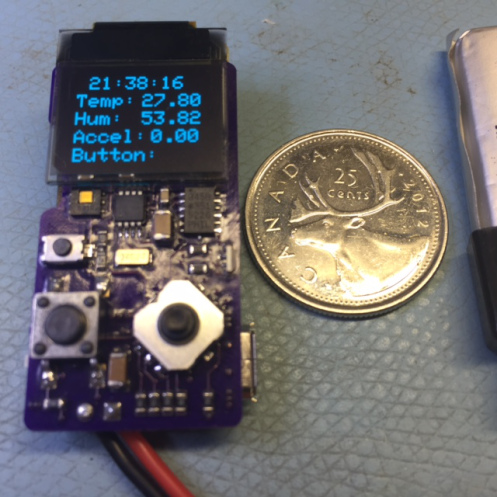
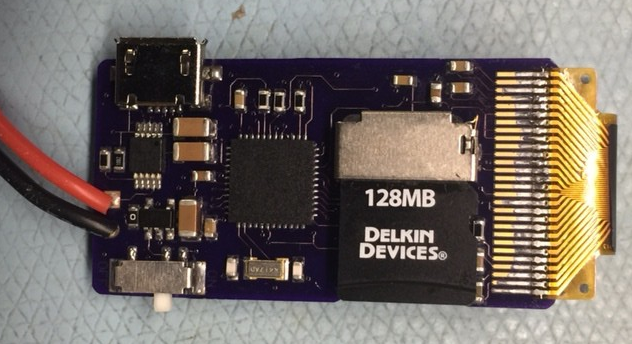
Mike Rankin created this tiny sensor board with an ARM Cortex M0+ microcontroller and OLED display:

img_1852

0miker0’s Blog: SAMD21G Sensor Board

It’s pretty tiny so a 4 layer board made the whole job easier. The top and bottom are pretty much dedicated for components, layer1 are tracks and power traces, layer2 is a ground plane. Mixing up an internal plane and routing layer was interesting.

Screenshot from 2016-09-21 09-43-22.png

The hardware consists of:

  • SAMD21G18A processor (used in the Adafruit Feather)
  • HDC1080DMBT temperature/humidity sensor
  • ADXL345B accelerometer
  • DS1340U RTC
  • MCP73833 LiPo battery charger
  • MicroSD card connector
  • Navigation Button and pushbutton
  • 0.66″ mono oled display
  • Micro USB connector for charging and uploading new sketches


The design files and source code are available on GitHub:

github mike-rankin/SAMD21G18A_Sensor_Board


Video of the board in action:


miker has shared the board on OSH Park:

SAMD21G18A_Sensor_Board_Rev1

cf01e5fb7d5ded50fb419a849e21608c
Order from OSH Park

Atmel SAMD21G Sensor Board

Fish Food Lure for MinnowBoard

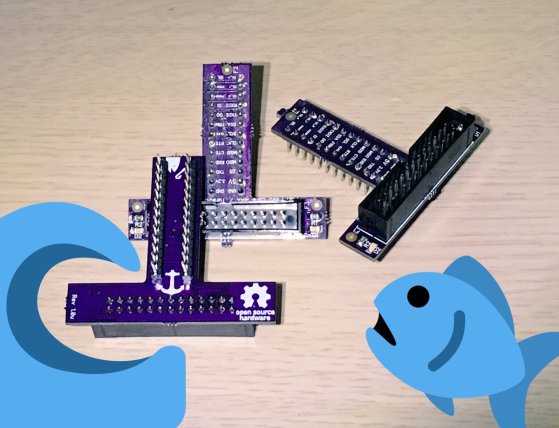
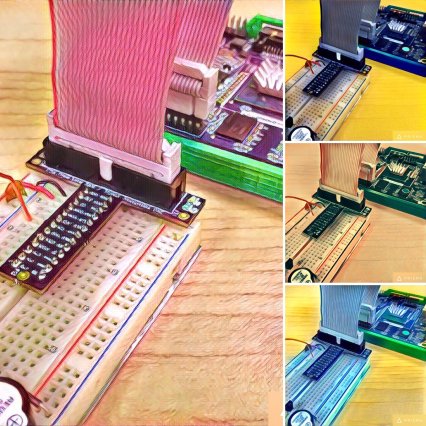
The MinnowBoard is an Open Source Hardware single board computer with 64-bit Intel Atom processor.  Jose Navarro created this “lure” board to simply connecting the MinnowBoard to a breadboard:

Fish Food Lure

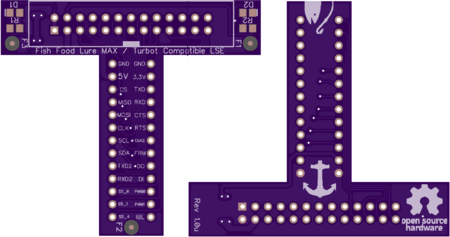
Fish Food Lure, breadboard adapter for the MinnowBoard MAX / Turbot compatible boards (because you feed bread to fish). Enables fast prototyping on a breadboard, connects to the MinnowBoard using a ribbon cable.

crsac17ukaatbay

jnavarro has shared the board on OSH Park:

Fish Food Lure for MinnowBoard

450px-fish_food_lure

Order from OSH Park

Fish Food Lure for MinnowBoard