
- To brave the depths of Kenneth Olsen’s madness, click below:
teensy
The Monolith Brings the Boom to Maker Faire

[Ross Fish], [Darcy Neal], [Ben Davis], and [Paul Stoffregen] created “the Monolith”, an interactive synth sculpture designed to showcase capabilities of the Teensy 3.6 microcontroller. The Monolith consists of a clear acrylic box covered in LED-lit arcade buttons. The forty buttons in front serve as an 8-step sequencer with five different voices, while touch sensors on the left…
Open Panzer Sound Card
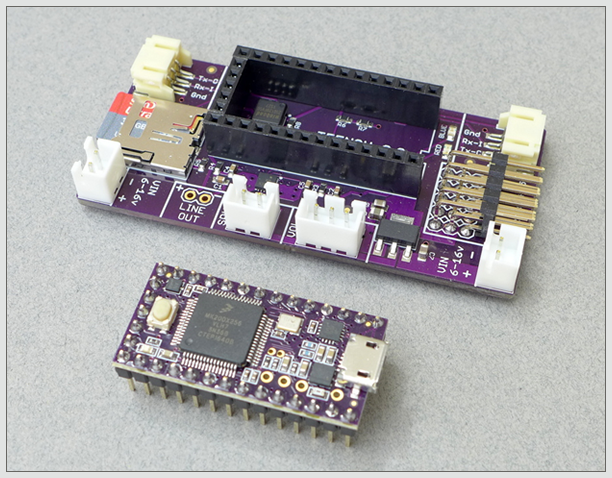
Open Panzer Sound Card
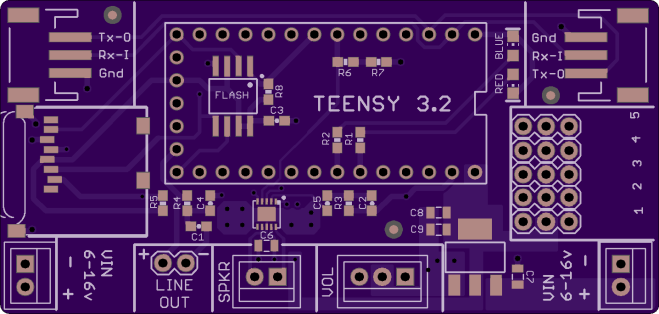
The Open Panzer Sound Card is a work in progress with the goal of bringing inexpensive, high quality, and open source sound functionality to RC models but especially to tanks using the Tank Control Board (TCB).
The board is actually made up of two components. First, an off-the-shelf PJRC Teensy 3.2 is used as the onboard processor. The Teensy is then plugged into a socket on our custom carrier board that adds a Micro SD card slot (max 32 GB), an additional 16 MB of flash memory, an LM48310 2.6 watt audio amplifier, and headers for external connections.

Resources
- GitHub Page
- A discussion thread on the development of this card can be found on the Open Panzer Forum.
- Eagle Board and Schematic (zip)
- Printable Schematic (pdf)
- Bill of Materials – PDF – Excel
I/O Expander for LED Arcade Buttons
Teensy creator Paul Stoffregen has shared a new project on OSH Park:
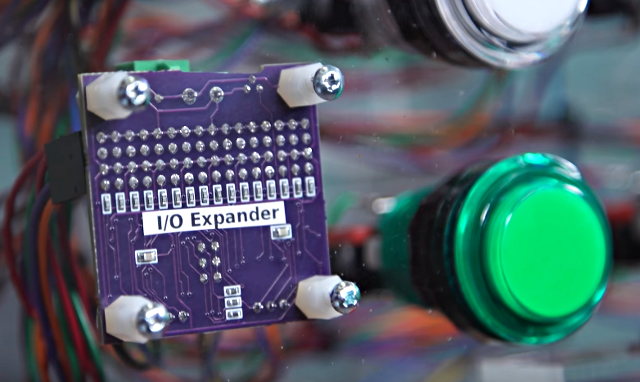
I/O Expander for LED Arcade Buttons
The Monolith Synth Project needed to use a large number of these LED lit arcade buttons.
Dimming of the LEDs was required. Initially I considered using this Adafruit 16 Channel PWM board. But the LEDs in these buttons have integrated resistors which require 12 volts, so 16 transistor circuits and another board for reading the switches would have also been needed.
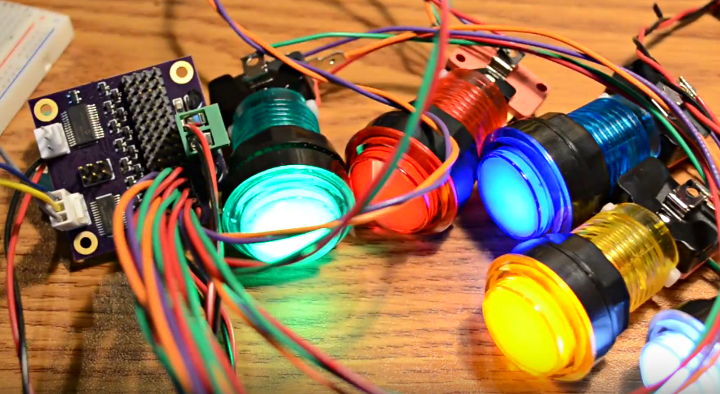
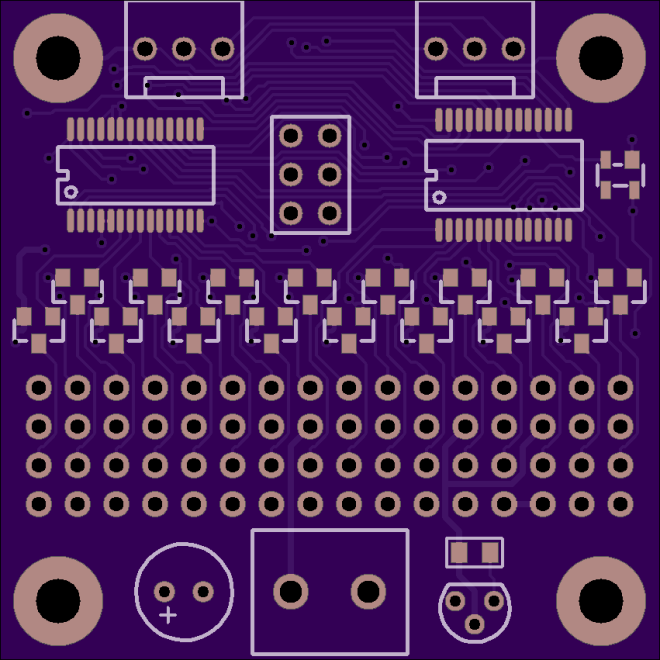
It uses the same PCA9685 chip for 12 bit PWM control on every LED, with mosfet drivers to handle 12V outputs, and also a MCP23017 chip to read the buttons. Every button has a discrete 1K pullup resistor (rather than using the higher impedance on-chip pullups) to help with use in the same cable bundles cross coupling to 12V PWM signals.
Monolith Synth
Four of these boards where used in the Monolith Synth project:
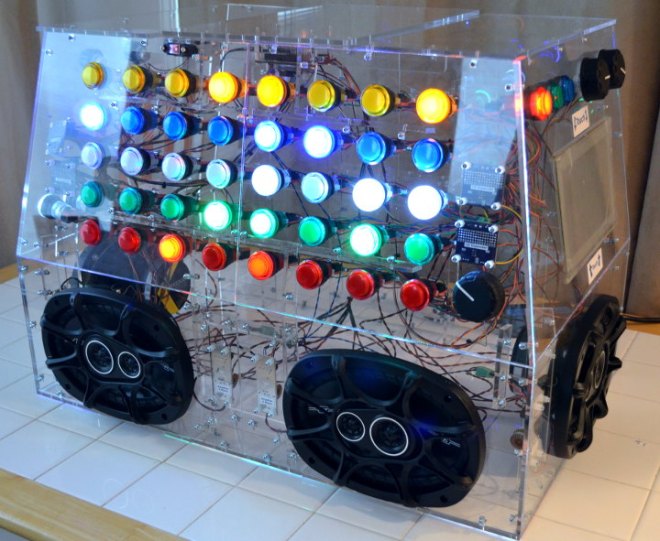
The project is featured in this Tested video:
Teensy: TDM Support For Many-Channel Audio I/O
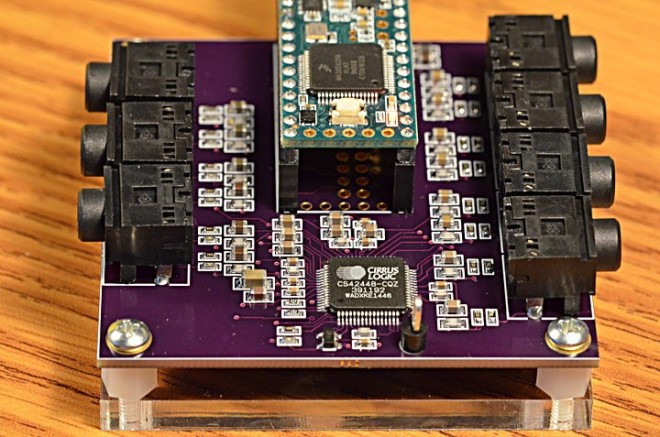
Paul Stoffregen posted an update in his Teensy Audio Library on Hackaday.io:
TDM Support, For Many-Channel Audio I/O
Some projects need a lot of audio I/O. Maybe you’re doing positional audio sound effects (using the 8-tap delay effect) where ordinary stereo or even 5 channel “surround” isn’t enough? Maybe you’re making the ultimate Eurorack synthesizer module? Or you just want a lot of signals, because you can!
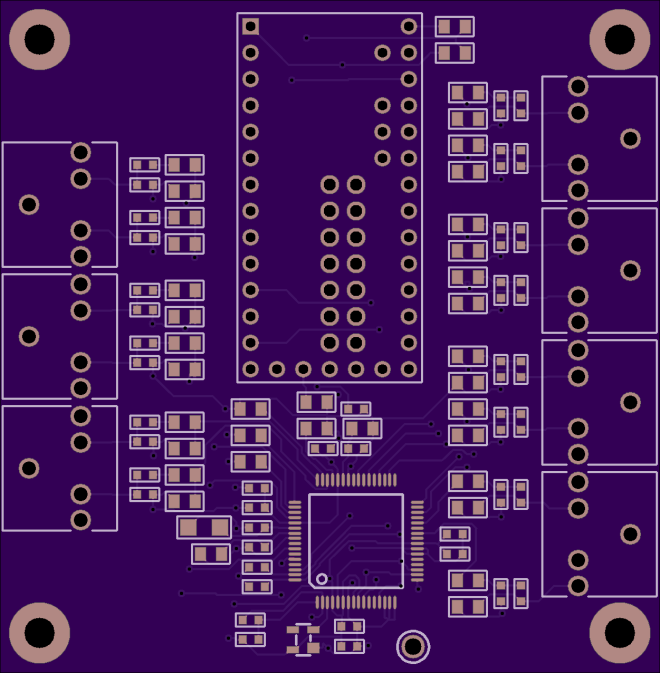
Here’s a board for the Cirrus Logic CS42448 chip, which provides 6 inputs and 8 outputs. All are high quality audio, and all work simultaneously.


PaulStoffregen has shared the board on OSH Park:
CS42448 Audio, 6 Inputs, 8 Outputs
Teensy 3.6 DIY Reference Board
Shared project from Teensy creator Paul Stoffregen on OSH Park:
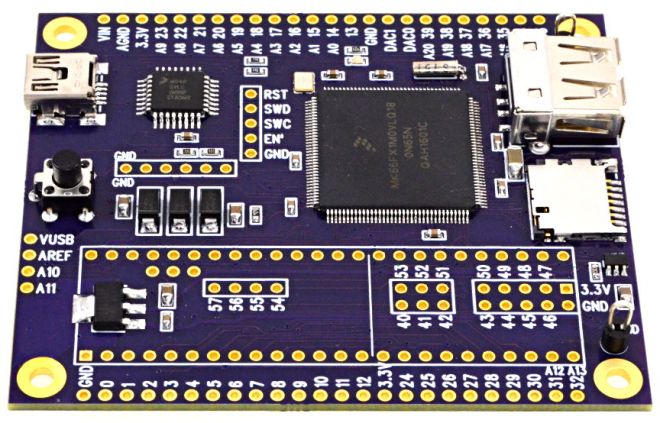
Teensy 3.6 DIY Reference Board
A known good reference board for testing the MKL04 chip when building a DIY Teensy 3.6. Refer to this table for the differences between Teensy 3.6 and other models. The soldering friendly LQFP package (at least more friendly than BGA) is used on this board.
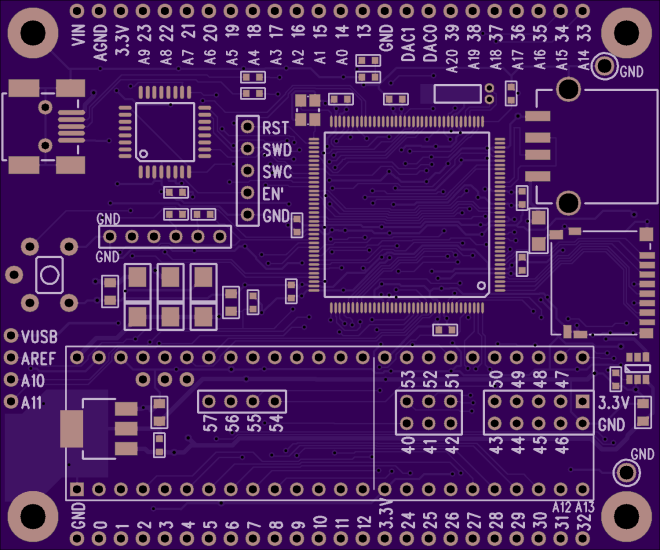
Parts Placement Diagram

Bill Of Materials
1   MK66FX1M0VLQ18
1   IC_MKL04Z32_TQFP32
1   USB A Connector
1   USB Mini B Connector
1   Micro SD Socket
1   MCP1825S Voltage Regulator
1   TPD3S014 USB Power Switch
1   Crystal, 16 MHz
1   Crystal, 32.768 kHz
3   Diode, Schottky, B120
1   Capacitor, 100uF, 6.3V
4   Capacitor, 4.7uF
10  Capacitor, 0.1uF
1   Resistor, 100K
2   Resistor, 470
2   Resistor, 220
2   Resistor, 33
1   Pushbutton
2   Test Point, Black
Giant Functional LEGO NES Controller
Bob Baddeley writes on Hackaday:
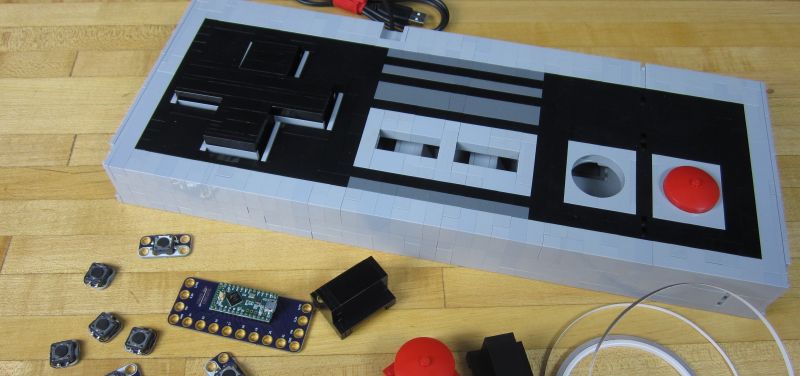 Giant Solderless LEGO NES Controller Gives Everyone Tiny Hands
[BrownDogGadgets] built a giant NES controller out of LEGO. The controller is designed in LEGO Digital Designer, which lets you create a virtual model, then get a full list of parts which can be ordered online.
The electronics are based on a Teensy LC programmed to appear as a USB keyboard, and the buttons are standard push buttons. The insides are wired together with nylon conductive tape. LEGO was an appropriate choice because the Teensy and switches are built on top of LEGO compatible PCBs, so components are just snapped in place. The system is called Crazy Circuits and is a pretty neat way to turn electronics into a universal and reusable system.
Here is the controller in action:
Design files and source code for Crazy Circuits modules and projects are available on GitHub:
 BrownDogGadgets/CrazyCircuits


Find out more in our previous blog post:
Crazy Circuits launches on Kickstarter
E-Paper Breakout Board for Teensy
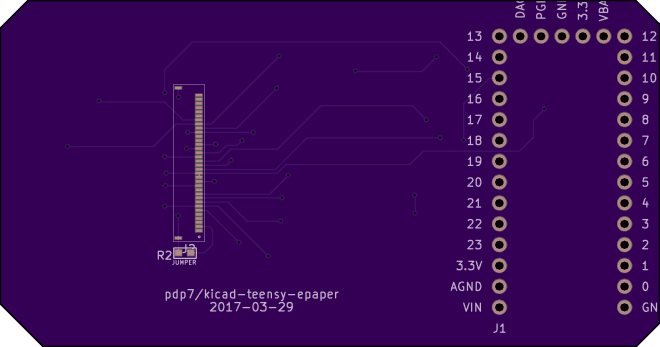
Breakout board designed in KiCad to connect Pervasive Displays 2.15″ E-Paper (E2215CS062) to Teensy 3.2 or Teensy LC. Based Teensy E-Paper Shield by Jarek Lupinski in EAGLE.
My goal is to create a name badge I can wear at conferences and Maker Faires. This was first step to verify the KiCad schematic and KiCad footprints work. I will post more information as the badge project progresses.
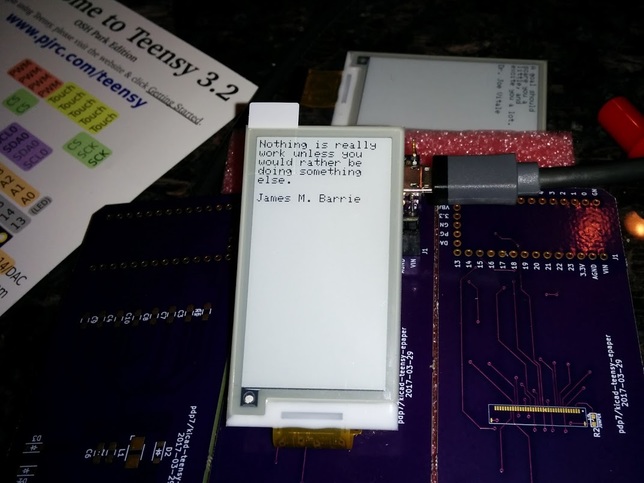
KiCad PCB design files:
- repo: pdp7/kicad-teensy-epaper
- commit: 54458f4
- requires KiCad library wickerlib by Jenner Hanni of Wickerbox Electronics for the 34-position FPC connector that the e-paper display plugs into:
The board is shared on OSH Park:
E-Paper Breakout Board for Teensy
Bill of Materials (BoM)
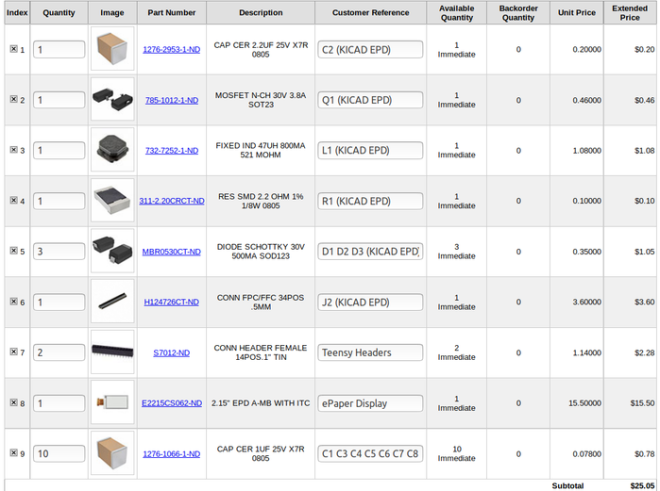
Source Code
- uses EPD215 Arduino Library by Jarek Lupinski for his E-paper Teensy Shield
- requires pinout modification:
- EpaperQuoteDisplay.ino
EPD215 epaper( 17, 16, 14, 15, 13, 11 );
Photos
Video
Related: Jarek’s ePaper Teensy shield
- OSH Park shared project: Teensy e-Paper shield
- My repo of Jarek’s design files: TeensyEpaperShield
Rotary Encoder Breakout with Pull-up Resistors
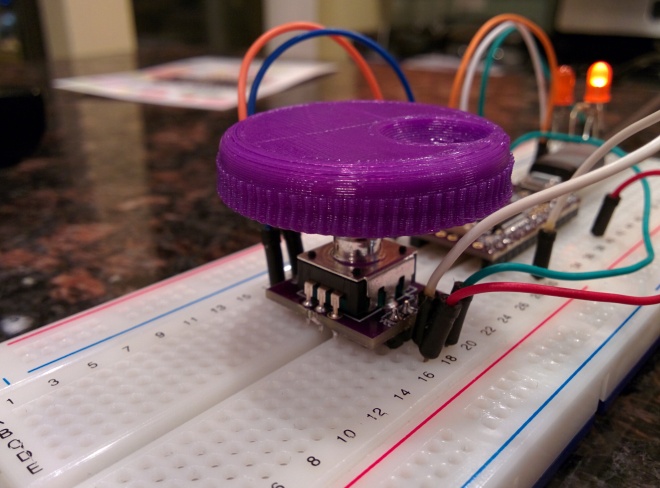
This breakout board designed in KiCad makes it easy to put a rotary encoder and pull-up resistors on a breadboard. (Thanks to Enrico for the idea to add pull-up resistors). The footprints on the back are meant for 1206 SMD resistors. I choose 1K Ohm resistors, marked 102, when I assembled this board.


Additional photos are available in the GitHub repo’s images directory and in a Google Photos gallery.
Here is the OSH Park shared project for the board:
Rotary Encoder Breakout with Pull-ups
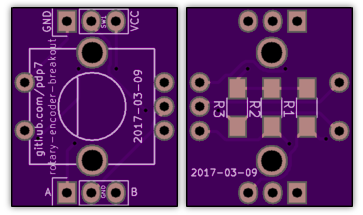
The KiCad design files are available on GitHub:
 pdp7/rotary-encoder-breakout

I used this KiCad symbol and footprint by Mike Cousins for a Sparkfun rotary encoder:
mcous/kicad-lib
I’ve verified that these rotary encoders fit:
I wrote this Arduino sketch to run on the Teensy 3.2. The brightness of one LED is controlled by the rotary encoder knob. The other LED is turns on when the rotary encoder knob is pressed down:
 rotary-encoder-test.ino
Here’s a video of the breakout board being used with a Bourns PEC12R-4220F-S0024 and Teensy 3.2:
thingSoC Grovey on Crowd Supply
 thingSoC is an Open Source socket system for IoT development and has just launched a new Crowdy Supply campaign:
thingSoC “Grovey”
Build any IoT or Networked device you can imagine!
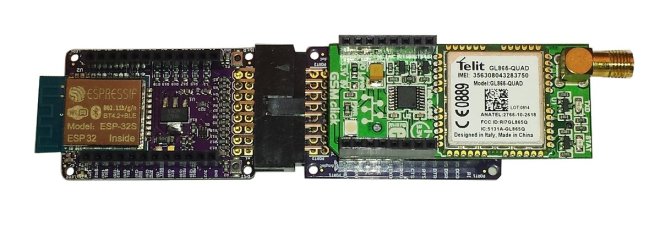
The thingSoC Grovey! platform gives you the freedom to choose from hundreds of existing sensors, actuators, and radios to quickly create new electronic systems, in plug together configurations that were not possible before. Easily mix together different CPUs, Radios, and Peripherals, like Servos, Motors, Relays, Sound and Lights, and then program them in your choice of Integrated Development Environments (IDE).


The thingSoC Grovey! series combines access to the Seeedstudio Grove system, and the Mikrobus “Click” system, to give you the widest selection of radios, sensors, and actuators available today.


The thingSoC Grovey Series files are available on GitHub:
- TSOC_Teensy3x: Teensy3.x Adapter for the Grove System
- TSOC_GROVEY_ONE: Model “Uno” Arduino Clone for the Grove System
- TSOC_GROVEY_FOUR: Model “Four” PSoC4 mini for the Grove System
- TSOC_GROVEY_WIFI: ESP8266 Wi-Fi Adapter for the Grove System
- TSOC_GROVEY_I2CHUB: I2C Hub/Switch for the Grove System
- TSOC_GROVEY_GPIO: SX1509 GPIO for the Grove System
- TSOC_GROVEY_UART: USB to UART for the Grove System
 OSH Park