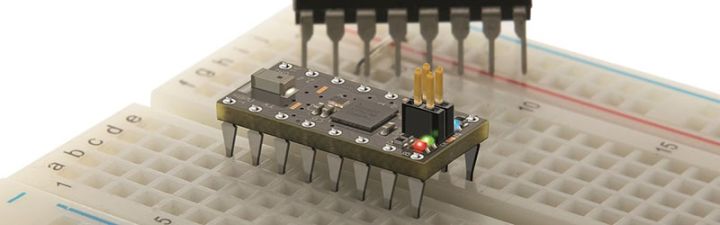
If you’re making a circuit that is designed to plug into a breadboard, you have a problem. Those 0.1″ header pins are square, and the metal leaf contacts inside a solderless breadboard will eventually get bent out of shape. You only need to look at the breadboards in a university electronics lab for evidence of…
Uncategorized
DIY Vacuum Pickup Tool
We are always surprised how much useful hacking gear is in the typical craft store. You just have to think outside the box. Need a hot air gun? Think embossing tool. A soldering iron? Check the stained glass section. Magnification gear? Sewing department. We’ve figured out that people who deal with beads use lots of fine…
via [Dave’s] Not Just a Member of the Air Club for Tweezers — Hackaday
iceRadio SDR
From the Hackaday blog:
Ice, Ice, Radio Uses FPGA
Building a software defined radio (SDR) involves many trades offs. But one of the most fundamental is should you use an FPGA or a CPU to do the processing. Of course, if you are piping data to a PC, the answer is probably a CPU. But if you are doing the whole system, it is a vexing choice.
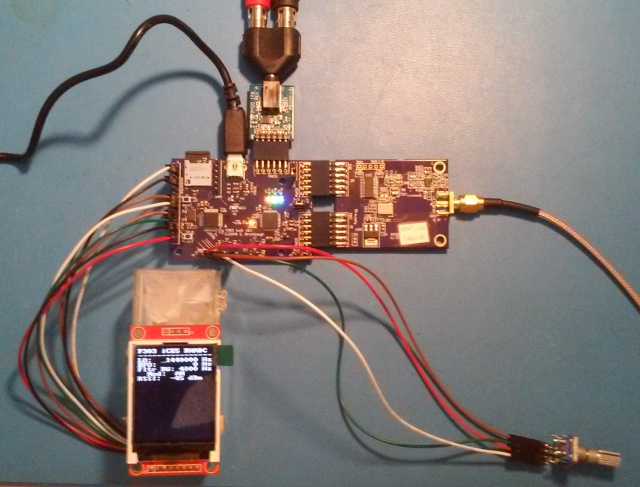
The FPGA can handle lots of data all at one time but is somewhat more difficult to develop and modify. CPUs using software are flexible–especially for coding user interfaces, networking connections, and the like) but don’t always have enough horsepower to cope with signal processing tasks (and, yes, it depends on the CPU).
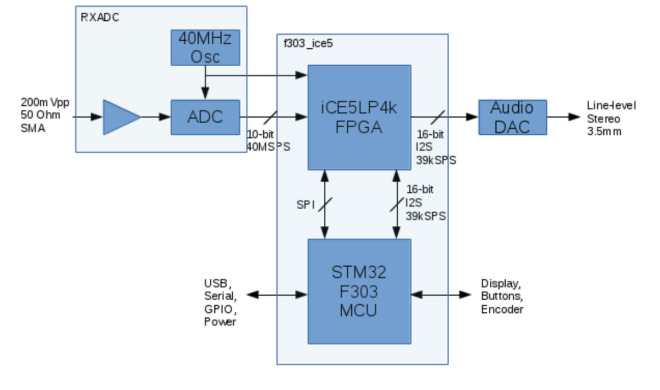
[Eric Brombaugh] sidestepped that trade off. He used a board with both an ARM processor and an ICE FPGA at the heart of his SDR design. He uses three custom boards: one is the CPU/FPGA board, another is a 10-bit converter that can sample at 40 MSPS (sufficient to decode to 20 MHz), and an I2S DAC to produce audio. Each board has its own page linked from the main project.Z
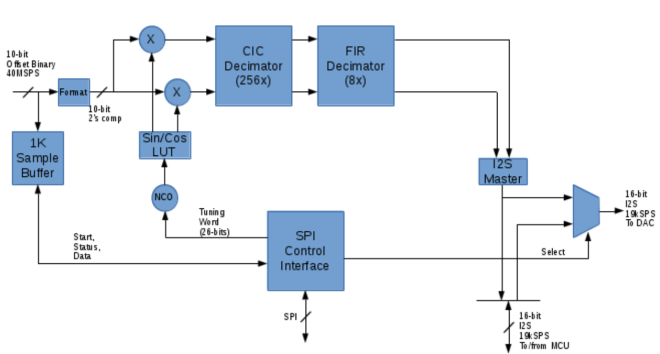
The iceRadio project page has additional details:
- RXADC Board – 40MSPS 10-bit ADC for capturing HF-band RF signals.
- STM32F303 and ice5 Board – MCU and FPGA which implement the digital receiver.
- I2S DAC PMOD – Used for stereo audio output of demodulated signals.
Design files and source code are available on GitHub:

emeb/iceRadio
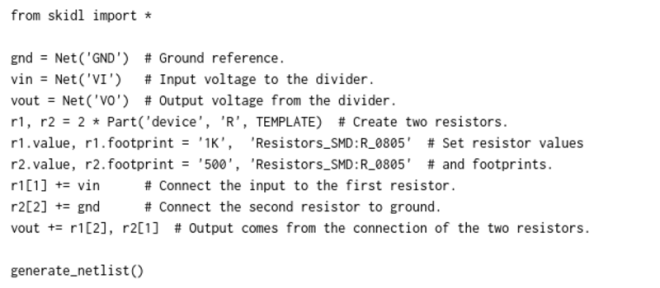
SKiDL: Script Your Circuits in Python
SKiDL is very, very cool. It’s a bit of Python code that outputs a circuit netlist for KiCAD. Why is this cool? If you design a PCB in KiCAD, you go through three steps: draw the schematic, assign footprints to the symbolic parts, and then place them. The netlist ties all of these phases together […]
The source code is available on GitHub:
xesscorp/skidl
Surface-Mount Edge Connectors
FacelessTech designed this small board to act as a surface-mount edge connector:
SMD edge connectors
So you want to joint two boards together, You decide to use through hole female and male 2.54 pitch headers. Normally you would use through hole than ether have a 90 degree headers or just bend them over. For years this is how I did it, I would have to make sure I made sure the holes were just the right distance from the edge of the board.
The KiCad design files are available on GitHub:
facelessloser/smd_edge_connectors
The State of Hackaday.io
At the Hackaday SuperConference in November, Sophi Kravitz had the chance to look back on the past year of Hackaday.io, and what a great year it has been. Hackaday.io now has over 178k members who have published 12.6k projects with about 10% of those being collaborative team projects. But the numbers tell just a small…
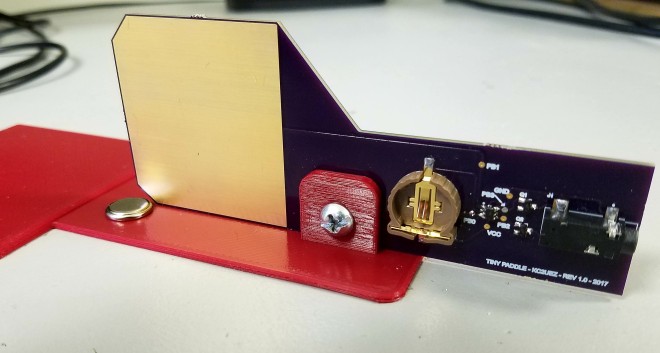
Tiny CW Capacitive Touch Paddle
Like many no-code operators, after being on the air for a while, I developed an interest and appreciation for Morse Code [..] I purchased a cheap paddle, but I found the clicking noise a little bit annoying.
The goal of this project was to create a single PCB with an ATTiny4 AVR, a battery, transistors and a 3.5mm connector jack. The paddle is designed to have exposed conductive material in order to read the capacitive touch.
The under 1kB binary code worked well and without error. This made me wonder how small I could make this code. After optimizing the code, I managed to shrink it to under 512 bytes.
“Mocking” – Minimizing Risk
From the Rebooting Electronics blog:
“Mocking” – Minimising Risk
The goal is to have as few spins of the board as possible and the process of mocking the board was a huge help
Friday Hack Chat: Eagle PCB Design with Matt Berggren
Eagle is a household name for all Hackaday regulars. Here’s your chance to learn about upcoming features, get your ‘how do I do this in Eagle?’ questions answered, and get your wishlist items heard. Join us on Friday at 12:00 PST for a live Hack Chat about the Eagle PCB Design software. Hosting this week’s…
via Friday Hack Chat: Eagle PCB Design with Matt Berggren — Hackaday
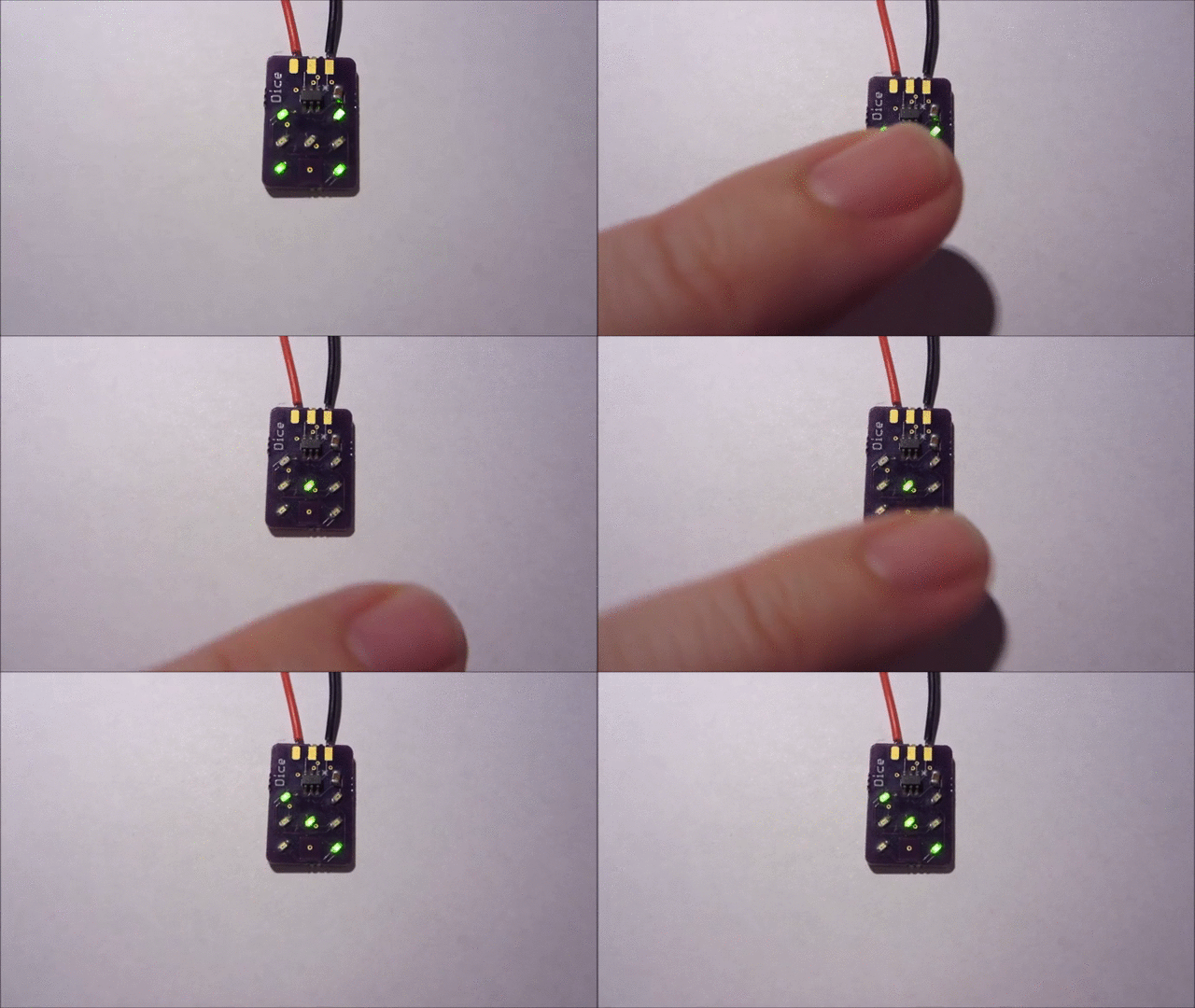
7 LED’s, 2 Pins – beat that, Charlieplexing
[Tim]’s Dice10 is an exercise in minimalism. [Tim] upped the game by using just two GPIO pins to drive the seven LED’s for the dice