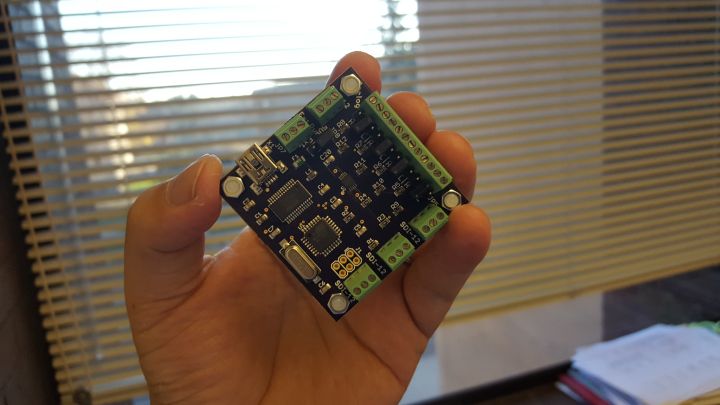
So finally the boards and parts are here and I built the first batch of 3 boards (purple as in oshpark.com). Here is a photo of one of them with my hand as size reference: This board is twice the size of the original SDI-12 USB adapter and features the following additional features: 4 SDI-12
Uncategorized
The Final 10 Entries of the 2016 Hackaday Prize
It has been quite a ride this year, watching entries pour in during the five challenges of the 2016 Hackaday Prize. Our yearly engineering initiative is designed to focus the skill, experience, and creativity of the world’s tinkerers, hackers, designers, and fabricators to build something that matters: things that change lives.
via The Final 10 Entries of the 2016 Hackaday Prize — Hackaday
Put That Amateur Radio License to Use on 915 MHz
Amateur radio enthusiasts in the US will be interested in Faraday, an open-source digital radio that runs on 915 MHz, which amateur radio enthusiasts may know better as the 33 cm band. You can transmit on 915 MHz without a license (in the US), taking advantage of the Industrial, Scientific, and Medical (ISM) exemption.
via Put That Amateur Radio License to Use on 915 MHz — Hackaday
Building an ARM based microcomputer at home
Having my reflow solder oven finished, I couldn’t wait to see how far can I challenge it with complex circuit boards and tiny components. I decided to build a system with components that are tricky to solder, such as BGA and QFN packages. Not interested in designing the whole circuit on my own, I […]
via Building an ARM based microcomputer at home — HELENTRONICA
FixieTube Clock
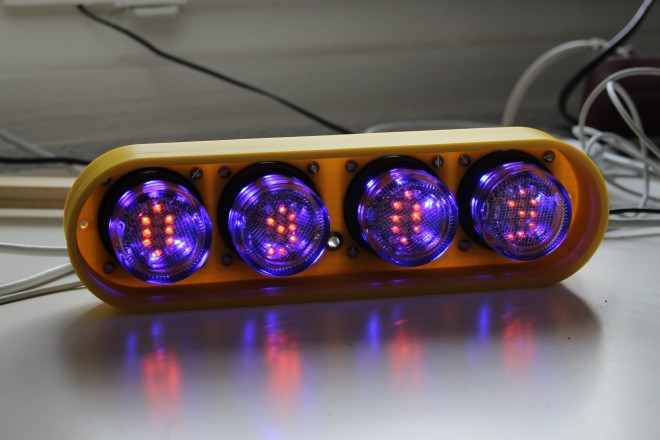
davedarko’s mum gave him some small jam jars and it inspired him to design this clock:
FixieTube clock
30ml jam jars hopefully turned into beautiful LED displays – nixietube like looking without the higher voltage fuzz – fake LED nixietubes
The design files and source code are available on GitHub:
davedarko/FixieTubes
Here’s a video of the clock in action:
MagSpoof for Raspberry Pi
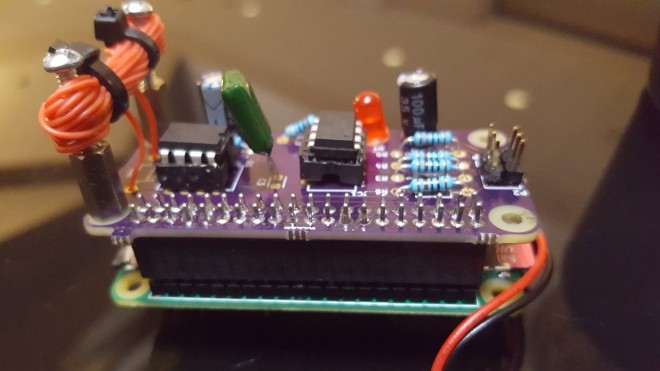
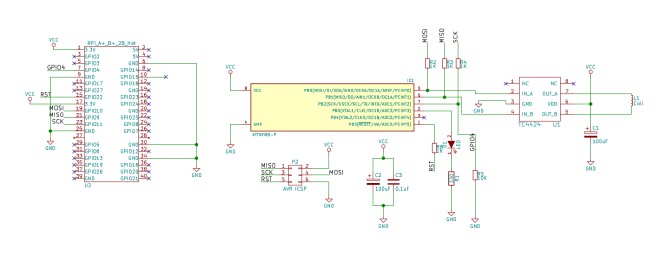
Be able to make & upload MagSpoof with variable tracks, to use it without Arduino dependencies, and implement it on the same Raspberry GPIO.
More details are available on Salvador’s blog.
The makefile and the modified MagSpoof library are avialabel on GitHub:
MagSpoofPI
Tindie: PCB with Chaos Theory Built In
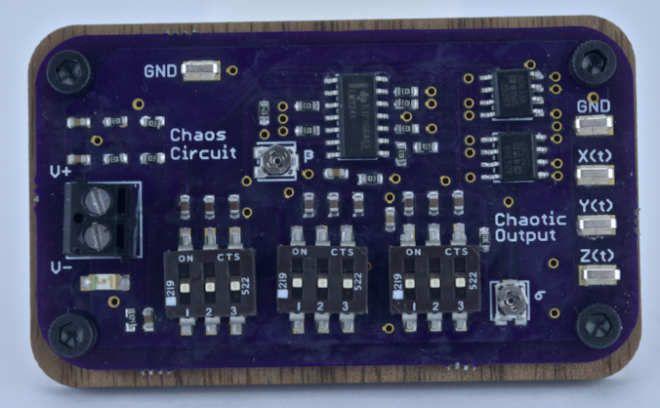
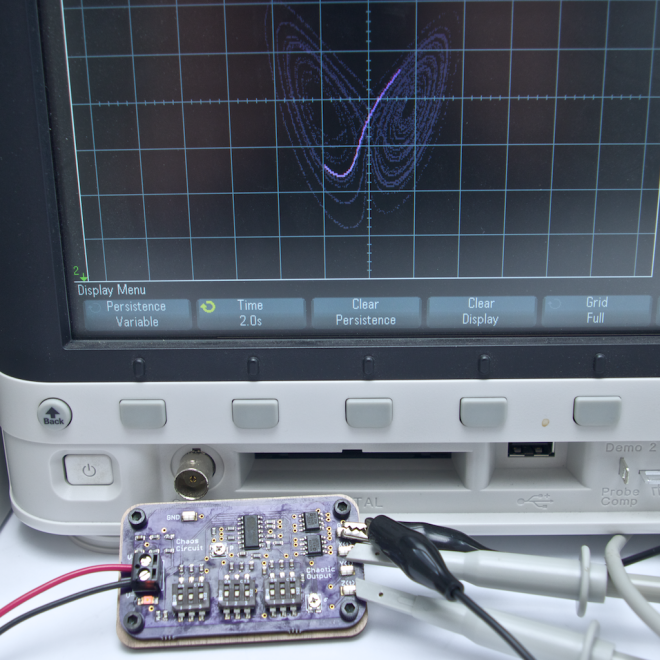
Shane Ormonde wrote on the Tindie blog about the Chaos Computer by Tom Quartararo:
PCB with Chaos Theory Built In
It turns out you can solve ordinary differential equations using simple op-amp circuits. Paul Horowitz, author of the famous book The Art Of Electronics took an interest in the Lorenz Attractor and made a circuit to solve the Lorenz Attractor equation
BoosterBot for TI LaunchPad
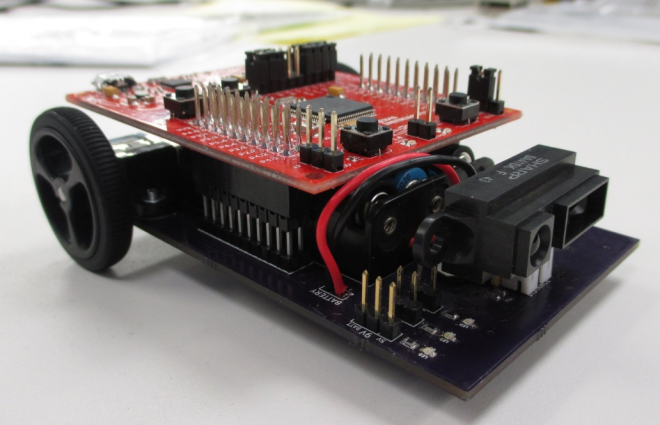
BoosterBot turns a TI Launchpad into a fully functional robot:
Perfect for anyone who wants to get started with MSP430 and robotics, or just wants an easy to use robotics platform to build off of.
- Micro Metal Gearmotors from Pololu
- Powered by 3xAAA batteries
- Five QRE1113 Reflectance sensors for line following and maze solving
- Header for a Sharp IR distance sensor
- Header for a servo
The design files and source code are available on GitHub:
Hylian/BoosterBot
Here’s a video of the BoosterBot in action:
3 Inch Tall 7-segment Clock
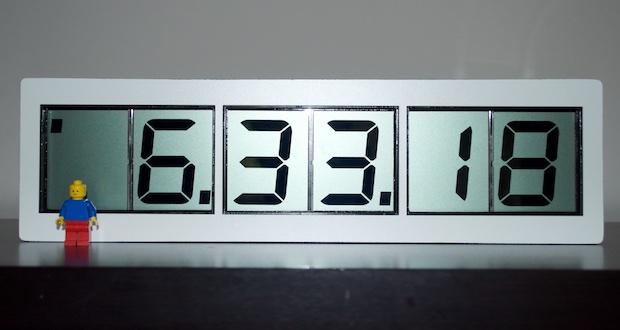
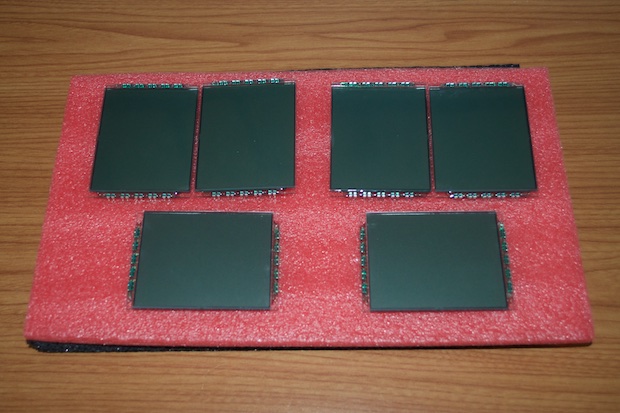
Kevin Rye decided to build a 15 inch long digital clock after acquiring these 3 inch 7-segment displays. He documented the project from start to finish:
- LUMEX 3″ 7-Segment Displays
- 3″ LCD Clock – Part I
- 3″ LCD Clock – Part II
- 3″ LCD Clock – Part III
- 3″ LCD Clock – Part IV
- 3″ LCD Clock – Part V
I picked up these sweet LUMEX S101D22TR 7-Segment LCDs the other day.
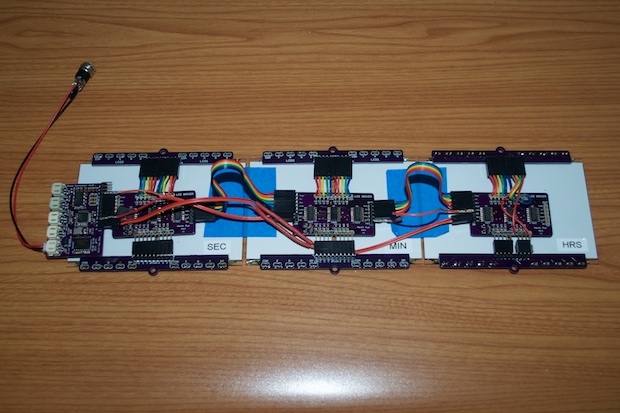
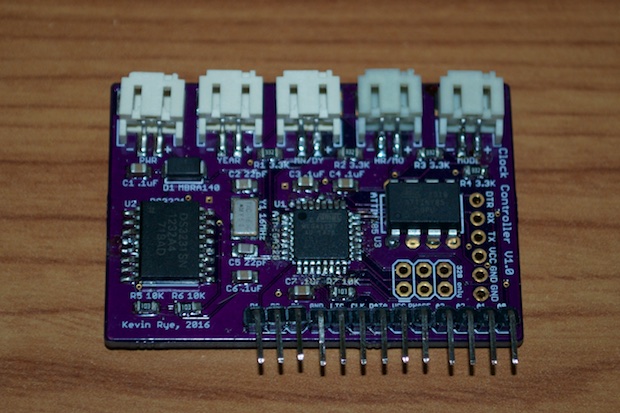
The PCBs for the hours, minutes, and seconds display modules are identical. They’ll just be wired differently.
On the driver boards, data flows in from the left out to the next section on the right.
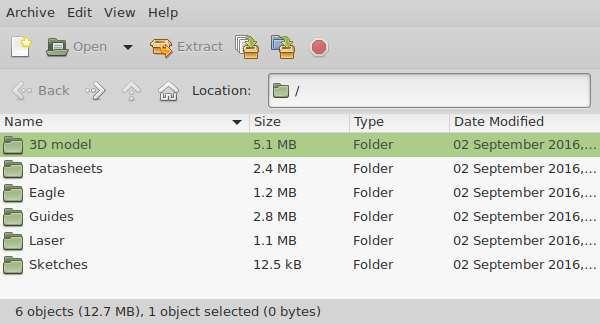
The source files can be downloaded from:
15inch-LCD-Clock-Source.zip
Lumen Electronic Jewelry
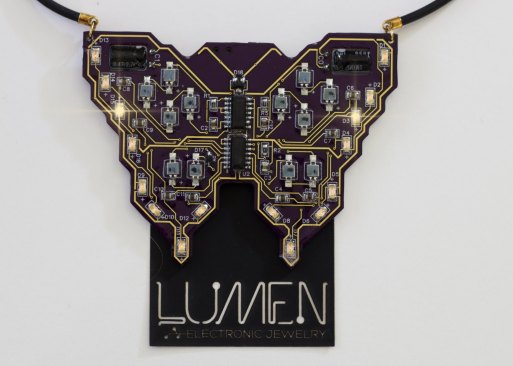
We love PCBs, so we were excited to see this beautiful circuitry from Lumen Electronic Jewelry:
Fashion Gets Geeky
Lumen is the creation of Robin and Marty Lawson in Madison, Wisconsin:
We’re life-long tinkerers, siblings, and fourth generation mechanical engineers.
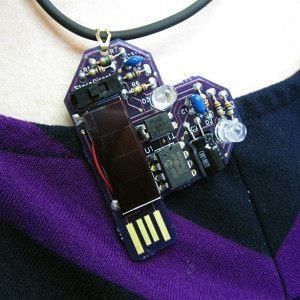
They’ve designed soldering kits for all levels: beginner, intermediate, and advanced surface mount soldering. This heart is an example of an intermediate kit:
Lumen also makes beautiful fully-assembled LED jewelry:
Solar powered twinkling LED jewelry. No batteries, hours of blinky.
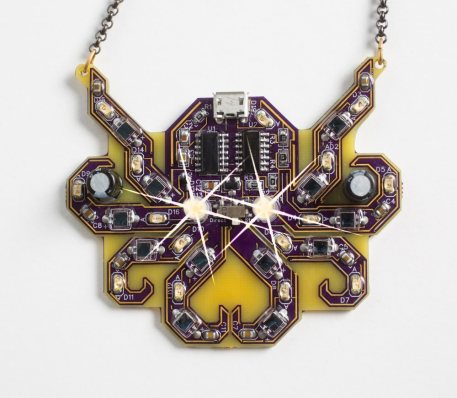
We particularly like this twinkling fiberglass cephalopod:
Blinky Octopus Necklace
Each octopus has 16 amber LED lights throughout the arms connected to 12 tiny solar cells. So your necklace will charge and blink all on its own, no batteries required.

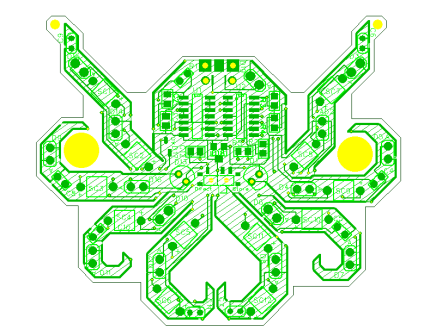
Robin tells me that they use Free PCB for layout:
Robin informed me that they laser their own stencils out of thin mylar sheets at their local Makerspace, Sector 67:
It is expensive but has a long working life, excellent hardness and optical clarity, as well as UV resistance to yellowing.