Ever since Jimi Hendrix brought guitar distortion to the forefront of rock and roll, pedals to control the distortion have been a standard piece of equipment for almost every guitarist. Now, there are individual analog pedals for each effect or even digital pedals that have banks of effects programmed in. Distortion is just one of…
Uncategorized
DIY Scanning tunneling microscope
MatthiasR is building a scanning tunneling microscope:
DIY Scanning tunneling microscope
At the end of last year i started collecting information about needed system components like the vibration isolation, the tunneling current amplifier, the z-height controller, the coarse approach mechanism and so on
Here’s a video of his DIY vibration isolation system:
1bitsy: Open Source JTAG enabled ARM dev platform
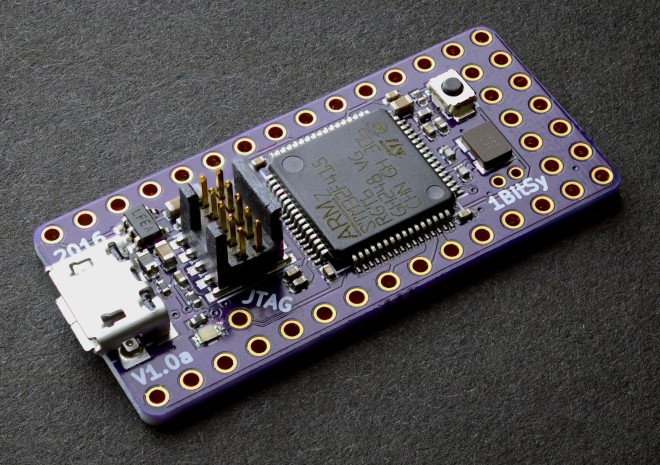
Piotr Esden-Tempski of 1Bitsquared created this Open Source and Open Hardware debuggable ARM development platform:
1Bitsy
Firmware development with the lights on
Design files and source code are shared on GitHub:
1bitsy-hardware
Small breadboard friendly STM32 (eventually other mcu’s too) eval boards with exposed JTAG and SWD for the use with Black Magic Probe and others!
The MightyWatt: a 70W Electronic Load Kit
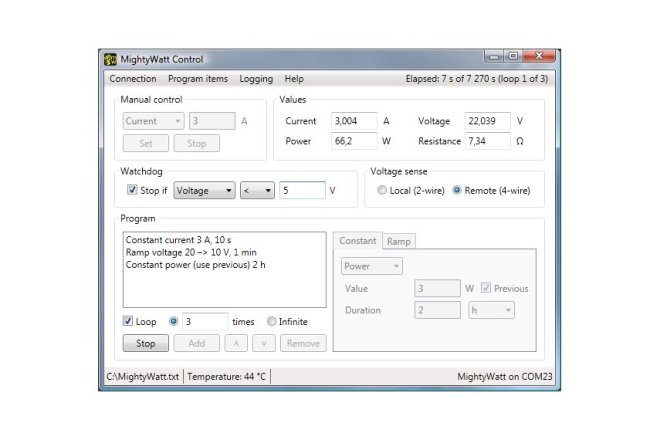
Jakub Polonský of Kaktus Circuits created this programmable electronic load that sits on top of an Arduino:

The MightyWatt: a 70W Electronic Load Kit
Electronic loads are used to draw power from a source at either a constant current or a constant voltage. This comes in useful for things like battery discharge testing or making sure that PCB you designed can actually power those motors without releasing the all important magic smoke.
The kit is sold on Tindie:
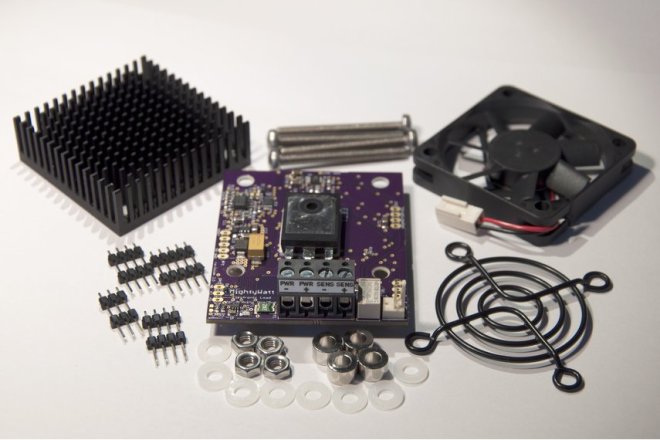
MightyWatt turns your Arduino Uno R3, Arduino Zero (M0/M0 Pro) or Arduino Due into an electronic load capable of dissipating 70 Watts in a very small form factor. Ideal for testing power supplies, batteries, fuel cells or power amplifiers.
Design files and source are shared on GitHub:
Creating A PCB In Everything: KiCad, Part 1
This is the continuation of a series of articles demonstrating how to Create A PCB In Everything. In this series, we take a standard reference circuit and PCB layout — a simple ATtiny85 board — and build it with different PCB design tools. Already, we’ve taken a look at the pre-history of PCB design with…
Low power Arduino Pro Mini board
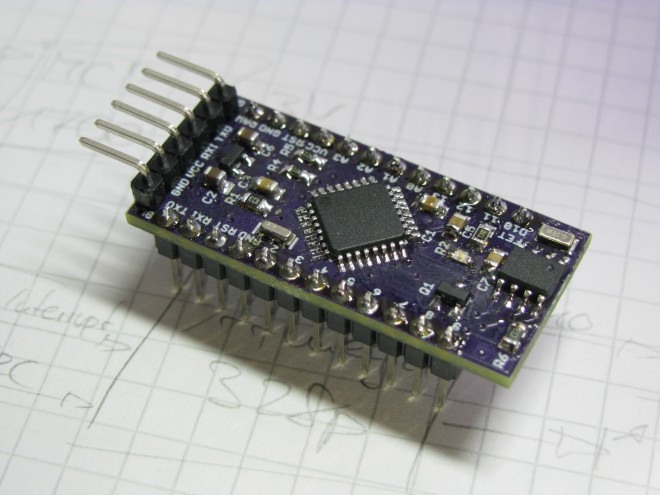
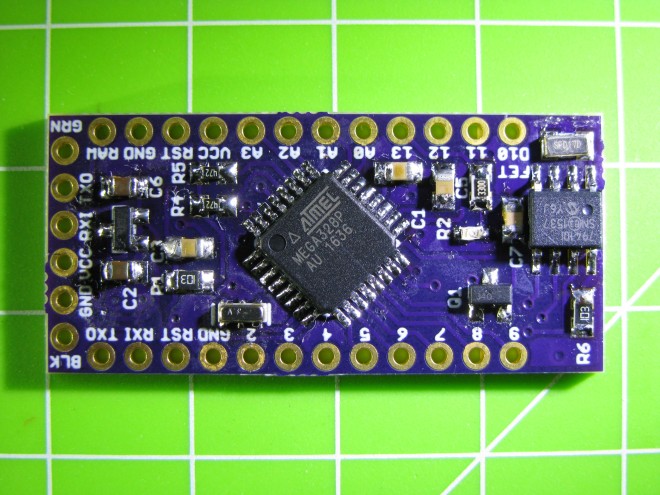
Max.K created this Arduino Pro Mini compatible development board for low power applications:LP Mini
ideal for data logging over extended periods of time [..] can run for months or even years on a coin cell
Hardware
- Microcontroller: Atmega328p with Arduino bootloader
- Real Time Clock: MCP79410
- Voltage Regulator: MCP1700
- FDN340P MOSFET
Features
- 2.8 µA current consumption in sleep mode
- Compatible to the Arduino Pro Mini (except for pin 2 and 10)
- A real time clock keeps the time and is used to wake the Atmega from sleep mode
- Sleep current is reduced by using a more efficient voltage regulator
- A simple Mosfet is used to turn external devices on and off if the IO pins cannot provide enough current
Simula Robotic Organisms
Chicago Robotics Corp is exploring 3D Printed Robotics with Simula:
simulated life-forms for use in research and entertainment
The robot is programmed with Arduino IDE:
Programming Simula
You might choose to program Simula by yourself from scratch, modify our existing software, or just keep up with our latest simulations.
Arduino Library for the Simula Boards and Modules is on GitHub:
ChicagoRobotics/CRC_Simula_Library
Video of two Simula units cruising around:
Vinduino: Save 25% Of Water Needed For Irrigation
Shane Ormonde wrote on the Tindie blog:
Vinduino – Save 25% Of Water Needed For Irrigation
Vinduino is one of those projects that set out to solve a really big problem which straight away makes it interesting. Reinier van der Lee wanted to use the least amount of water possible for irrigation in his southern California vineyard.
Hence the Vinduino project was made to be a relatively low cost system to help save on water use. It is also solar powered, further reducing its impact on the environment.
The Travelling Hackerbox Is Going International
Over the last year, Hackaday.io has seen an incredible project. It’s a migratory box of random electronic junk, better known as the Travelling Hackerbox. The idea behind this mobile electronic surplus store is simple: receive the box, take out some cool electronic gizmos, add some of your own, and send it on to the next person […]
via The Travelling Hackerbox Is Going International — Hackaday
Give Your RPi a Cool FPGA Hat
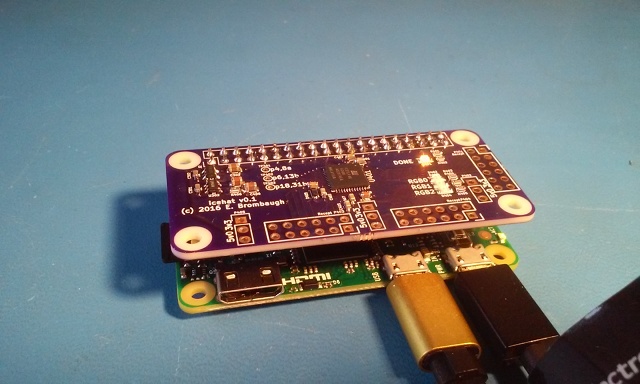
Need additional, custom IO for your Raspberry Pi? Adding an FPGA is a logical way to expand your IO, and allow for high speed digital interfaces. [Eric Brombaugh]’s Icehat adds a Lattice iCE5LP4K-SG48 FPGA in a package that fits neatly on top of the Raspberry Pi Zero. It also provides a few LEDs and Digilent compatible PMOD connectors […]