DRV8818 Stepper Driver Module for 3D Printers

RAMPS compatible driver module based on DRV8818 by Dean Gouramanis:
Screenshot from 2017-11-15 01-01-04

DRV8818 Stepper Driver Module for 3D Printers

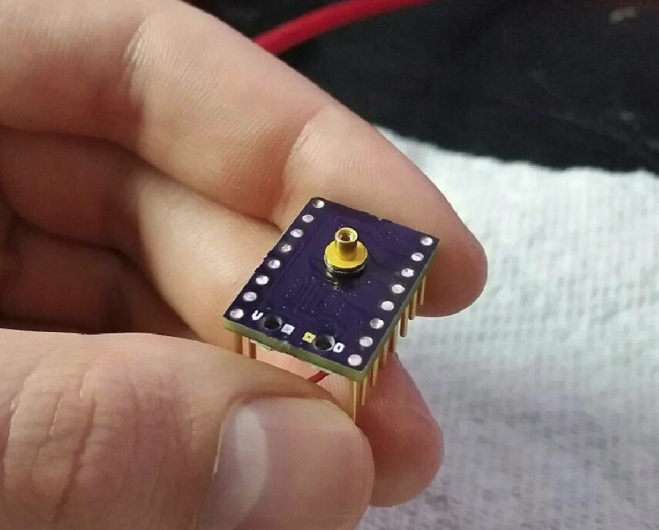
The goal of this project is to fit the DRV8818 driver circuit onto the standard 0.8″ X 0.6″ PCB size used in RAMPS 3D printers. DRV8825 drivers are a popular choice for desktop 3D printers, because they can provide up to 2.5 amps peak current. The DRV8818 is a similar IC capable of driving up to 3.5 amps, but the circuit is too large to fit on PCB using regular methods. Also, without a propper heatsink it will overheat.

Schematic, gerbers and mechanical CAD files are shared on GitHub:
dgouramanis/T18_driver

 
DRV8818 Stepper Driver Module for 3D Printers

Tiny ESP32 WROVER pSRAM board

Tiny ESP32 board from the store on Tindie with optional battery header and pSRAM:

Screenshot from 2017-11-15 00-17-12.png

Tiny ESP32 WROVER pSRAM board

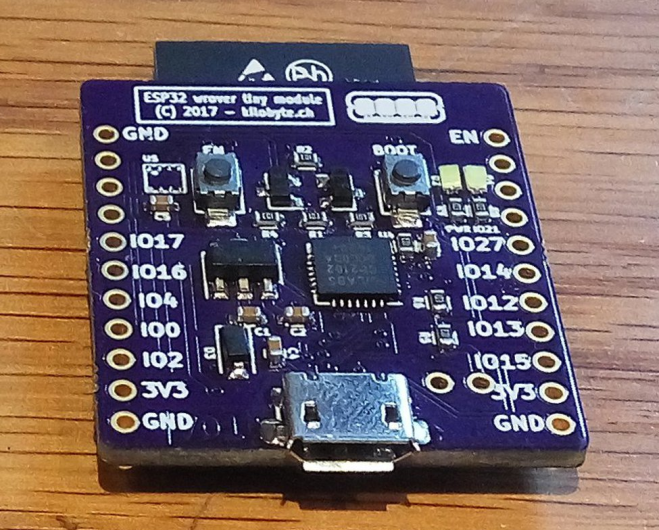
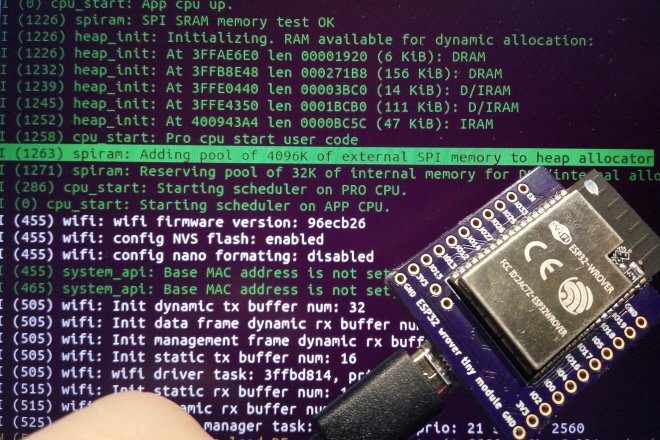
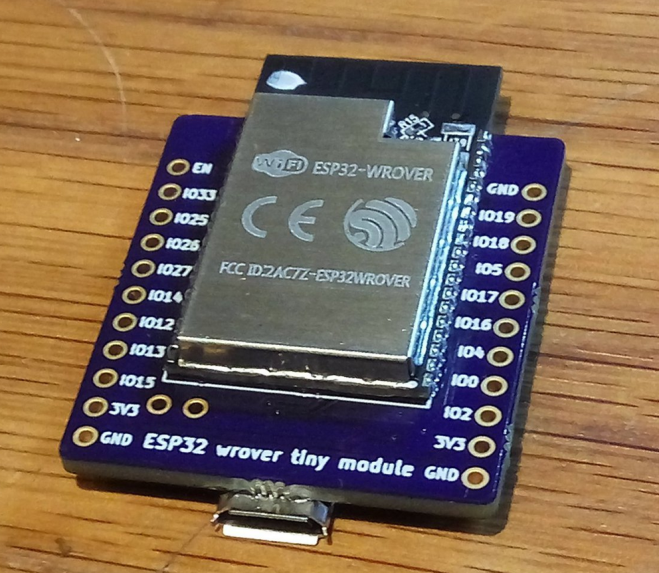
It’s a little ESP32 Board. Perfect for controlling or sensing stuff in the real world and sync it to the internet! Despite that it features the ESP32 WROVER Module. This means it got 4MB FLASH and 4MB RAM. That’s an absolute incredible amount of RAM. I honestly have no clue for what I will ever need 4MB in my embedded Projects.

Screenshot from 2017-11-15 00-25-49

Why did you make it?

I wanted a small ESP32 Board with the pSRAM and which works and doesn’t eat your whole time to get it working and find it’s issues and quirks.

I’ve used the CP2102 Serial converter because this is the one, which works the best way to program the ESP32. Even Espressif uses this serial converter on their own dev boards.

2017-11-14T20:11:04.072Z-IMG_20171114_204145

What makes it special?

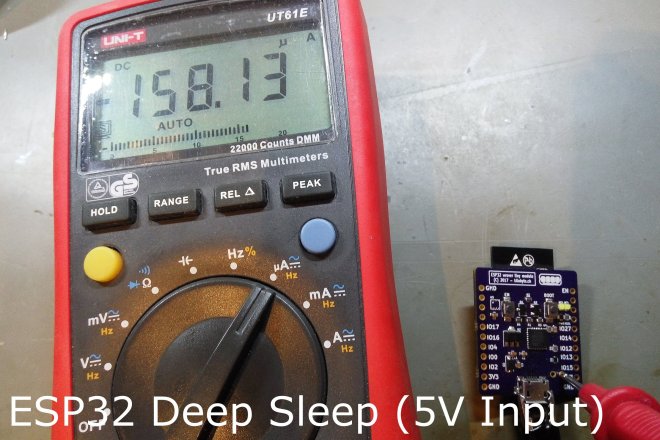
It’s propably the smallest ESP32 Board with pSRAM. Despite the size it’s ideal for battery operation. It uses under 200uA in Deep Sleep mode!

2017-11-14T21:18:21.815Z-IMG_20171114_221457

Tiny ESP32 WROVER pSRAM board

Arduino Neural Network Robot

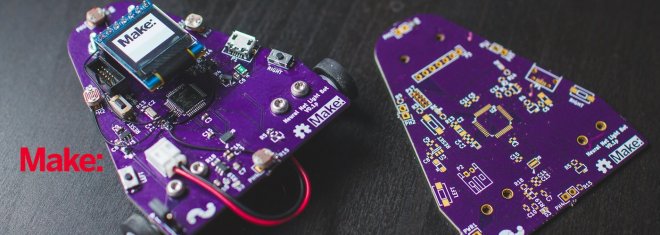
Sean Hodgins created an Arduino-based robot that avoids light by navigating using a neural network:
4863551509384902904
This project is meant to teach about utilizing neural networks in robotic platforms. There will be a 3 part video series on the Make YouTube channel on building the robot. It will start with prototyping and design, then move onto assembly and testing, and finally programming and running the neural network. You will be able to follow along and make your own robot in the end.

Part 2: Soldering and Assembly


Arduino Neural Network Robot

Open Source Underwater Glider Wins 2017 Hackaday Prize

The Open Source Underwater Glider has just been named the Grand Prize winner of the 2017 Hackaday Prize. As the top winner of the Hackaday Prize, the Open Source Underwater Glider will receive $50,000 USD completes the awarding of more than $250,000 in cash prizes during the last eight months of the Hackaday Prize. More than…

via Open Source Underwater Glider Wins 2017 Hackaday Prize

6522401506119277022

Open Source Underwater Glider Wins 2017 Hackaday Prize

Grid-EYE 8×8 Infrared Camera

From Jeremy S. Cook on the Tindie blog:

grid-cam.jpg

Grid-EYE 8×8 Infrared Camera

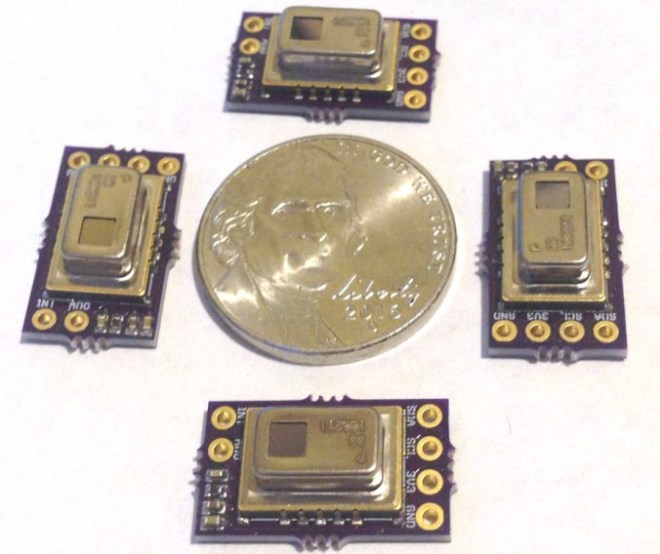
Thermal imaging has remained an interesting, if costly, technology for some time. One lower cost option is the the Grid-EYE sensor from Panasonic. While it has a resolution of only 8×8 pixels, it’s priced in the low double digit range, making it an ideal candidate for budget projects. If you’d like to add it to your build, Pesky Products has a has a breakout available that allows it to be used with the I²C protocol.

grid-eye

Xose Pérez, after finding this sensor and breakout on Tindie, which he (correctly) considers “a great place to find uncommon electronic components or weird/interesting boards,” decided to make his own low-resolution IR camera. At only 64 pixels of resolution, it’s not as capable as more expensive units, but it could still be very useful for getting a general idea of what is hot and cold in a room/environment. The case is made out of slices of acrylic, paper, cardboard, and MDF, giving it a very unique look. It also features a small screen to display supplemental information, and a simple button/switch  interface.

Grid-EYE 8×8 Infrared Camera

Hologram.io: Open-Sourcing Our Hardware

Ben Strahan of Hologram.io writes about why development hardware should be open source:

opensource-hardware-hologram.png

Open-Sourcing Our Hardware

It’s a simple premise – black boxes stifle innovation while open systems encourage exploration. Black Boxes and IP have their place as an essential tool in our economy; but in an industry like IoT where rapid innovation is needed, we need to push for open development tools as the building blocks that lead to innovative end-products for industry and consumers.

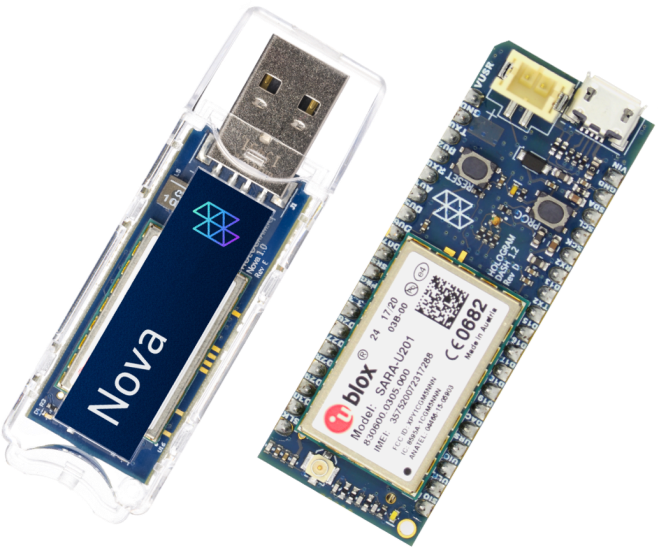
Going forward Hologram will open-source all hardware we develop for the developer community, including dependent firmware, through OSHWA. We see this as a mandatory step we need to take to help move IoT forward, to lower the barriers to entry, and to spur innovation in a rapidly evolving ecosystem.

The hardware design files for the new Hologram Nova module are available on GitHub:

Hologram Nova Hardware Repository

novam_header_r2.png

Hologram.io: Open-Sourcing Our Hardware

Live Streams and Hack Chat From The Hackaday Superconference

Want to experience the Hackaday Superconference from the comfort of your own workshop? Just follow us on YouTube or on Facebook as two days of live streaming talks begin this Saturday morning. This weekend is the Hackaday Superconference, the greatest hardware conference on Earth. While the Superconference is the most amazing gatherings of engineers and engineering…

via Live Streams and Hack Chat From The Hackaday Superconference

Live Streams and Hack Chat From The Hackaday Superconference

Reflowduino: Open Source Reflow Oven Controller

 writes on Hackaday about Timothy Woo’s Reflowduino:

1658421509137060505-e1509247070943

Hackaday Prize Entry: Reflowduino, the Open Source Reflow Oven Controller

Face it — you want a reflow oven. Even the steadiest hands and best eyes only yield “meh” results with a manual iron on SMD boards, and forget about being able to scale up to production. But what controller should you use when you build your oven, and what features should it support? Don’t worry…

3821281510029060878

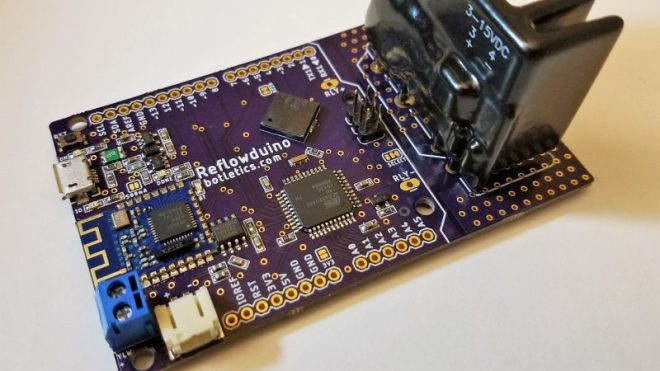
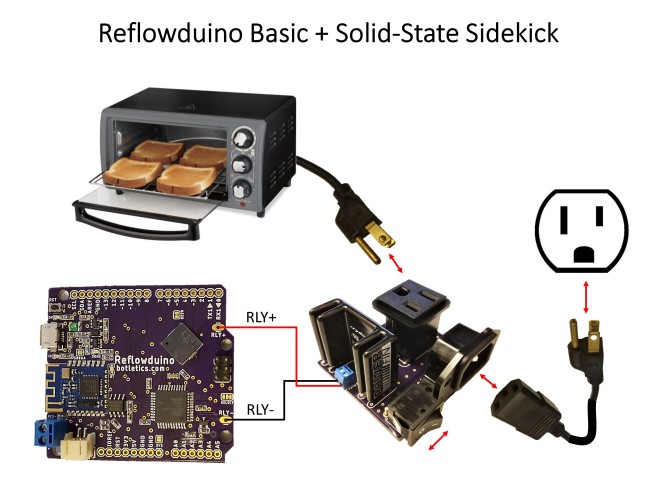
Dubbed the Reflowduino for obvious reasons, Timothy Woo’s Hackaday Prize entry has everything you need in a reflow oven controller, and a few things you never knew you needed.
 
 
Reflowduino: Open Source Reflow Oven Controller

Making Braille Signs out of PCBs

From  on Hackaday:

Screenshot from 2017-11-01 11-47-06.png

Making Braille Signs out of PCBs

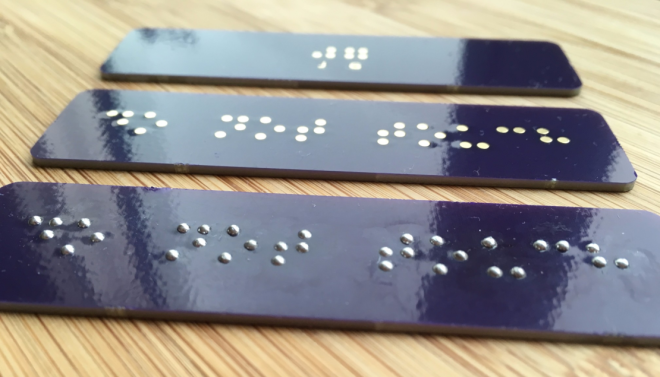
[jg] recently passed some damaged Braille signs and took on the challenge of repairing them. Informed by his recent work on PCB lapel pins, [jg] immediately thought of using circuit boards for this project. He’d noticed that round solder pads made for uniform hills of solder, and this reminded him of the bumps in Braille.


He began by reading up on the standards of the Braille Authority of North America, which stipulates a dot height of 0.6mm. He loaded up the PharmaBraille font system and laid it out the dots in photoshop, then and imported it into KiCad and laid out the boards. When the PCBs had arrived from OSH Park, [jg] soldering up the pads (lead free, but of course) to see if he could get the hills to 0.6mm. He’s experimenting with different methods of melting the solder to try to get more even results


Making Braille Signs out of PCBs

Ben Krasnow Hacks E-Paper For Fastest Refresh Rate

https://youtube.com/watch?v=MsbiO8EAsGw%3Fversion%3D3%26rel%3D1%26fs%3D1%26autohide%3D2%26showsearch%3D0%26showinfo%3D1%26iv_load_policy%3D1%26wmode%3Dtransparent

[Ben Krasnow] is known for his clear explanations alongside awesome hardware, being one of only a few hackers who owns an electron microscope. This time he’s explaining how E-paper works while modifying the firmware of a 4.2 inch E-paper module to get a higher refresh rate. As for the awesome hardware, he also analyses the…

via [Ben Krasnow] Hacks E-Paper For Fastest Refresh Rate — Hackaday

Ben Krasnow Hacks E-Paper For Fastest Refresh Rate