Tiny CW Capacitive Touch Paddle

Edgar implemented capacitive touch sensing using an ATTiny4 to create a touch paddle for Morse code:

Tiny CW Capacitive Touch Paddle
8481381483458432642

Like many no-code operators, after being on the air for a while, I developed an interest and appreciation for Morse Code [..] I purchased a cheap paddle, but I found the clicking noise a little bit annoying.


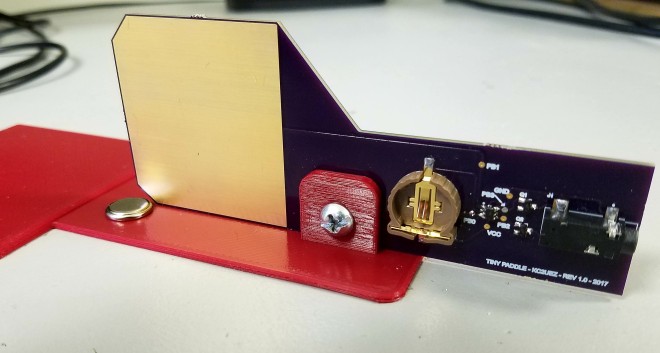
The goal of this project was to create a single PCB with an ATTiny4 AVR, a battery, transistors and a 3.5mm connector jack. The paddle is designed to have exposed conductive material in order to read the capacitive touch.

The under 1kB binary code worked well and without error. This made me wonder how small I could make this code. After optimizing the code, I managed to shrink it to under 512 bytes.

Tiny CW Capacitive Touch Paddle

Friday Hack Chat: Eagle PCB Design with Matt Berggren

Eagle is a household name for all Hackaday regulars. Here’s your chance to learn about upcoming features, get your ‘how do I do this in Eagle?’ questions answered, and get your wishlist items heard. Join us on Friday at 12:00 PST for a live Hack Chat about the Eagle PCB Design software. Hosting this week’s…

via Friday Hack Chat: Eagle PCB Design with Matt Berggren — Hackaday

Friday Hack Chat: Eagle PCB Design with Matt Berggren

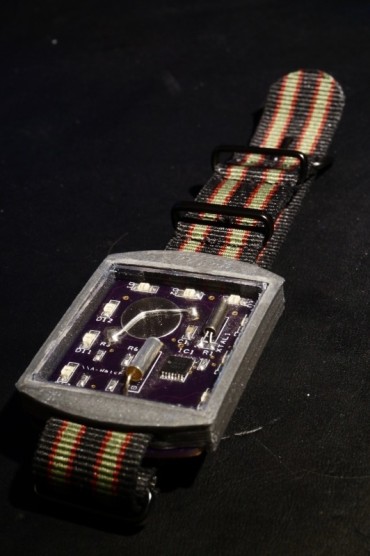
Tilt activated LED watch

askoog89 saw a major flaw with many LED watches – you have to press a button to see the time:

114881412191895394.jpg

A Watch

I tried fix that problem by using a tilt switch to active the LED showing the time when tilt your arm to look at the watch

The watch uses the low power MSP430G2211 MCU from Texas instruments to control the LED and mesure the time with the help of a 32kHz watch cristal. The MCU sleeps most of the time only waking up ones a second to count up the time and check if the tilt switch is active.  To show the time the watch uses 12 charlieplexed orange LEDs.

Tilt activated LED watch

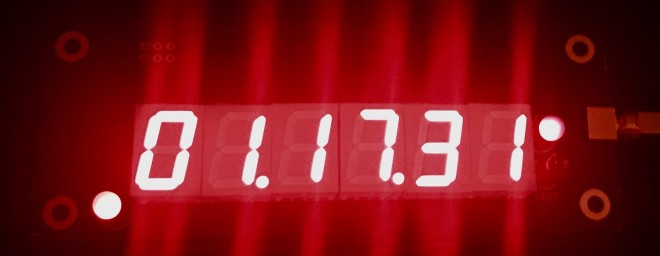
GPS Clock by Nick Sayer

Nick Sayer created this simple desk clock that gets time from GPS:

397901481448251464.jpg

GPS Clock

GPS is best known as a ubiquitous, accurate positioning system (obvious from the name), but the way it actually works requires distributing hyper-accurate time information. This makes it possible (and, actually, pretty easy) to make a clock that you never have to set as long as it gets good GPS reception.

Yes, this is way overkill… but GPS is getting so cheap that you might as well.

The source code is available on GitHub:

images11 nsayer/GPS_clock


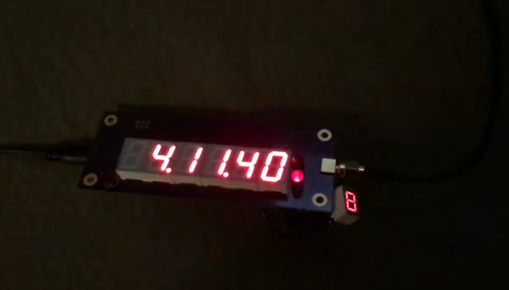
Nick has hacked together a tenth digit for the clock:

screenshot-from-2016-12-16-13-15-11

Here is a video of the GPS clock in slow motion:


GPS Clock by Nick Sayer

ESPTool: WiFi Security Swiss Army Knife

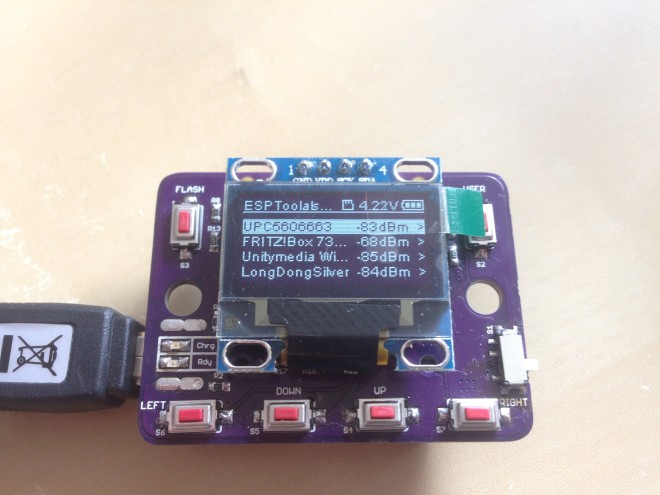
Daniel Grießhaber created this convenient tool to test your WiFi Security against attackers:

1961381469611359811

ESPTool

Demonstrate how easy it is to crack a WiFi Password or jam your WiFi so you can’t access the internet.  Designed for education and self-tests.

ESPTool has the following hardware:

  • SSD1306 based OLED Display, connected via I2C
  • microSD Card Socket connected over the SPI interface
  • 3 general purpose buttons
  • ESP8266-12E Module
  • TPS63031 Buck-/Boost-Converter with an input range from 1.8V – 5.5V
  • MCP73831 Single-Cell LiPo Charger Chip
  • CP2012 USB to UART converter Chip

7768641469614494016

The design files and source code are available on GitHub:

images11dangrie158/ESPTool

ESPTool: WiFi Security Swiss Army Knife

K3 Latching Solenoid Driver

2606331480470590110
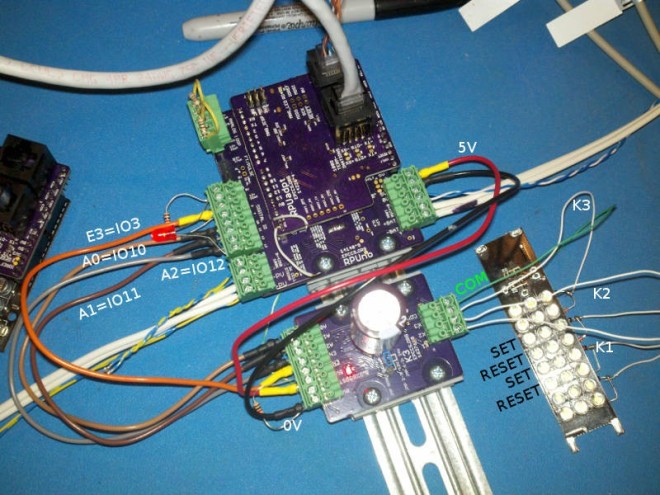
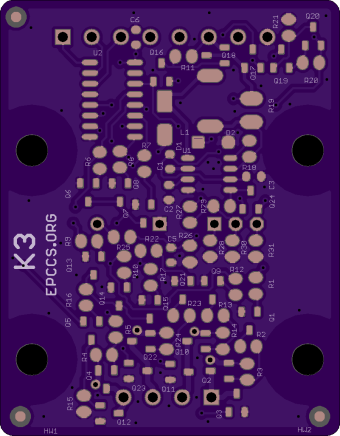
ronald.sutherland created this driver board for a latching solenoid or relay coil:

K3: Latching Solenoid or Relay driver

three half bridge and a common half bridge that can be used to discharge a (9V/12V/24V) capacitively stored charge into a latching Solenoid or Relay coil


The design files are available on GitHub:

images11 epccs/Driver/K3


epccs has shared the board on OSH Park:

16276^0

19b6abaa7f1d8909ae4bfeabd0d8ffee
Order from OSH Park

K3 Latching Solenoid Driver

DIYing A Raspberry Pi Power Bank

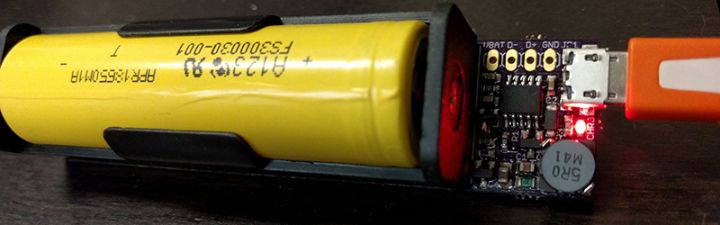
Over the last decade or so, battery technology has improved massively. While those lithium cells have enabled thin, powerful smartphones and quadcopters, [patrick] thought it would be a good idea to do something a little simpler. He built a USB power bank with an 18650 cell. While it would be easier to simply buy a USB…

via DIYing A Raspberry Pi Power Bank — Hackaday

DIYing A Raspberry Pi Power Bank

DIY Scanning tunneling microscope

MatthiasR is building a scanning tunneling microscope:

DIY Scanning tunneling microscope

3633781463935578715.jpg
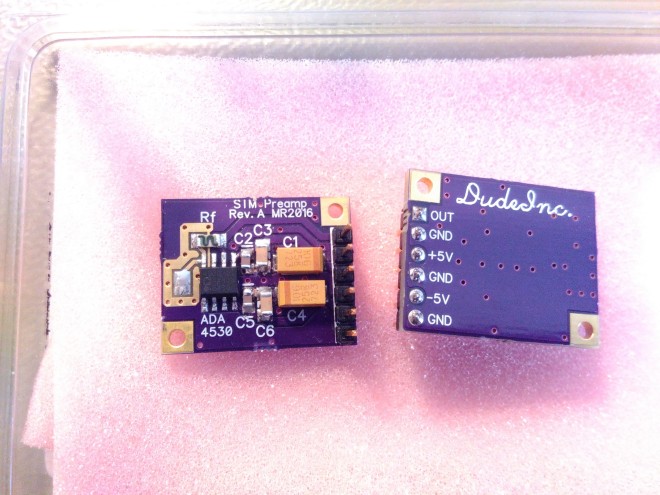
At the end of last year i started collecting information about needed system components like the vibration isolation, the tunneling current amplifier, the z-height controller, the coarse approach mechanism and so on

Here’s a video of his DIY vibration isolation system:

DIY Scanning tunneling microscope

Vinduino: Save 25% Of Water Needed For Irrigation


wrote on the Tindie blog:


vinduino-676x507.jpg

Vinduino – Save 25% Of Water Needed For Irrigation

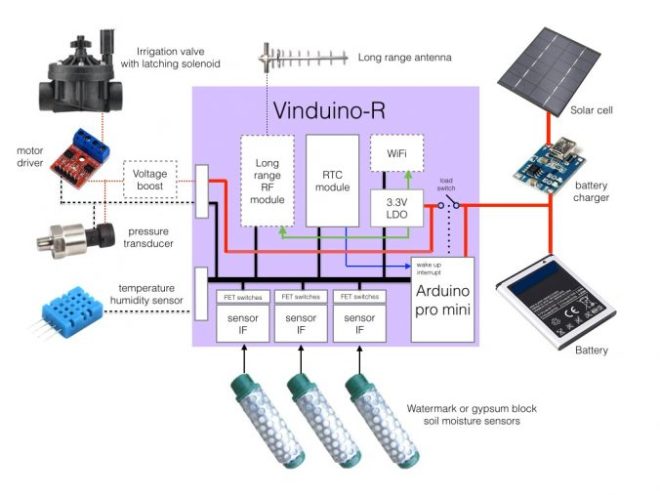
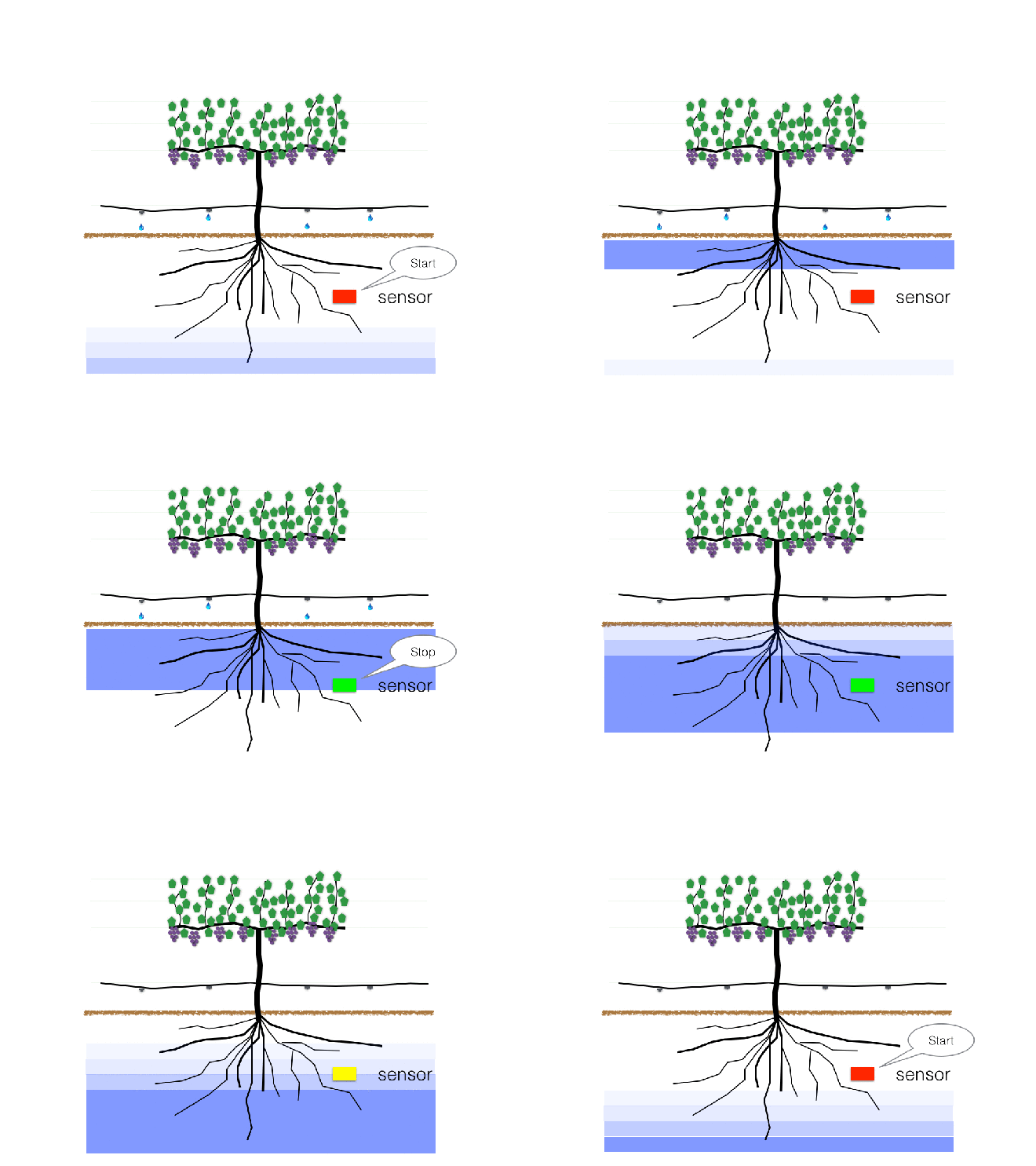
Vinduino is one of those projects that set out to solve a really big problem which straight away makes it interesting. Reinier van der Lee wanted to use the least amount of water possible for irrigation in his southern California vineyard.

irrigigation.gif

Hence the Vinduino project was made to be a relatively low cost system to help save on water use. It is also solar powered, further reducing its impact on the environment.

Vinduino: Save 25% Of Water Needed For Irrigation