Tindie Seller Projects in The Robotics Module Challenge

From  on Tindie blog:

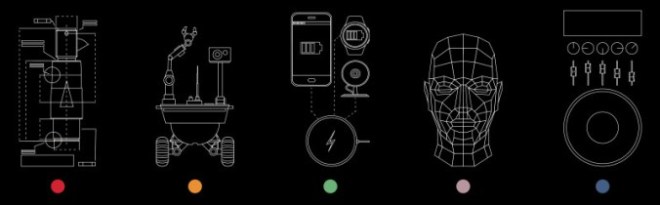
2018-hackaday-prize-challenges-from-poster1.jpgTindie Sellers Competing in the Hackaday Prize

The Robotics Module Challenge just wrapped up and last week we featured two of the twenty finalists who are also Tindie Sellers. Today let’s look at several other Tindie Sellers who got in the game with their own robotics module designs!

Tindie seller Citrus CNC Store is working on a low-cost automatic pick and place feeder and entered it into the robotics challenge. The pick and place machine is a valuable resource for building electronics.

The end goal here is to create a fully featured pick and place machine at a mid-range hobby 3D printer price point, with support for at least 20 automatic tape feeders and loop control of every motion related component. Check out this project on Hackaday.io.

Another Tindie seller who owns the proto-Phi Store is working on a modular design for a soft robotic gripper.

The design is for soft robotics fabrication and emphasizes the molds and subsequent actuators. The current method combines the softness of a silicone actuator and a 3D plastic exoskeleton.

Check out the project page for more details!

Supporting Our Tindie Sellers

These aren’t the only Tindie sellers participating in this year’s Hackaday Prize. Take a look at these other robotics projects from our talented makers:

Stay tuned for more updates on the finalists, and future modules in this year’s Hackaday Prize!
Tindie Seller Projects in The Robotics Module Challenge

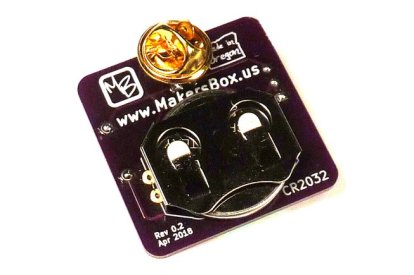
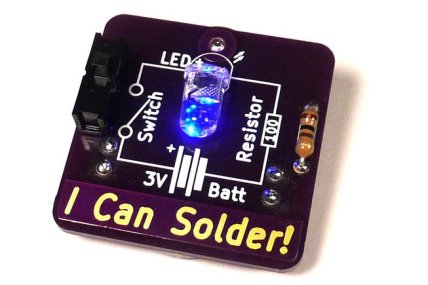
I Can Solder Badge

From MakersBox on Tindie:

2018-07-11T05_07_07.063Z-P1080585 (1)

I Can Solder Badge

Learn to solder, and learn a little bit about electronics as well

2018-07-11T05_22_45.042Z-P1080587

Soldering can seem a bit daunting,

but it is easier than it looks and it is a skill that opens a world of DIY projects to you. This project is the perfect way to not only learn how to solder, but to show off your new found skill to your friends and family.

Unlike other simple soldering project, this one will also teach you about circuits, and how they work. And it has a switch to save the battery. More power to you!

2018-07-11T05_23_35.053Z-P1080559

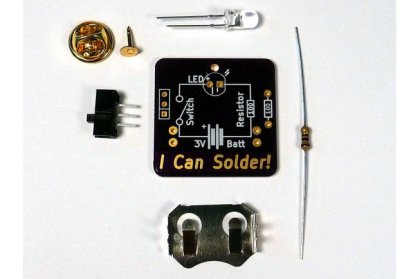
What you get:

  • A perfect purple PCB made in the USA by OSH Park.
  • An RGB LED that will open the all the mysteries of color mixing to you.
  • A resistor, which in addition to being the easiest component to learn how to solder, will also save your battery life.
  • A switch, which far more than the resistor, will save your battery and allow you to sleep at night not wondering how long that color changing LED will continue to light up the room.
  • A battery holder for the CR2032, the best and most cost effective lithium coin cell on the planet*.
I Can Solder Badge

Open Source Turtle Robot Kit Teaches Beginners & Creates Beautiful Art

 writes on the Tindie blog about this robotics kit from The Maker’s Box:

 turtle-robot

Open Source Turtle Robot Kit Teaches Beginners & Creates Beautiful Art

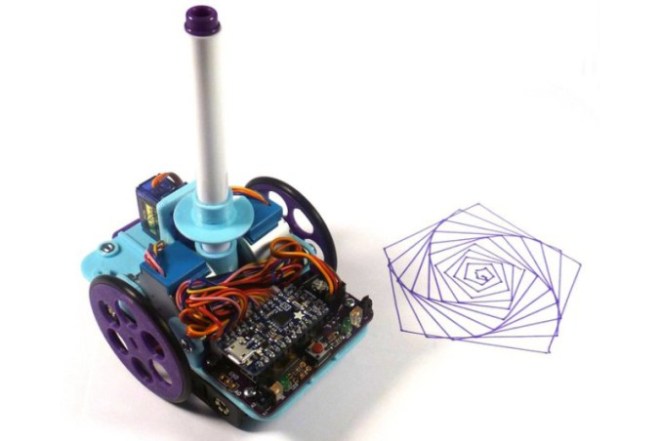
The Open Source Turtle Robot (OSTR) was created as the basis for a two-day workshop where high school students could gain hands-on experience with engineering concepts. The finished robot even creates interesting pieces of art via pen plotting with Turtle graphics.

turtle-robot-parts

The project is Arduino compatible for ease of programming and powered by 4 AA batteries to make it cost effective. Stepper motors were chosen for accurate motion, and the parts were 3D printed for easy customization.

Open Source Turtle Robot Kit Teaches Beginners & Creates Beautiful Art

Tindie seller: Renier van der Lee & Vinduino

From  on the Tindie blog:

Seller Feature: Renier van der Lee & Vinduino LLC

Renier van der Lee is the father of three kids, a technology enthusiast, and a self-proclaimed “gentleman farmer,” which sounds incredibly official on its own. He is also a Tindie seller who created the award-winning Vinduino sensor, which has seen massive growth and sales both on Tindie and beyond since its inception.

Join us as we explore the history and proliferation of this unique and endlessly useful device that has a huge impact on water conservation and savings for growers.

renier-van-der-lee (1).png

What is Vinduino, and How Does it Work?

Vinduino is a water-saving irrigation project for vineyards, but it has applications for all types of growers who live in drought-ridden countries. Vinduino utilizes a gypsum soil moisture sensor to accurately measure the moisture present around the roots of a plant.

It was originally designed for use in vineyards, where it can be connected to several long-range RF LoRA modules and charged by solar power. All of this is connected to the irrigation system. When the sensor detects a drop in moisture, the sprinklers turn on, and not a moment before.

vinduino

The concept won the Best Product award during the 2015 Hackaday Prize, which aims to find projects that have potential as a product people would want. Vinduino was also selected for residency in the SupplyFrame Design lab.

Renier first tested his VInduino installation on his own vineyard. Prior to the creation of Vinduino, he was spending over $4,300 each year on a vineyard management company to ensure his vines were watered.

Once he switched over to Vinduino, he didn’t need their assistance anymore. Over the course of a single year, he managed to save 430,000 gallons of water, which equates to $1,925 in cost savings. The entire installation costs $635. It offers a great return on the investment almost immediately and represents a viable solution for the ongoing water shortages in California and across the world.

Tindie seller: Renier van der Lee & Vinduino

New Laser Time of Flight Breakout Board

From  on the Tindie blog:

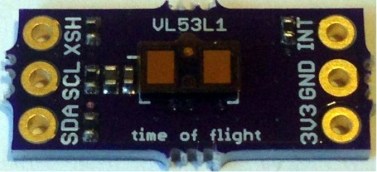
vl53l1-breakout-board-676x309-wb

New Laser Time of Flight Breakout Board Brings Out The Best in VL53L1 Long-Range Sensors

Watching your robotic creation take flight is an incredible feeling, but watching it collide with something or crash can make your stomach turn. One common sensor you may reach for in a case like this is the VL53L0. But it only provides ranging to a distance of 2 meters. For many of us, this is just shy of a range we would be comfortable with.

vl53l1-sensor-wb

Thankfully, a new sensor has appeared which doubles the range. The VL53L1 extends the accurate distance detection to 4 meters. It also uses a patented ranging technology that harnesses time-of-flight from a 940 nm laser.

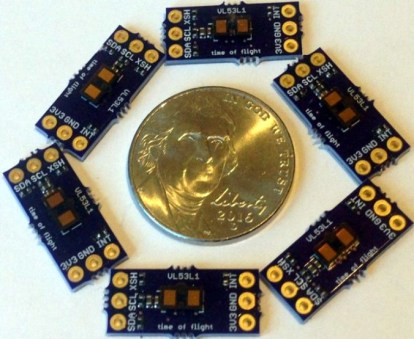
This results in estimation independent of surface reflectivity and high accuracy in a variety of weather and environmental conditions. This breakout board sold by Pesky Products is designed to bring out all the best capabilities of the VL53L1 from ST Microelectronics.


New Laser Time of Flight Breakout Board

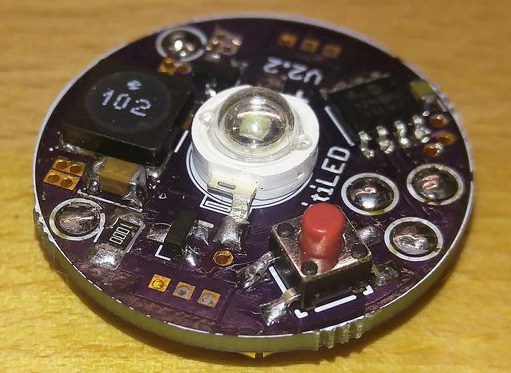
TritiLED Flashes for 20 Years on a Single Coin Cell

From  on Tindie blog:

tritiled

TritiLED Flashes for 20 Years on a Single Coin Cell

Ted Yapo had a small problem. As an amateur atronomer and astrophotographer, he needed a way to mark his expensive equipment so that he wouldn’t trip over it in the dark. Glow-in-the-dark materials were out because of they only glow for a short time, and glow sticks were also less than ideal because of their single-use nature. Tritium light sources would be perfect, barring the small details that they’re radioactive, expensive, and in the US only a few uses are allowed, most are prohibited by law.

tritiled1

So Yapo instead came up with an LED light that can run for not 20 hours, or even 20 days, but 20 yearson a single CR2032 coin cell battery!

TritiLED Flashes for 20 Years on a Single Coin Cell

OKAY 2 Monophonic Synth Kit

 writes on the Tindie blog:

okay2-Medium

OKAY 2 Monophonic Synth Kit

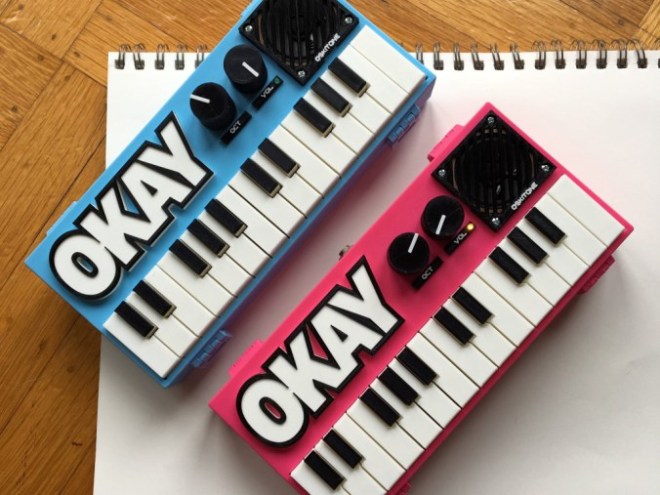
Take a look at Tindie’s thriving sound section and you’ll see there is no shortage of people making their own electronic music. These devices take many forms, and one interesting take on sound creation is the OKAY 2 Synth DIY Kit. At face value it features 2 octaves of keys, a built-in amplifier along with a 1/4″ line out, and knobs to select the octaves that you’d like to play — but it gets more interesting under the hood.

Oskitone OKAY 2 from oskitone on Vimeo.

What makes it unique by today’s standards is that it doesn’t use any sort of computer or microcontroller, but instead produces sound using an LM555 timer along with other discreet components for monophonic sound. Given its small size, you could use two at once, perhaps combining them via the line out to be further modified in your synth setup!

In case you’re wondering, the original—or nearly so as it’s version 1.1.1—OKAY is also available. It works largely the same as the OKAY 2, but features only a single octave of keys, and doesn’t have an audio output jack.

OKAY 2 Monophonic Synth Kit