ADSR Envelope Generator Module


https://youtube.com/watch?v=LQK_8QNw8T4%3Fversion%3D3

What’s an ADSR envelope generator? If you are a big music hacker, you probably know. If you are like the rest of us, you might need to read [Mich’s] post to find out that it is an attack-decay-sustain-release (ADSR) envelope generator. Still confused? It is a circuit used in music synthesis. You can see a…

via The Sound of (Synthesized) Music — Hackaday

ADSR Envelope Generator Module

Best Product Entry: Emulating Memory

For this year’s Hackaday Prize, we’re giving everyone the opportunity to be a hardware startup. This is the Best Product portion of the Hackaday Prize, a contest that will award $30,000 and a residency in our Design Lab to the best hardware project that is also a product. Imagine all the memory chips in all…

via Best Product Entry: Emulating Memory — Hackaday

Best Product Entry: Emulating Memory

Open Narrowband RF Transceiver

We have so many options when we wish to add wireless control to our devices, as technology has delivered a stream of inexpensive devices and breakout boards for our experimentation. A few dollars will secure you all your wireless needs, it seems almost whatever your chosen frequency or protocol. There is a problem with this…

via Hackaday Prize Entry: Open Narrowband RF Transceiver — Hackaday

Open Narrowband RF Transceiver

Want to try flex?

UPDATE 2018-01-03:

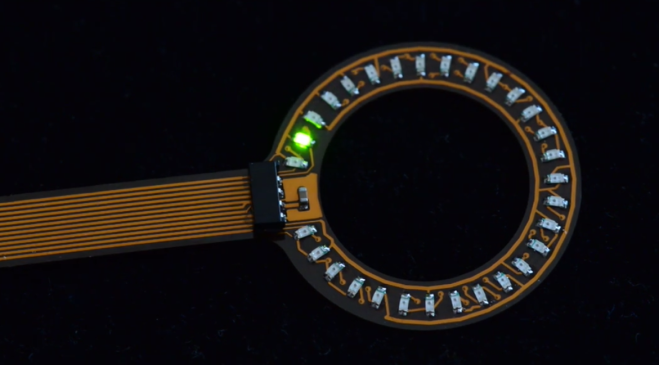
We are still testing our flex process. We just sent our second round off to fab this week.

The previous round was delivered to folks starting Hackaday Supercon weekend back in November 2017. Here some more information:

Flex Beta Service Info + FAQ

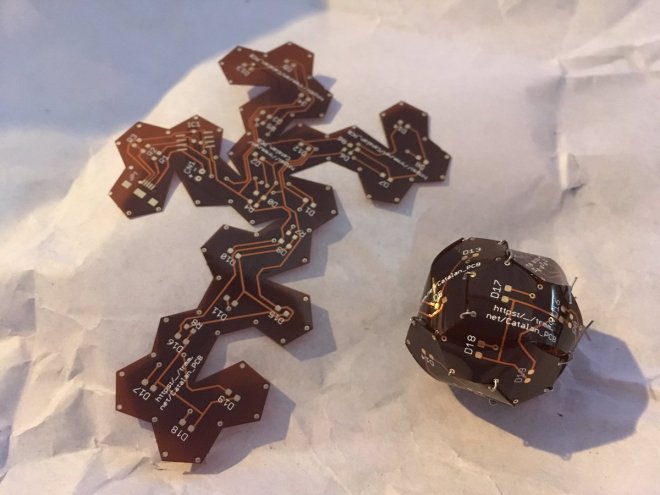
We were pleased to see Trammell Hudson’s creative Catalan design:

DOZLsL_U8AA9bc9

Screenshot from 2018-01-05 10-06-52

For more information, please email: [email protected]


We’re looking for a variety of flex designs to test.  The specs will be the same as our normal 2 layer service but on Kapton:

  • 6 mil minimum trace width
  • 6 mil minimum trace spacing
  • 10 mil minimum drill
  • 5 mil annular ring

Please send us an email with “flex” in the subject: [email protected]

Want to try flex?

1Bitsy 1UP handheld game console

We’re excited about this new project from Piotr Esden-Tempski of 1BitSquared on Hackaday.io:
1641161499897782709.jpg

1Bitsy 1UP

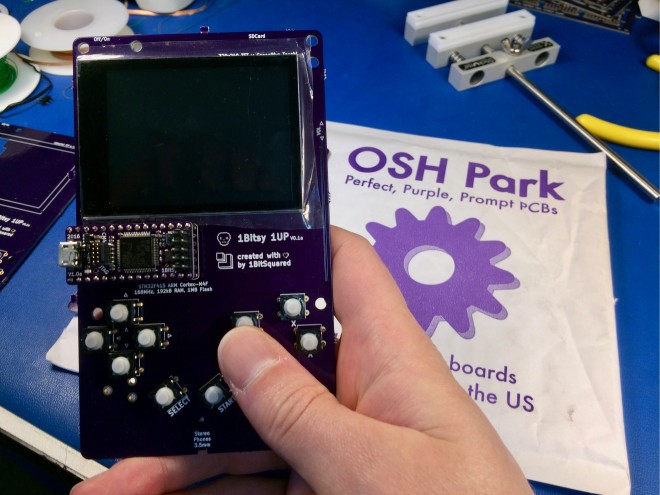
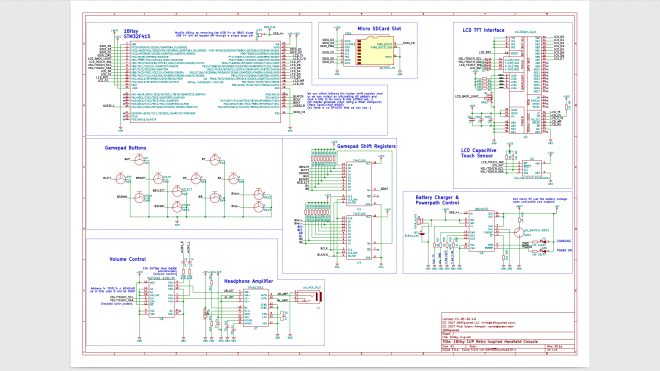
1Bitsy 1UP is a retro inspired handheld game console, the design is based on the 1Bitsy STM32F415RGT6 ARM Cortex-M4F 168MHz 192kb RAM and 1MB Flash micro controller. 2.8″ TFT with capacitive touch, SDCard Reader and a few other components.

https://www.youtube.com/watch?v=pUUsK-pLtG4

The display used is a TFT LCD with I2C CapTouch and ILI9341 driver. (should be compatible with the display sold by Adafruit on their breakouts as well as the buydisplay.com 2.8″ tft with CapTouch sensor)

Screenshot from 2017-07-13 21-08-58.png

The most basic design consists of:

  • 1Bitsy STM32F415RGT6 (168MHz, 192kb RAM, 1MB Flash)
  • 240×320 2.8″ TFT with capacitive touch and PWM backlight control
  • D-Pad, ABXY, Start, Select buttons
  • DAC audio out to headphones. (speakers optional)
  • SDCard connected over SDIO interface

The hardware design files and firmware source code are available on GitHub:

github1bitsy/1bitsy-1up

1Bitsy 1UP handheld game console

Pi0CKET-tiny

From moosepr on Hackaday.io:

1337181493368419073.JPG

Pi0CKET-tiny

Possibly the worlds smallest Pi based gaming device!


Our 0.8mm thickness 2 layer service was used to make it as slim as possible:


The designs for a 3-D printed case are shared on the Hackaday.io project page:


Pi0CKET-tiny

Dooba.io open source MP3 player

MP3 player design from Dooba.io:

Shiva: MP3 player for the masses

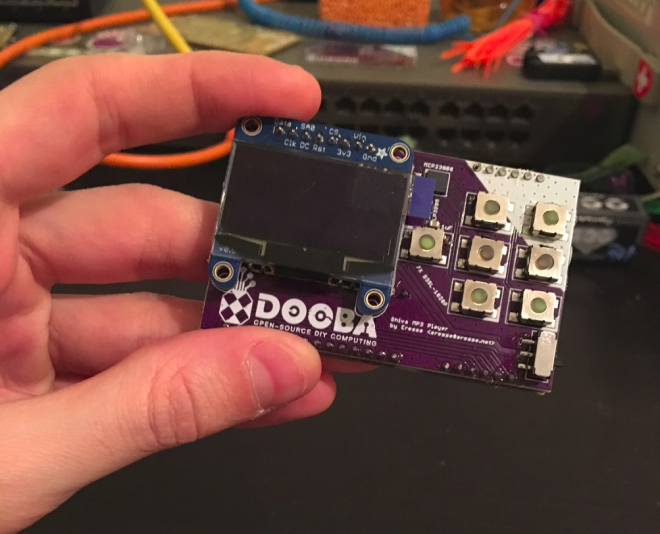
Based on the ioNode, Aecho and Nomad modules, the Shiva allows browsing & playing MP3 files stored on any FAT-formatted MicroSD card with audio quality up to 128Kbps.
Screenshot from 2017-07-11 11-27-48.png

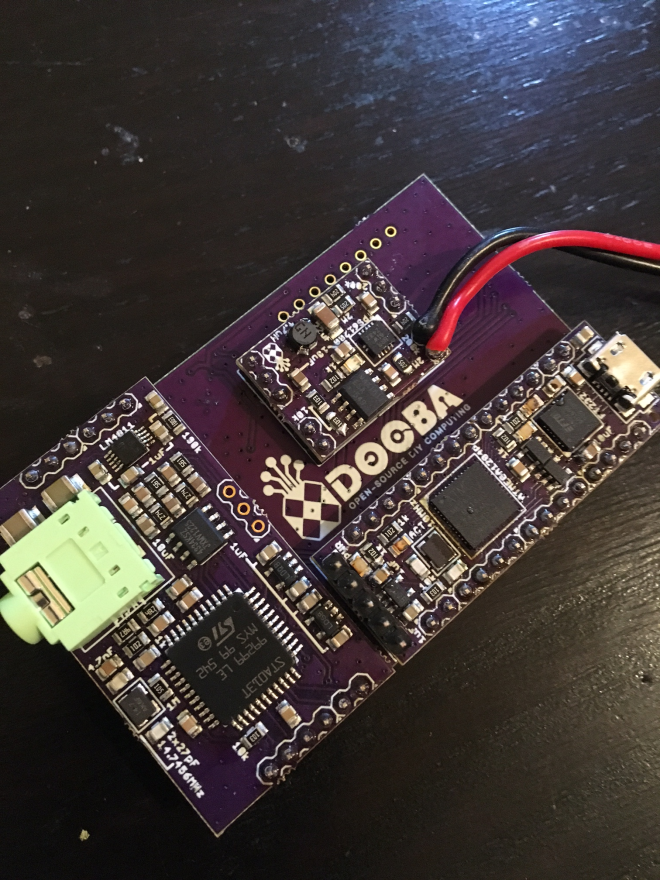
The actual Shiva board itself is quite simple, featuring an MCP23008 from Microchip for reading the 7 buttons, a DM3D-SF MicroSD card socket from Hirose and a 128×64 OLED display from Adafruit.
IMG_0327

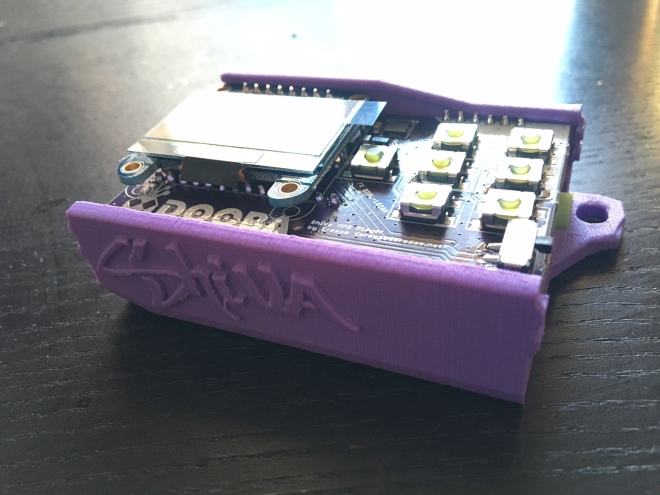
To keep everything neatly together I needed an enclosure. Being lucky enough to own a half-decent 3D printer I decided to keep things minimal but functional. Who needs glue and screws when you can go for a press-fit case?
IMG_0346The code for the Shiva MP3 player is available in the Dooba Firmware SDK under /src/shiva.  Schematic and board are available in the Dooba Hardware collection.

Dooba.io open source MP3 player

Hackaday Superconference tickets on sale

https://youtube.com/watch?v=vuO-XK470mE%3Fversion%3D3

We’re thrilled to announce Supercon tickets are now available. The 2017 Hackaday Superconference is November 11th and 12th in Pasadena, California. This is the ultimate hardware conference. Hackers, designers, and engineers from all over the world converge — from the greenest beginners to those who have made history with their designs. This is the Hackaday community,…

via Hackaday Superconference: Tickets and Proposals — Hackaday

Hackaday Superconference tickets on sale

ATXMega32E5 adapted for a breadboard

2017-07-04T23:35:25.015Z-IMG_8570.jpg.855x570_q85_pad_rcrop.jpg

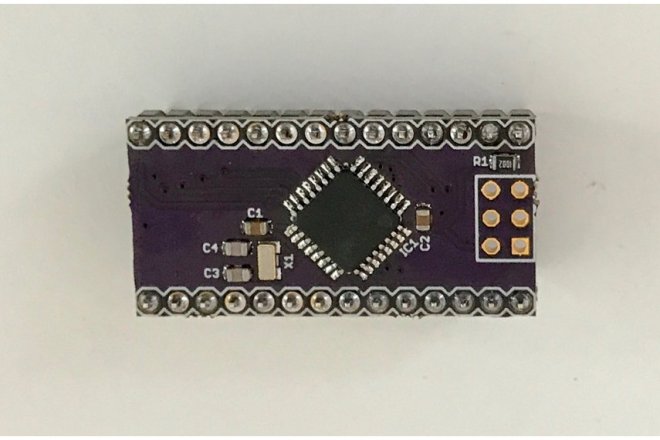
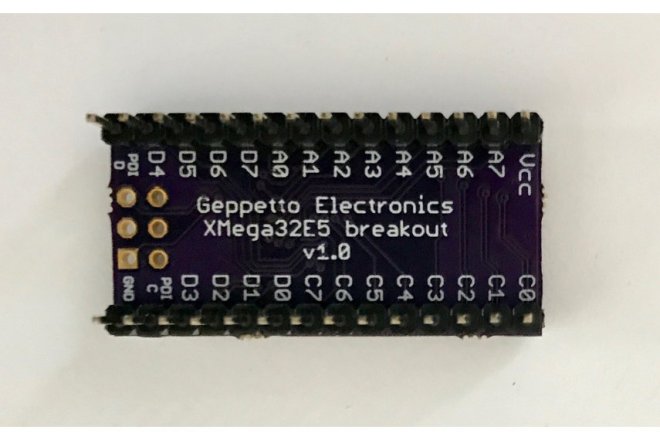
ATXMega32E5 breakout board

The ATXMega32E5 is the next step up for those experienced with the AVR series of microcontrollers from Microchip (formerly Atmel). They use the same compilers and libraries as the rest of the AVR 8- and 16-bit families, but they can run at 32 MHz and have an amazingly powerful set of internal peripherals that can take your projects to the next level and beyond.

2017-07-04T23:35:25.015Z-IMG_8571.jpg.855x570_q85_pad_rcrop.jpg

For prototyping, however, the disadvantage is that the XMega chips are not available as through-hole parts. That’s where this breakout board comes into play.

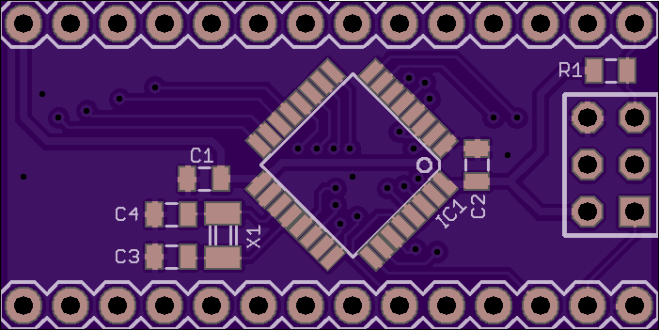
nsayer has shared the board on OSH Park:

ATXMega_E5 breakout v1.0

9ccb24bd9f9b447019c3a97cfa9dd06b.png
Order from OSH Park

ATXMega32E5 adapted for a breadboard

DIY 6-Axis Micro Manipulator

[David Brown]’s entry for The Hackaday Prize is a design for a tool that normally exists only as an expensive piece of industrial equipment; out of the reach of normal experimenters, in other words. That tool is a 6-axis micro manipulator and is essentially a small robotic actuator that is capable of very small, very precise movements.…

via Hackaday Prize Entry: DIY 6-Axis Micro Manipulator — Hackaday

DIY 6-Axis Micro Manipulator