I’ve been soldering for a long time, and I take pride in my abilities. I won’t say that I’m the best solder-slinger around, but I’m pretty good at this essential shop skill — at least for through-hole and “traditional” soldering; I haven’t had much practice at SMD stuff yet. I’m confident that I could make a…
Uncategorized
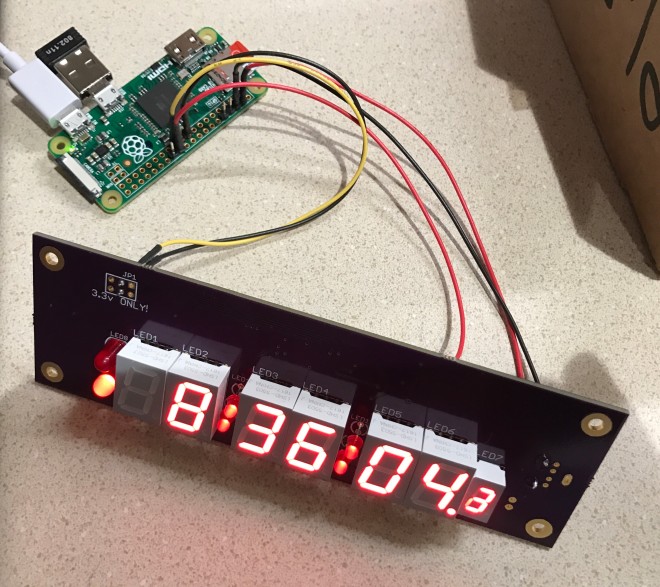
Raspberry Pi Zero W desk clock
Nick Sayer created a LED desk clock driven by NTP on a Raspberry Pi Zero W:
Raspberry Pi Zero W desk clock
When I was in college, I bought and built a Heathkit GC-1000 WWV clock. Since then, I’ve been somewhat interested in accurate time measurement. I recently designed a GPS driven clock, but sometimes your local WiFi reception is better than GPS (say, indoors). For those circumstances, a clock that gets time from NTP over WiFi would be preferable. The newly released Raspberry Pi Zero W makes this quite a bit simpler to achieve
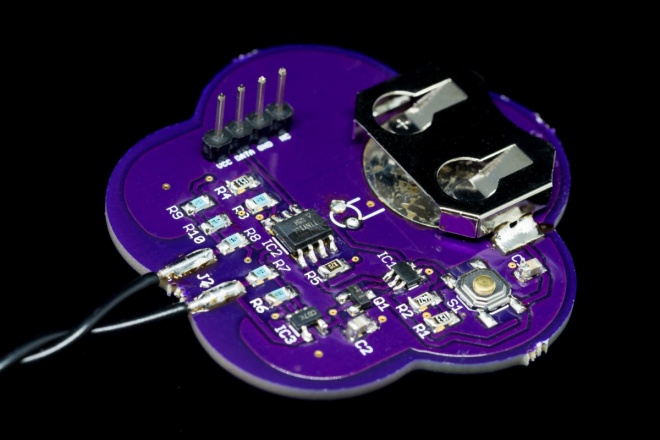
How to Design a Cheap Plant Watering Sensor
This is the third part of the meta-tutorial, where I talk about designing a cheap plant watering sensor. If you did not already read the first and second part, please do it now. These parts contain a lot information which lead to this point of the tutorial. The second part ended with step 14, designing a first prototype PCB.
via How to Design a Cheap Plant Watering Sensor (Part 3) — Lucky Resistor
Versatile ATtiny Programming Adapter
Lucky Resistor designed this programming adapter for ATtiny13 and similar chips:
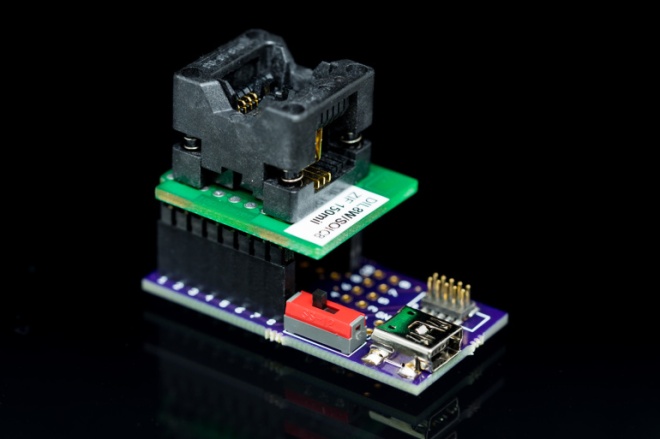
A Versatile ATtiny Programming Adapter
As mentioned in my article about designing a cheap plant watering sensor, I built a small adapter which can be used to pre-program the ATtiny13A. This is necessary, because once soldered on the board, I only have a debugWire interface, which has to be enabled first.
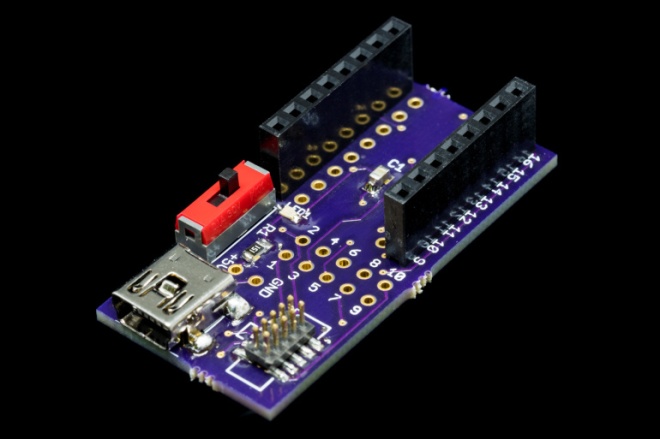
The adapter has a small 50mil JTAG header, where the Atmel ICE can be connected with the board. There is also room for a USB mini jack, which is used to power the MCU while programming. A small on-off switch is used to power the MCU and a LED is placed as indicator to see if the MCU has power.
One of the DIL/ZIF adapters is mounted on top of the female headers. Most of the adapters for SO-8, SO-14 and SO-16 will work with this board.
To make the board more versatile, I added a number of jumpers and solder points. By default, the adapter is connecting to the right pins for the ATtiny13A, but you can cut these routes and solder wires onto the board to implement any kind of connection you like.
The design files are available on GitHub:
LuckyResistor/ATtinyAdapter
LuckyResistor has shared the board on OSH Park:
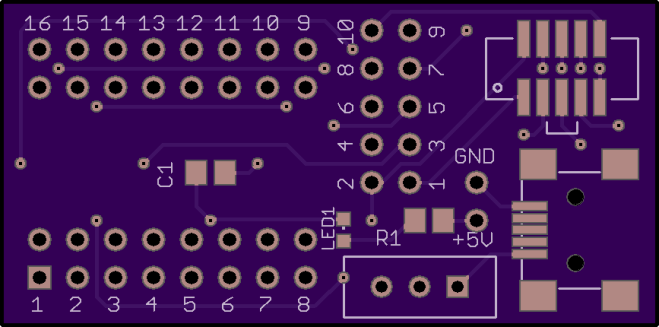
ATtiny Adapter
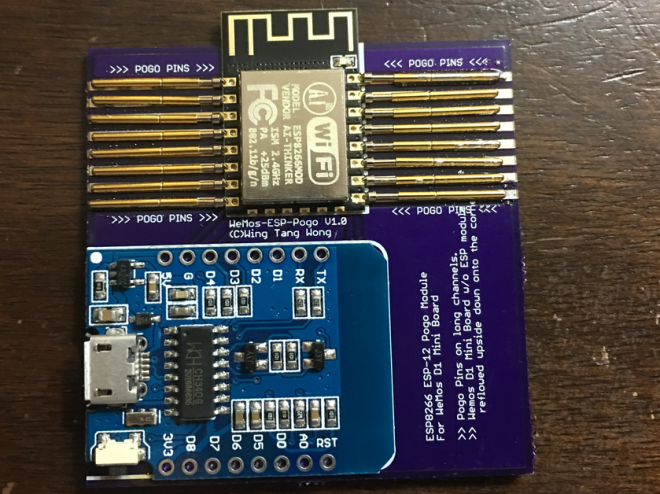
ESP8266 Pogo Jig Programming Board
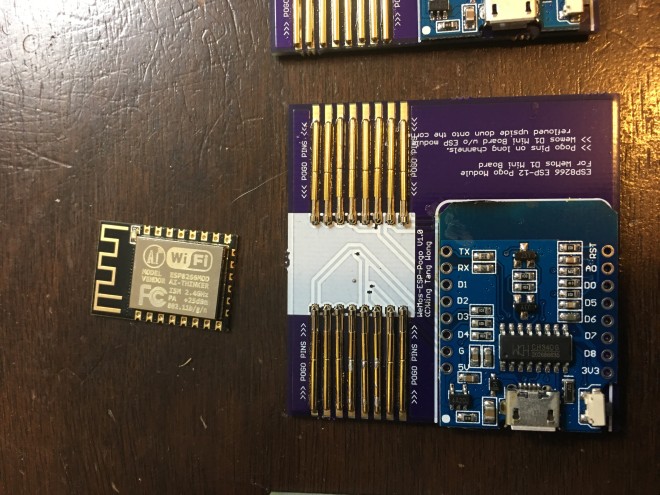
We like the novel orientation of pogo pins that Wing Tang Wong used in this board design:
ESP8266 Pogo Jig Programming Board
Upcycles D1 Mini Wemos board to create a USB connected ESP8266 Pogo pin jig
This is a board designed to take a WeMos D1 Mini board(with the ESP module removed) and use it as a USB interface with built-in reset/flash functionality for bare ESP8266 modules similar to the ESP-12 units.
The design files are available on GitHub:
ESP8266 Programming D1 Mini Pogo Jig V1
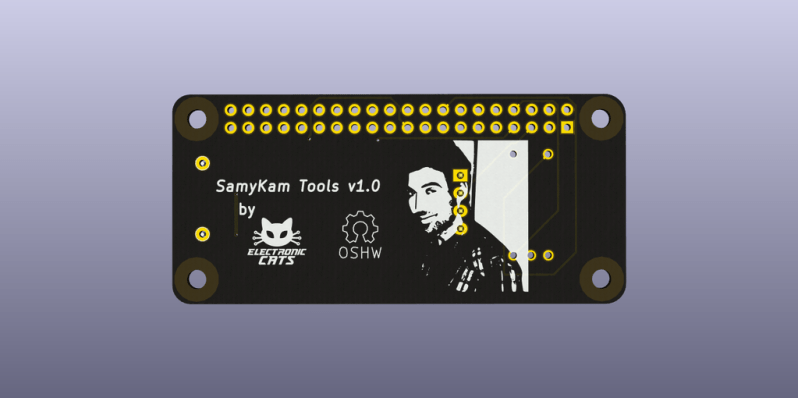
SamyKam by Salvador Mendoza
Electronic Cats made an important commit at SamyKam schematics. The first version of the PCB had an issue with a ground for the rotary encoder. The switch to select things in the menu was not working properly. After the fix, I tested the last version of the SamyKam PCB today from Oshpark, and […]
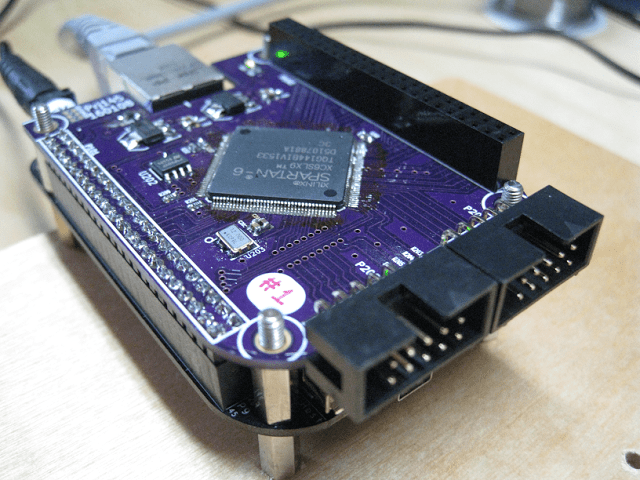
FPGA cape for BeagleBone
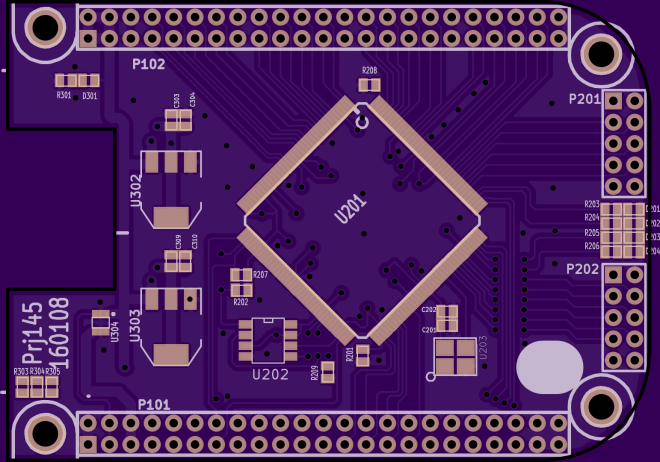
Jim Kleiner created a minimal FPGA cape for the BeagleBone Black: BBB LX9 FPGA Board Jim describes his design decisions: I decided to try a minimalist hand solderable FPGA board. The LX9 is the largest part available in a TQG-144, beyond that its BGAs One of the key points is that the SPI interface is on BBB […]
via FPGA cape for BeagleBone Black — BeagleBoard.org Blog
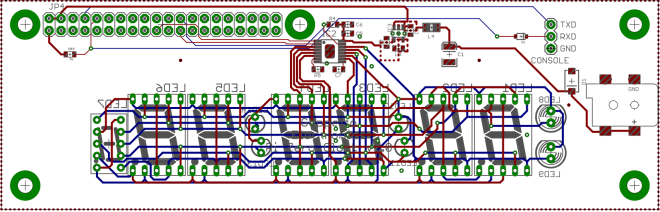
KiCad design files are available on GitHub:
BREC_3/Boards/Fboard
KD2BOA has shared the board on OSH Park:
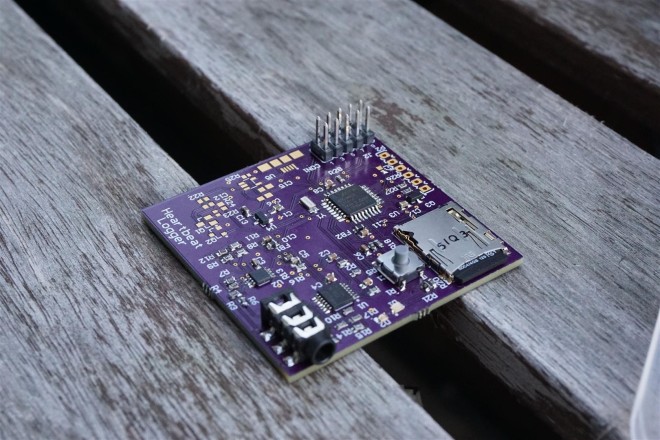
Portable Heartbeat Logger
Ole Andreas Utstumo designed this board to log ECG waveforms:
Heartbeat Logger
A portable device that will log your ECG – the “waveform” of your heart – to your phone via bluetooth or to a memory card
The Heartbeat Logger is a portable device that that logs your ECG throughout the day and throughout the night, 24/7. While this certainly is nothing new, even as an open source project (see MobilECG), Heartbeat is a project that, aside being of personal value for me, is designed to be simple to use and understand, and might serve a purpose somewhere for someone.
The firmware and hardware design is available on GitHub:
Utstumo/Heartbeat-Logger/
Hackaday and Tindie at SCALE 15x
Do you like Open Source? Join Hackaday and Tindie at the largest community-run Open Source conference in North America. We’ll be at the Southern California Linux Expo next week, and we want to see you there. What’s happening at SCALE this year? Amateur radio license exams, a PGP signing party, Bad Voltage Live and The Spazmatics, and…
via Join Hackaday And Tindie At The Southern California Linux Expo — Hackaday
Tindie Chat: All About Certifications
The chat functionality on Hackaday.io is quickly turning into the nexus of all things awesome. This Tuesday, February 28th, everyone’s favorite robotic dog is talking certifications. Everything from FCC to UL to OSH to CE and the other CE is on the table. If you want to build hardware, and especially if you want to…