Smaller version of GameBoy Zero

moosepr designed this small and simple GameBoy-style device using the Raspberry Pi Zero:
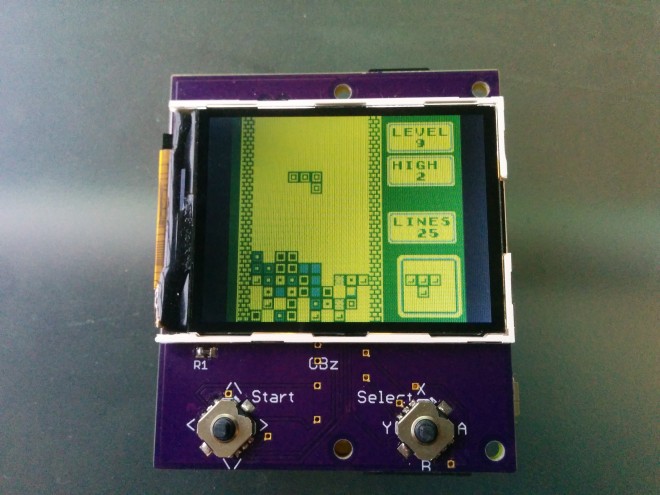
7352071488543051372.jpgGameBoy Zero, but smaller!

I’m not overly fond of ‘rats nest’ wires, and I have a bit of an obsession with making things as small as possible, so this is what I came up with.

Tis just an ILI9341 screen, a Pi Zero, 2 navi switches (5 way), and a battery (with charge/protect circuit)

petay has shared the board on OSH Park:

GBz
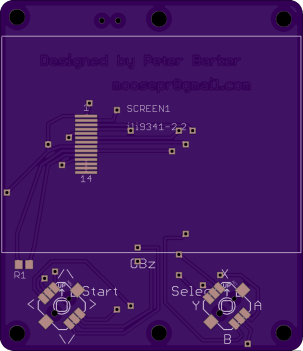
24dc2def413aa50cfa86da86615eedc8.png

Order from OSH Park

Here the board is in action:


Smaller version of GameBoy Zero

Chronio DIY Watch

 writes on Hackaday:

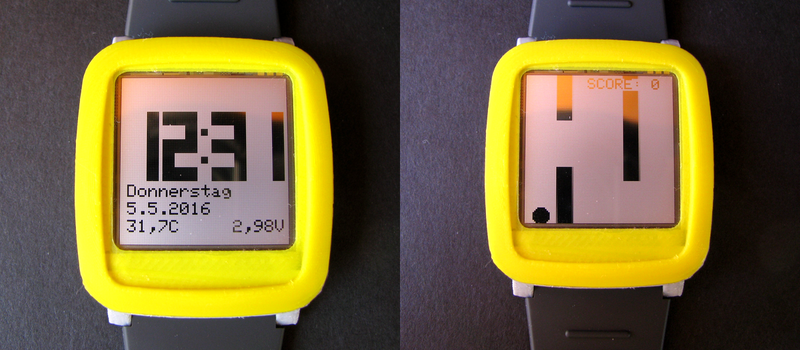
Chronio DIY Watch: Slick and Low Power

[Max K] has been testing the battery life of his self-designed watch under real-world conditions. Six months later, the nominally 3 V, 160 mAh CR2025 cell is reading 2.85 V, so the end is near, but that’s quite a feat for a home-engineered smart watch

Chronio DIY Watch

Ladder board for simple Automation

chmod775 designed this compact, standalone board to be programmed with a simple visual language:270681483106954815.jpg

Focus

Focus born with the purpose of making a prototype board that simplify every aspect of programming.

Spent the last hour writing down the main concept of the Visual Programming Language for the Focus!  It’s just a simple sketch, but I wanted to share it with you the main reason why I’m building it.

Ladder board for simple Automation

Snowbot

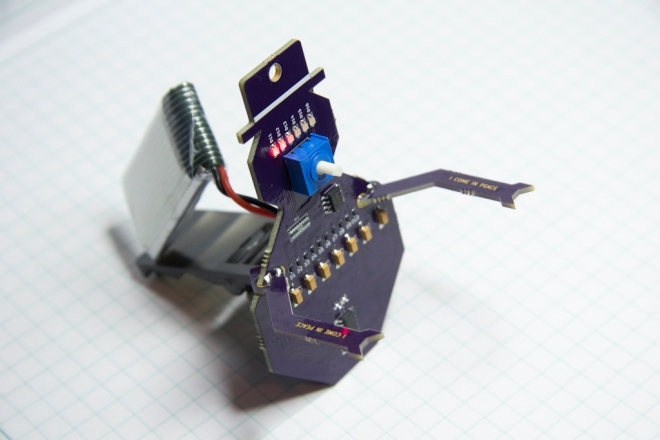
Dan Hienzsch a holiday project to build a little Snowbot with an adjustable speed larson scanner for an eye:

snowbot_v1_prototype-2

Snowbot Ornament Project

When I started thinking of this project, I wanted to make something that included a bit of the basics and something more advanced. It had to be battery powered, and most importantly, I wanted to make sure it went against the grain of everything needing a microcontroller. Thus Snowbot was born.

Photos from the Hackaday.io project:

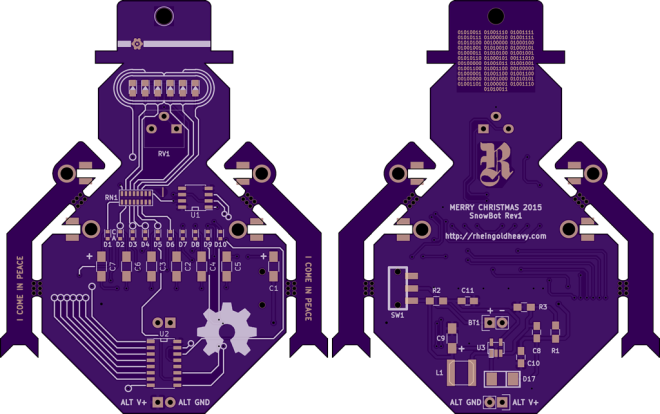
RheingoldHeavy has shared the board on OSH Park:

Snowbot_2015_Rev1

snowbot_revised_silkscreen_preview

Order from OSH Park

Snowbot

LED Matrix Generator for EAGLE

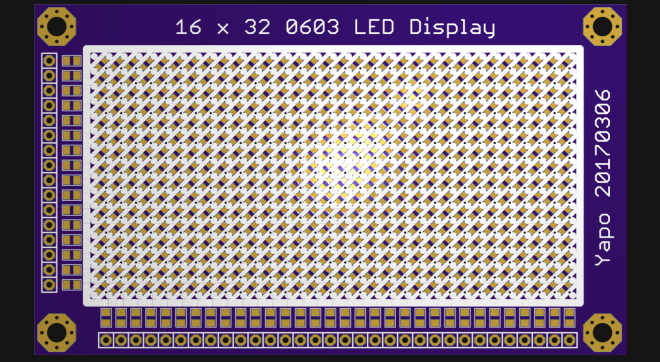
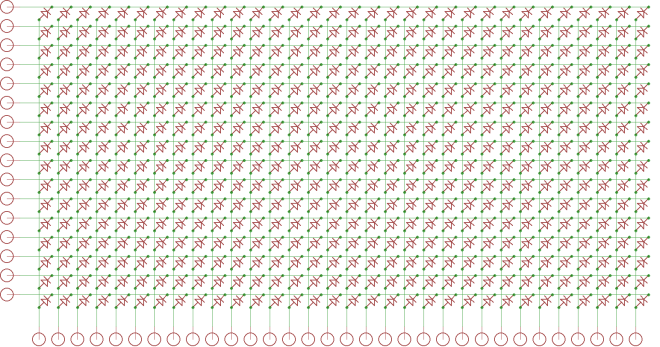
Ted Yapo is designing a display for his  LED Oscilloscope Mk. II and decided to automate the process:

6979361486485114739

16×32 Display Design

I painstakingly drew the schematic for 512 LEDs in this display, then endured the drudgery of laying out the board. The whole process took about 45 seconds. Yes, I wrote a few Eagle User Language Programs (ULPs) (elapsed time after the scripts were written and debugged). The previous time I wrote one was last century to lay out a circular LED clock face. I figured it was about time I regained those skills.

8920781486146501489-1

The EAGLE ULPs are on GitHub:

led-matrix-generator

 Eagle scripts for LED matrix display generation

LED Matrix Generator for EAGLE

Cypress FX2LP High-Speed USB Controller

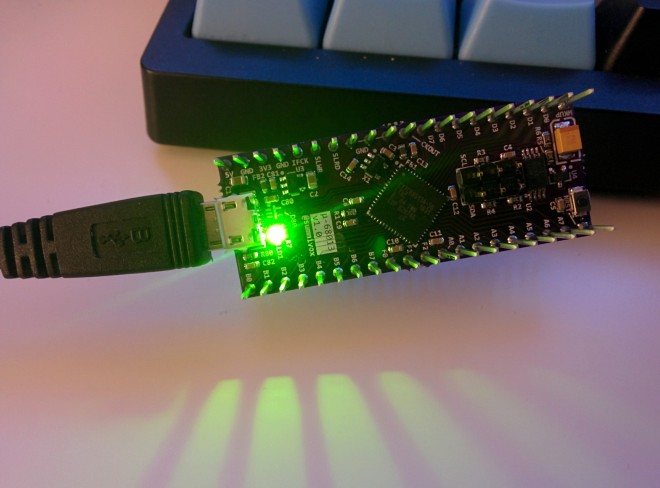
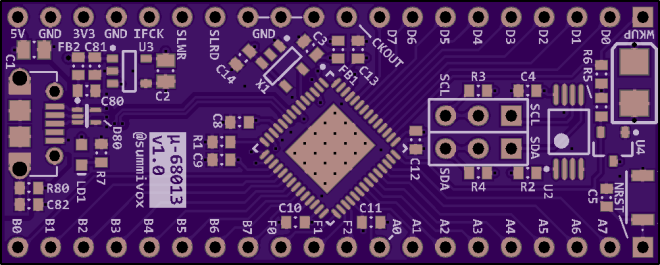
Yin Zhong designed this dev board for Cypress FX2LP™ microcontroller:

750471485341005936-1

μ-68013: a High Speed USB2.0 MCU breakout

Cypress’s FX2LP (CY7C6801x) is one of the smallest footprint MCUs that offer a high-speed USB (480 Mbit/s) device peripheral with built-in PHY (many others lack the PHY!). It contains a 8051 core for bookkeeping and setting up data streams through its hardware multiplexed parallel FIFO interface to/from an external processor, be it MCU, DSP, or FPGA/CPLD.

This is a breadboard-friendly minimal system PCB for CY7C68013 in QFN56 package. It integrates 3.3 V power supply, core clock, reset circuit/button, and I2C EEPROM (the MCU does not have built-in flash). It breaks out all IO pins through 2 rows x 20 pins 0.1″ pitch headers with 0.7″ row spacing.

summivox has shared the board on OSH Park:

20170112-0057 CY7C68013-v1.0.zip

3ff564ec93a66d415384b740fe7db92f.png Order from OSH Park

Cypress FX2LP High-Speed USB Controller

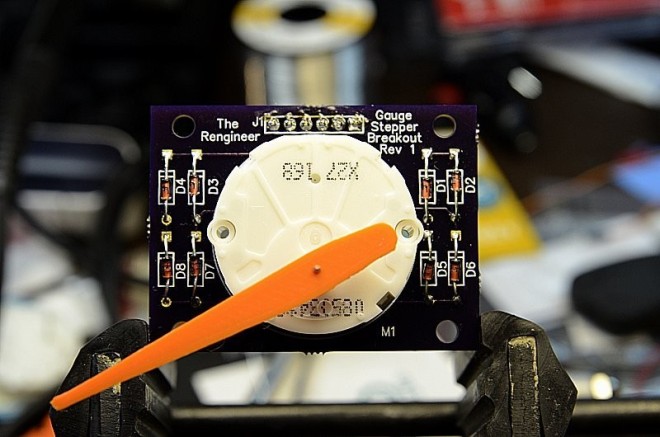
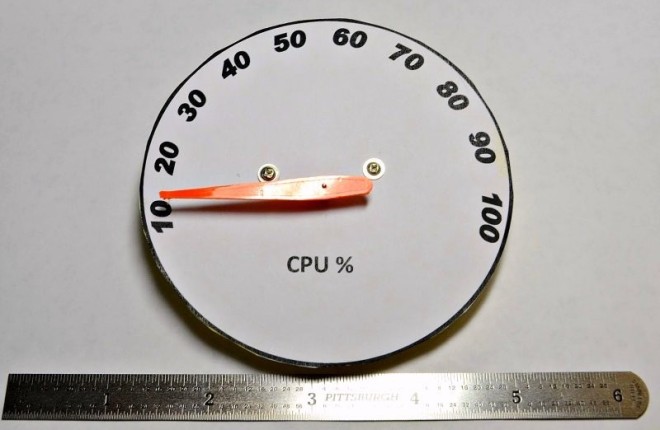
Analog CPU Gauge

Adam Fabio created this analog gauge to show your computer’s CPU utilization:

Analog CPU Gauge

The goal of this project was to build an analog gauge to display computer CPU utilization. I’ve always been fond of classic analog gauges. Most CPU Gauges are either digital on screen displays, or implemented with an LCD mounted in a drive bay

3404761390189001179

The goal of this project was to build an analog gauge to display computer CPU utilization. I’ve always been fond of classic analog gauges. Most CPU Gauges are either digital on screen displays, or implemented with an LCD mounted in a drive bay.

3060511390157116809

I’d always wanted a CPU gauge for my computer. Ok, and a bandwidth gauge for my router. You name it, I want a nice analog gauge for it. It always seemed a bit silly to use an true galvanometer based analog gauge for signals that are inherently digital.

8130331390188227204

The board is available on Tindie:

tindie-logo2x

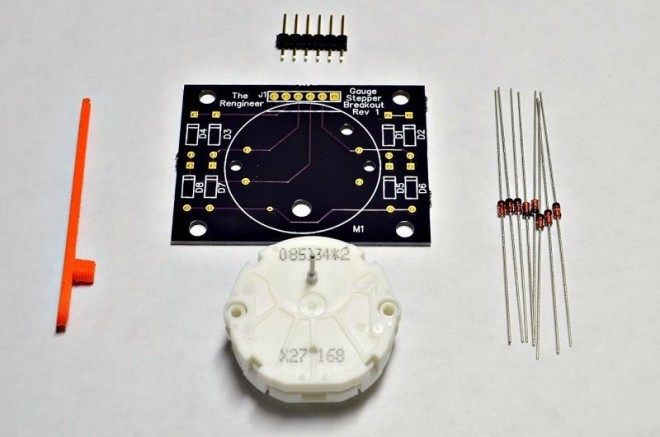
Analog Gauge Stepper Breakout Board

Tiny stepper motors for analog gauges and the like!

Analog CPU Gauge

Tiny SCSI Emulator

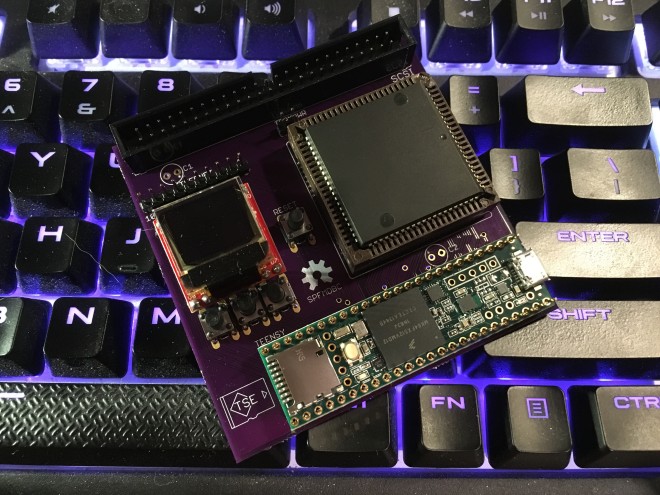
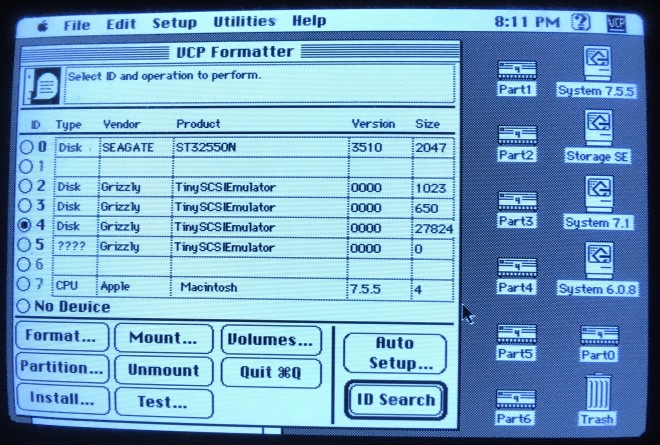
David Kuder designed a SCSI device emulator with a Teensy 3.5 & NCR 5380:

6746351484005160724-1

Tiny SCSI Emulator

SCSI target emulator based on the Teensy 3.5 (Kinetis MK64FX MCU) and classic NCR 5380 SCSI PHY. Supports multiple targets (Device IDs), LUNs, and device types. 3.2″ x 1.6″ footprint, optionally uses or provides bus termination power. 64×48 pixel OLED status display.

4576591481760757876

The design files and source code are available on BitBucket:

screenshot-at-2017-01-09-20-07-15 tinyscsiemulator

Tiny SCSI Emulator

Friday Hack Chat: KiCad with Wayne Stambaugh

KiCad is the premiere open source electronics design automation suite. It’s used by professionals and amateurs alike to design circuits and layout out printed circuit boards. In recent years we’ve seen some incredible features added to KiCad like an improved 3D viewer and push-and-shove routing. This Friday at 10 am PST, join in a Hack…

via Friday Hack Chat: KiCad EDA Suite with Wayne Stambaugh — Hackaday

Friday Hack Chat: KiCad with Wayne Stambaugh