Brake Lamp Flasher for Motorcycle

Bryan Cockfield of Hackaday writes:

Brake Light Blinker Does It with Three Fives

Sometimes you use a Raspberry Pi when you really could have gotten by with an Arudino. Sometimes you use an Arduino when maybe an ATtiny45 would have been better. And sometimes, like [Bill]’s motorcycle tail light project, you use exactly the right tool for the job: a 555 timer.
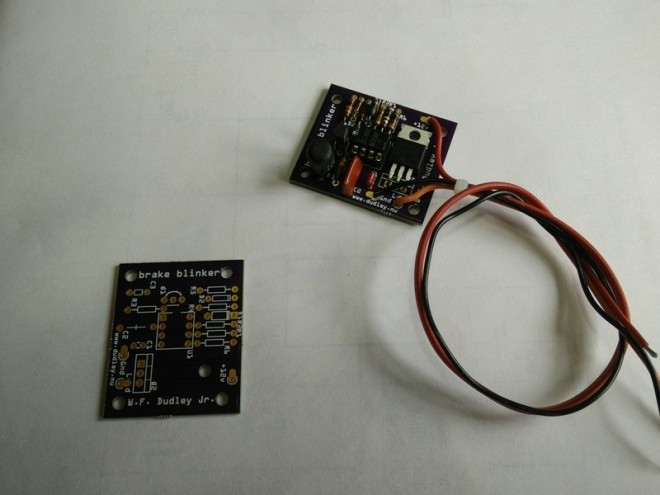
boardsMore details on William F. Dudley’s project page:

Brake Lamp Flasher for Motorcycle

The 555 is a clever chip; not only will it supply the oscillator for the flashing effect, it has a reset pin that can be used to force the output to a known state (low) when (other circuitry tells it that) it’s time to stop flashing. Thus the brake light will be steady “on” after a few flashes every time the brake is applied.
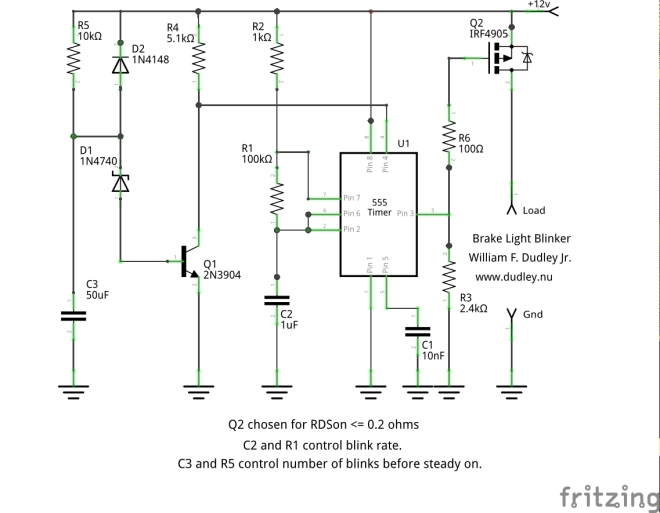
brake_blinker_1_schem

The 555 is happy to run directly off the nominal 12 volt vehicle electrical system, so no voltage regulator is needed. The 555 is almost immune to electrical system noise, so no worries about your Arduino code going off into the weeds if there’s a spike from the electrical system.
 

Brake Lamp Flasher for Motorcycle

OnChip Open-V Arduino Compatibility

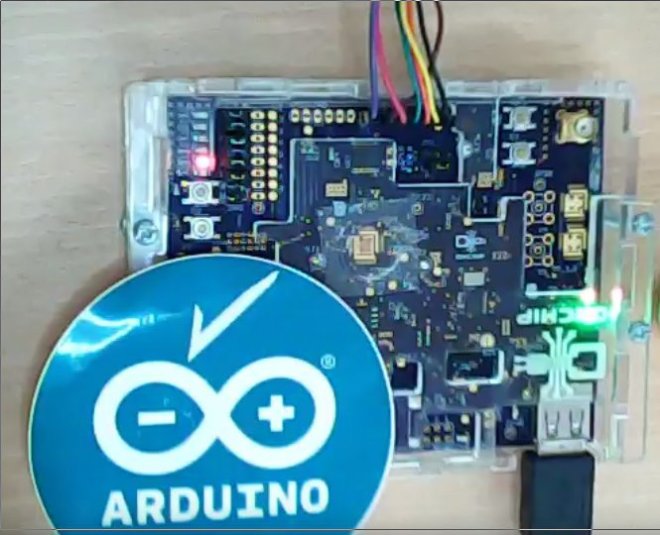
OnChip has posted a Crowd Supply update on their plans for Arduino compatibility:

arduino-open-v_jpg_project-body.jpg

Open-V Arduino Compatibility

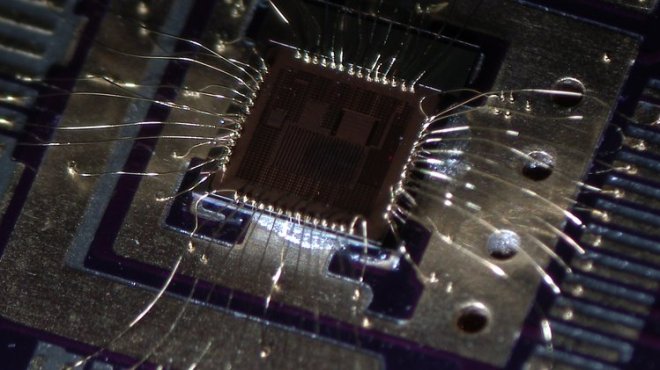
Arduino compatibility can mean a lot of things to a lot of different people, so we’ll try to be as concrete and specific as possible. For the Open-V, Arduino development tools, and interoperating on a hardware level with existing Arduino shields.

wire-bonds-zoomed_jpg_project-body.jpg

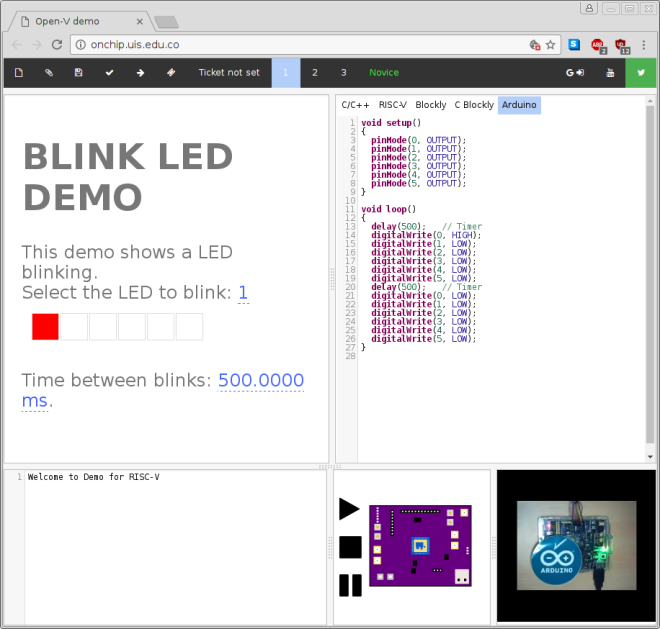
We’ve updated our live, web-streamed demos to include an Arduino mode in addition to the assembler and C modes we already have. You might also notice the relatively new Blockly modes and a refined layout of the demo page. Go write some code and see the results live streamed!

Screenshot at 2017-02-12 20-18-49.png

OnChip Open-V Arduino Compatibility

Bristlebot with LDRs Becomes Light-Following Bristlebot

Bristlebot with LDRs Becomes Light-Following Bristlebot

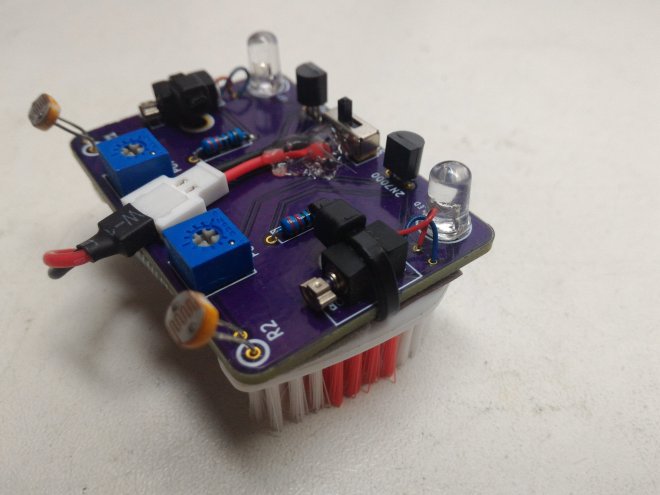
Bristlebots are great because no coding is required – they’re completely analog circuits that just go! But if you wanted them to go in a specific direction, how would you do that? Facelesstech has released their design for a light-following bristlebot that uses two LDRs to drive either side of the bristlebot (so you could turn it, somewhat – see video below for demo!). It’s pretty simple and pretty clever.

img_20160815_165948 (2).jpg

The KiCad design files are available on GitHub:


Bristlebot with LDRs Becomes Light-Following Bristlebot

KiCad at FOSDEM 2017

KiCad project leader Wayne Stambaugh talked at FOSDEM 2017 about KiCad’s current status and future roadmap:

KiCad Project Status

Wayne’s slides are available on Google Drive:

Screenshot at 2017-02-14 05-47-37.png

Tomasz Wlostowski of CERN talks about the SPICE integration that was added to KiCad in 2016:

Integrated Spice Simulation


Maciej Sumiński walked through the KiCad source code:

Diving into the KiCad source code

PDF of the slides is available for download:
screenshot-at-2017-02-14-06-18-02


KiCad at FOSDEM 2017

$3 Tinusaur board on IndieGoGo

Neven Boyanov has launched a new Tinusaur campaign on IndieGoGo:

Learn, Teach and Make with the Tinusaur

Small microcontroller board that could run Arduino and help you learn, teach others and make things

uvloj5csuhcx0ri4yn5c

The Tinusaur is powered by the Atmel ATtiny85 microcontroller.

We want to bring the cost down to $3 for the basic “lite” boards
and allow more people to be able to get them.

$3 Tinusaur board on IndieGoGo

IceZero FPGA Board for Raspberry Pi

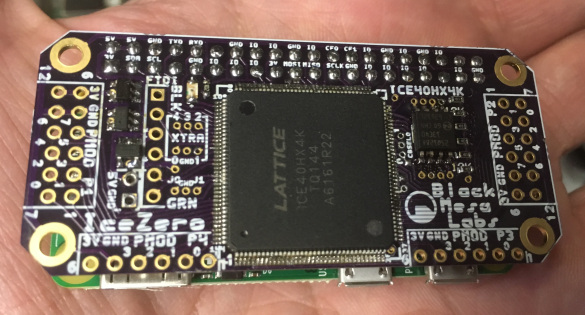
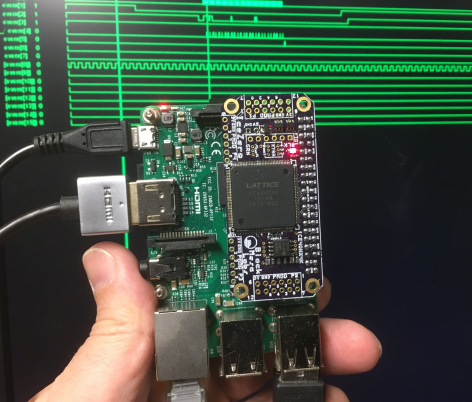
Black Mesa Labs created this board that adds a Lattice FPGA to a Raspberry Pi:

ice_zero_with_pi_zero

IceZero FPGA Board for RaspPi

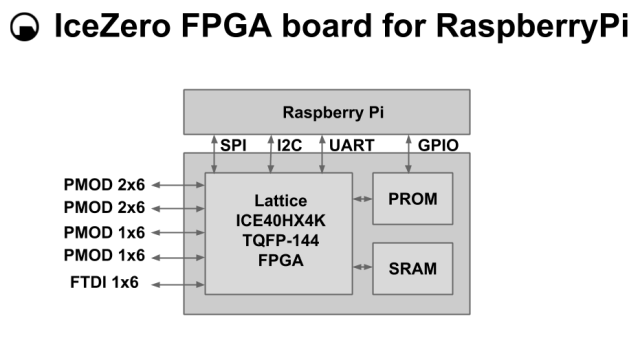
BML has been very much enchanted with the Lattice FPGA boards for Raspberry Pi, IcoBoard , BlackIce and IceHat. The IceZero board is a BML creation that attempts to combine the best features of all 3 boards into a single design.

screenshot-at-2017-02-11-12-23-44

IceZero features common with other designs

  • Fully Open-Source Hardware and Software Design.
  • Lattice ICE40HX4K FPGA that supports Clifford Wolf’s Project IceStorm tool chain.
  • Interfaces to Raspberry Pi 2×20 GPIO Header for both power and bus interfaces.
  • PROM programmable directly from Rasp Pi, no JTAG programmer required.
  • External SRAM, supporting soft CPU core designs ( code execution ).
  • Extra large SPI PROM, supporting soft CPU core designs ( code storage ).
  • Industry standard PMOD expansion headers

sump2_on_ice_zero

IceZero features that are BML specific

  • Mesa Bus Protocol 32 MHz SPI link between CPU and FPGA.
  • 2-Layer PCB design. Orderable via OSH-Park or Gerbers for Downloading.
  • FTDI 1×6 USB Serial Cable header for use with PC instead of Pi ( or as a soft CPU debug Trace Port ).
  • Single Pi UART plumbed to FPGA for muxing to multiple external serial devices.

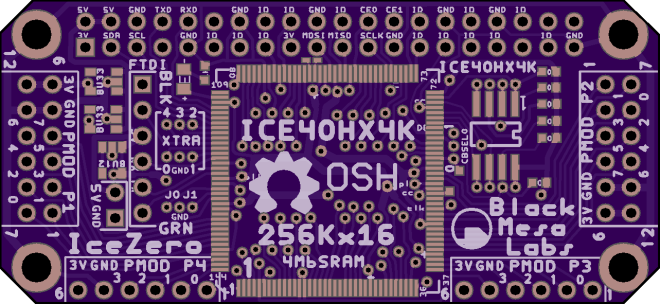
BlackMesaLabs has shared the board on OSH Park:

bml_ice_zero_19_02.zip

BML IceZero Lattice ICE40 FPGA for RaspPi

db079498cc7f080afc8ce1732dc887d9

Order from OSH Park

IceZero FPGA Board for Raspberry Pi

Learn, Teach and Make with the Tinusaur

Last week we’ve launched our Indiegogo crowdfunding campaign and, as of a few minutes ago, we’ve reached 1/3-rd of our goal already. In case you’re not familiar what the Tinusaur project is about … A small board with a tiny chip on it that comes as an assembly kit – a small package with parts and you […]

via Indiegogo Campaign is Almost Halfway Through — The Tinusaur

Learn, Teach and Make with the Tinusaur

Onion Omega2 Breakout

tumblr_ojbxowFrFv1tja38uo3_1280.jpg

Onion Omega2 Breakout

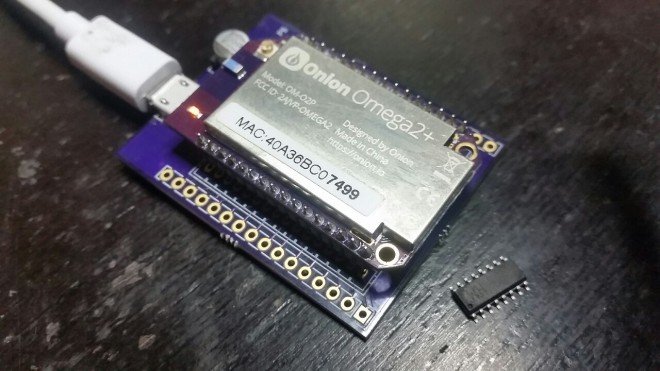
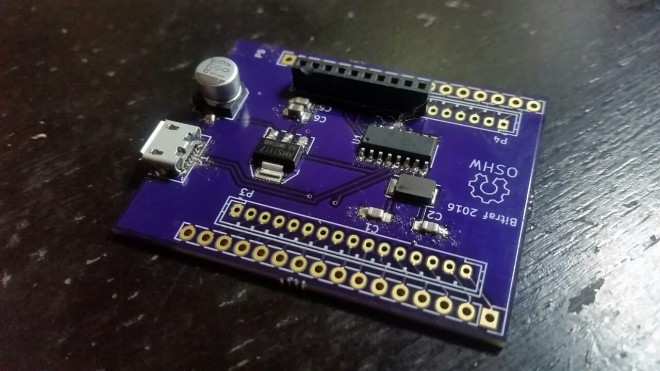
My Omega2 Onion shield, using a AMS1117 for 3.3V and CH340G for USB to serial. Kind of ugly soldering here as I didn’t have a tip for the syringe to dispense solder paste, so I just smeared it all over and hoped it reflowed well. It kind of did, but I had a solder blob short on pin 14 +15 on the CH340G, so I just lifted those two legs off the board. I was so eager to get this board tested that I forgot to check that I had these 2mm pin headers. I had just enough to get this thing tested. Time to order more 🙂

tumblr_ojbxowfrfv1tja38uo2_1280

Jensa has shared the board on OSH Park:

Onion Omega2 Breakout

fe1620694e5f9a5bb93bbfb970d31ff0
Order from OSH Park

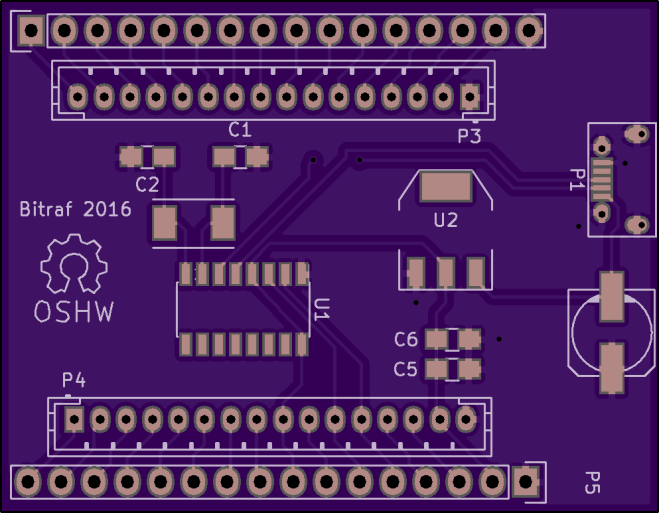
Simple breakout board using the dirt cheap IC’s CH340G ($0.30/each on ebay) for Serial and a AMS1117-3.3 ($0.025/each) for power. Breaks out all pins from 2mm to 2.54mm headers. Plugs nicely into two small breadboards for prototyping.

Onion Omega2 Breakout