Prototype of USB DAC + Headphone Amp

News from the USB DAC + Headphone Amp project by Yin Zhong (summivox):

IMG_20170213_201148.jpg

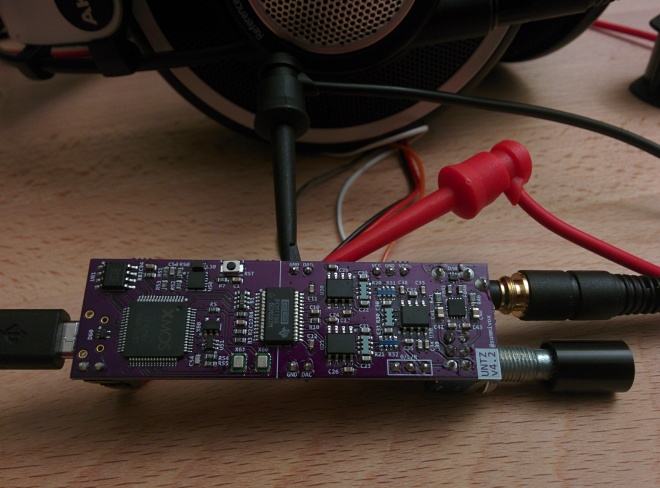
First Complete Prototype

In the interim update post I posted the plan for integration into 2 boards: A 2-layer power board, and a 4-layer main board. Actually I have had a good copy of the main board for quite a while: Story for the power board is not as good though. In the beginning I screwed up on […]

Prototype of USB DAC + Headphone Amp

XMOS-based USB to I2S bridge

An update from the USB DAC + Headphone Amp project by Yin Zhong (summivox):

USB Interface

Months into the project and I was still amazed at the lack of availability of a class of ASICs: USB-I2S bridges. Well I just lied — if you are fine with USB 1.1 and USB Audio Class (UAC) 1.0, which severely limits your (bit depth × resolution × channel count)

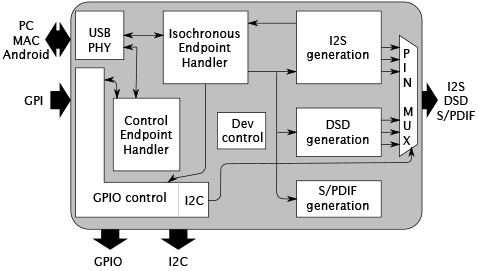
hires2-block-diagram-no-ios

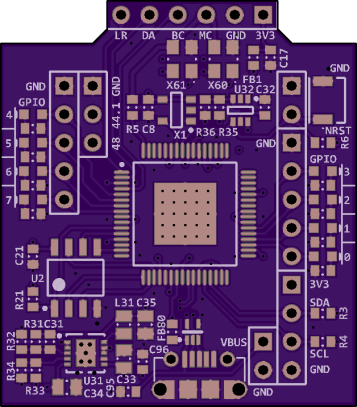
So I kept looking for ASICs, and I found one that is close enough: XMOS XHRA-2HPA. It even comes with a reference design that does exactly what I want!

summivox has shared the board on OSH Park:

20161229-1609 headphone-USB-v2.0.zip

140e1461c22df2546e0793a33a800c68.png
Order from OSH Park

XMOS-based USB to I2S bridge

DTV Tuner Breakout for SDR

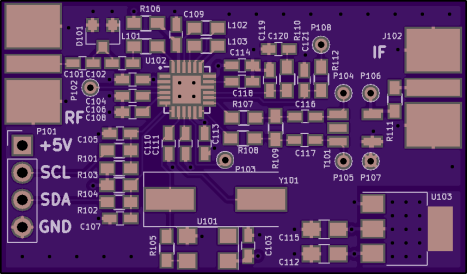
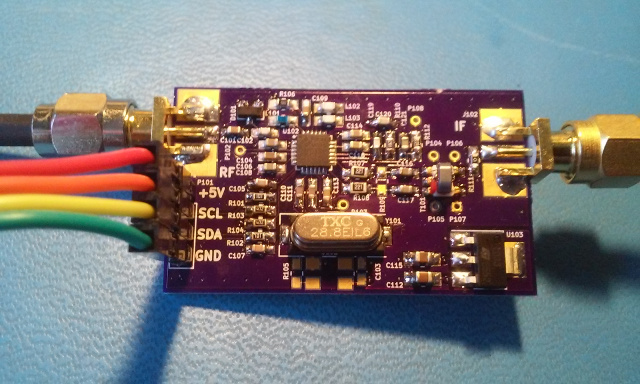
Eric Brombaugh designed this breakout board for the Rafael Microelectronics R820T2 Advanced Digital TV Silicon Tuner chip:
r820t2_breakout_assembled

R820T2 Breakout

This is the same chip used in most all of the RTL-SDR dongles, as well as the Airspy and numerous other radios. The chip is a versatile front-end with reasonable sensitivity and wide tuning range.
screenshot-at-2017-02-17-13-54-36

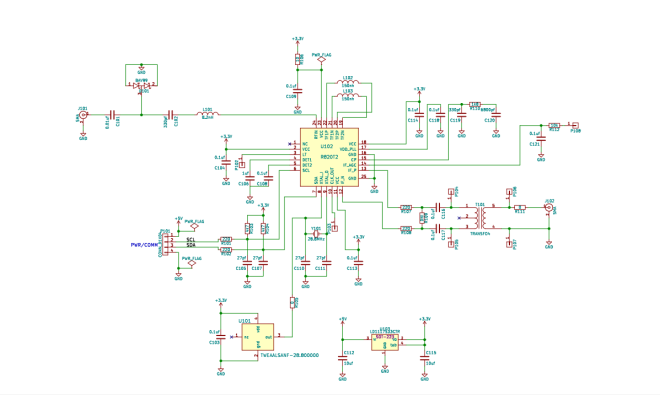
The design presented here is almost an exact implementation of the Mfg’s suggested demo design from the datasheet, implemented on the OSHpark 4-layer PCB process and provides a simple 4-pin interface with power, ground and I2C bus for controlling the tuner. A broad-band RF input and 10MHz IF output are provided on SMA connectors.

The breakout PCB design and STM32F0 firmware for the Rafael R820T2 tuner chip are shared on GitHub:

screenshot-at-2017-02-14-20-58-40 emeb/r820t2


emeb has shared project on OSH Park:

r820t2_breakout v0.1

cd102a38f8c39fe1ff2d6fe4cfe90e12.png
Order from OSH Park

DTV Tuner Breakout for SDR

ISL12022M RTC breakout board

From the Pluxx’s Magitech Golem Parts Emporium blog:

C44topVWEAAJj_u.jpg

ISL12022M RTC breakout board

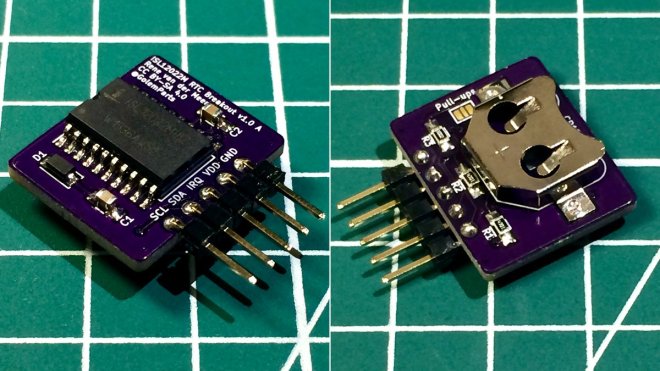
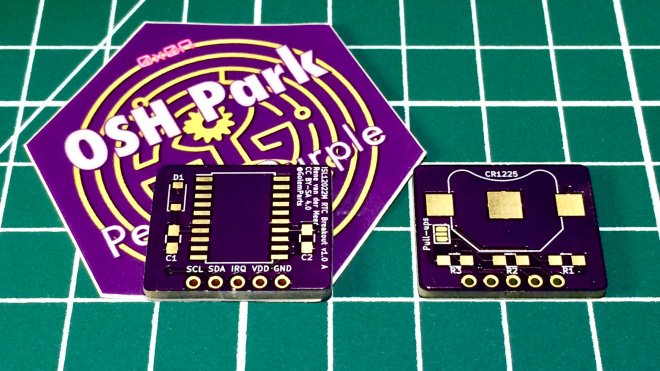
This is a breakout board for the Intersil ISL12022M real-time clock, with optional I²C pull-ups and a CR1225 backup battery. The circuit is based on the design recommended by Intersil, with a few tweaks. It’s the second board I’ve designed so far.

golemparts has shared the project on OSH Park:

ISL12022M RTC Breakout v1.0 A

c44tosaxuaadnik

Order from OSH Park

ISL12022M RTC breakout board

eMMC to SD Card Adapter

20170129_133109-s

From the Intelligent Toasters blog:

Retro CPC Dongle – Part 18

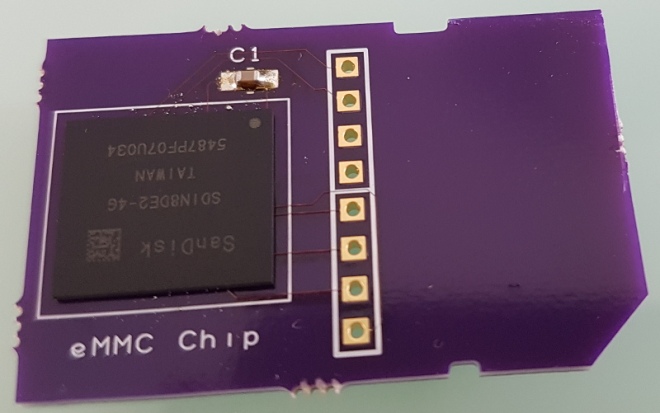
I’ve been working on, replacing the NAND raw flash with an eMMC chip on the CPC2.0 board.

20170129_135450-s

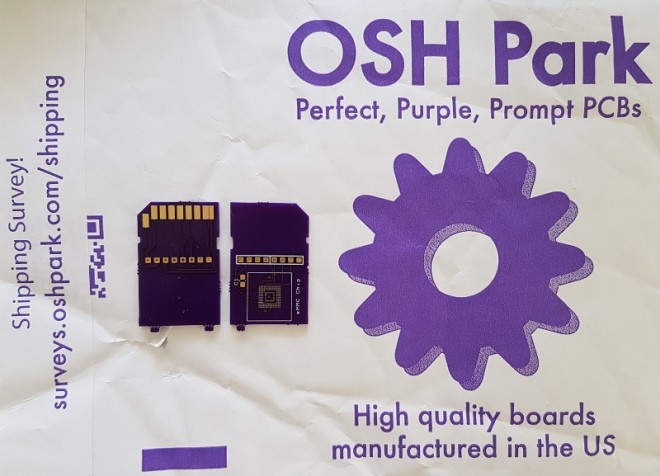
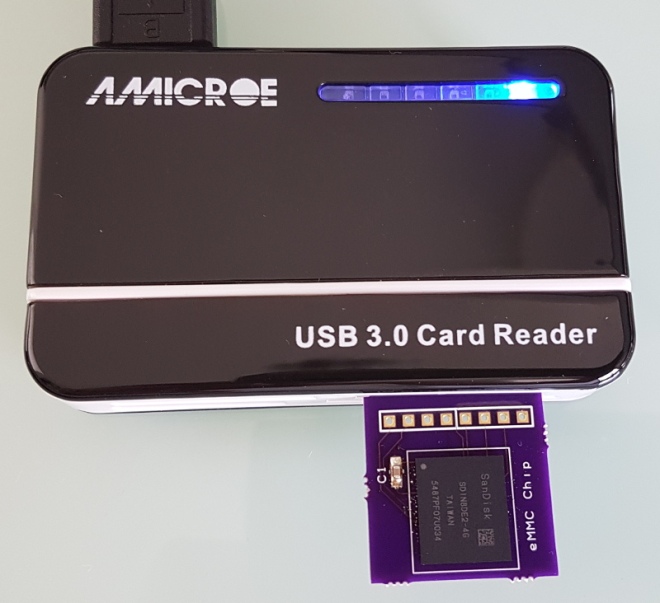
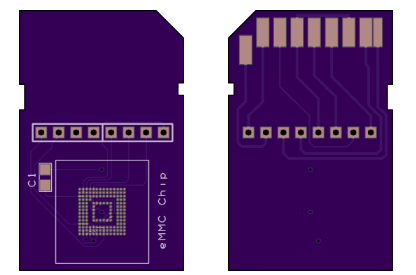
I wrote about raw flash and the challenges of writing a flash translation later in part 16 of this series. After some research, I concluded that the eMMC interface looked exactly like the much more common SDCard interface, albeit that the interface can be run with an 8-bit width. SDCards are limited to 4 bits by the physical pin count. Taking a gamble I created a board to test this new eMMC chip. I created a fake SDCard!

20170129_135518-s

This fake card allowed me to check very quickly if my assumptions were correct both at a hardware and a firmware level. I wanted to be sure that it was possible to interface the eMMC via 4 bits, rather than the full 8 bits and be sure the firmware instructions were the same between these two technologies.

Intelligent-Toasters has shared the board on OSH Park:

emmc.zip

screenshot-at-2017-02-15-21-04-11

Order from OSH Park

eMMC to SD Card Adapter

Snowbot

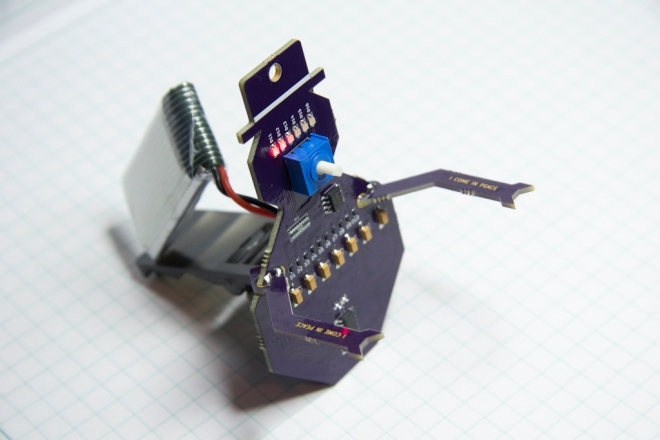
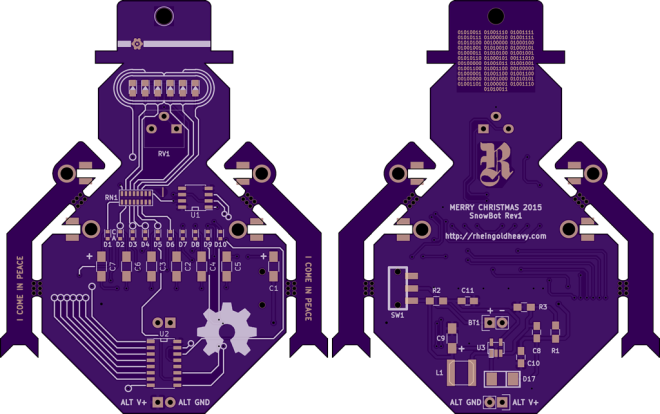
Dan Hienzsch a holiday project to build a little Snowbot with an adjustable speed larson scanner for an eye:

snowbot_v1_prototype-2

Snowbot Ornament Project

When I started thinking of this project, I wanted to make something that included a bit of the basics and something more advanced. It had to be battery powered, and most importantly, I wanted to make sure it went against the grain of everything needing a microcontroller. Thus Snowbot was born.

Photos from the Hackaday.io project:

RheingoldHeavy has shared the board on OSH Park:

Snowbot_2015_Rev1

snowbot_revised_silkscreen_preview

Order from OSH Park

Snowbot

Rotary Encoder Breakout Board

UPDATE: Check out the new version with pull-up resistors

img_20170211_233051

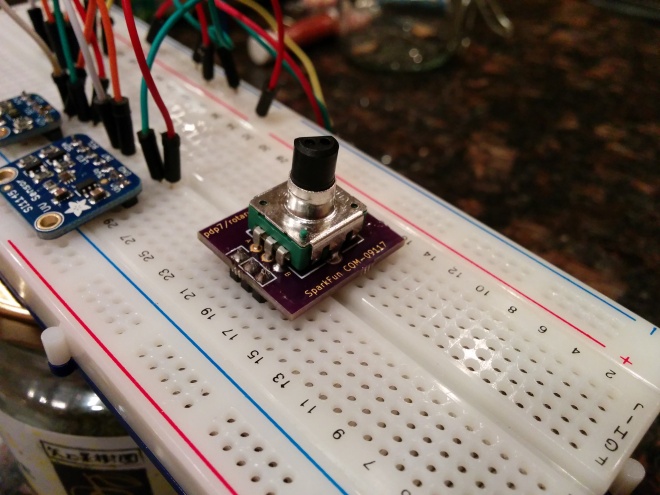
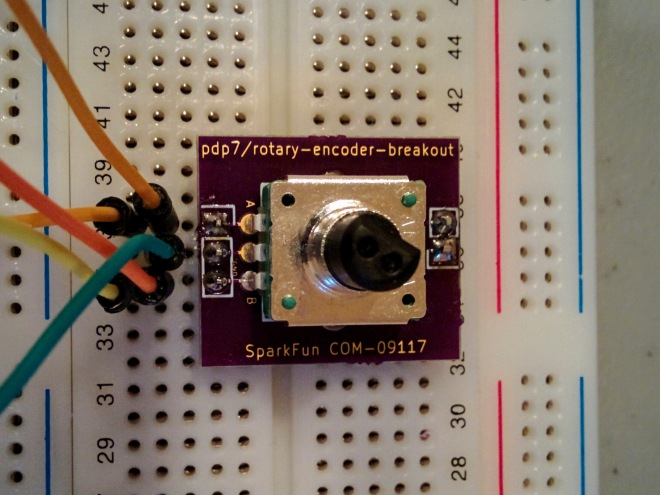
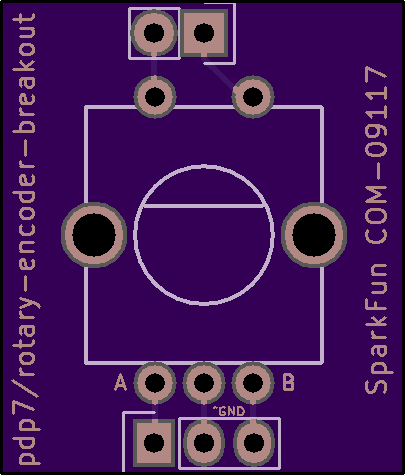
I designed this simple breakout board in KiCad to make it easier to put a rotary encoder on a breadboard.   The KiCad symbol and footprint for the SparkFun rotary encoder was created by mcous on GitHub.  I used an updated version with corrected pin numbering.

img_20170211_230723

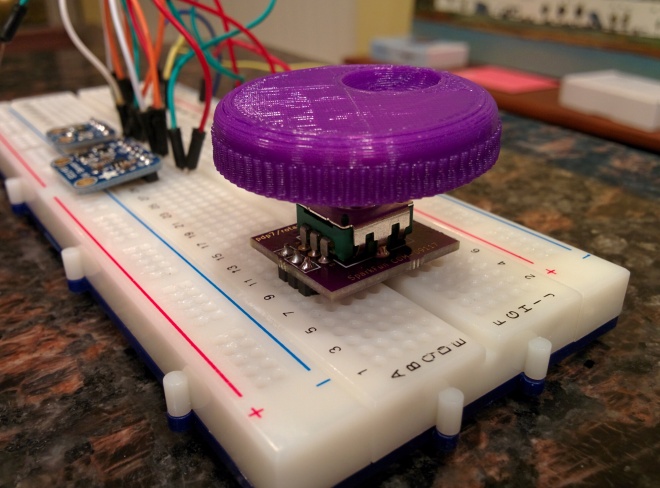
Here are the rotary encoders that I’ve verified to fit:

img_20170211_233439

The design files are available on GitHub:

Screenshot at 2017-02-14 20-58-40.png pdp7/rotary-encoder-breakout

The board is shared on OSH Park:

SparkFun Rotary Encoder Breadboard Adapter

e1911a0b6c7595c4cd7a05c4806f83bf.png

Order from OSH Park

Rotary Encoder Breakout Board

IceZero FPGA Board for Raspberry Pi

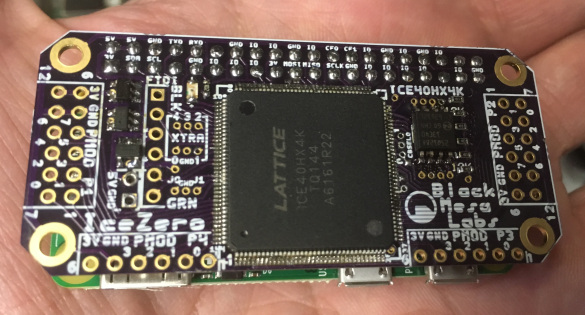
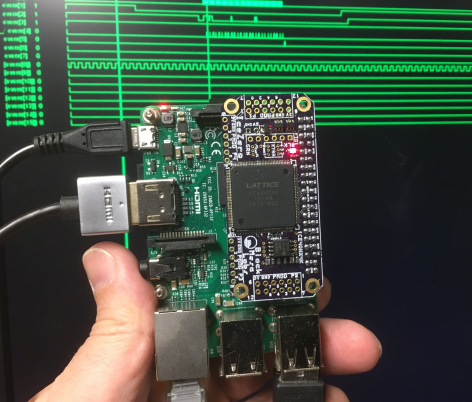
Black Mesa Labs created this board that adds a Lattice FPGA to a Raspberry Pi:

ice_zero_with_pi_zero

IceZero FPGA Board for RaspPi

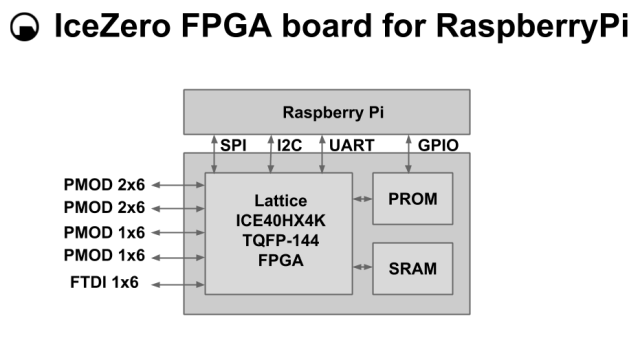
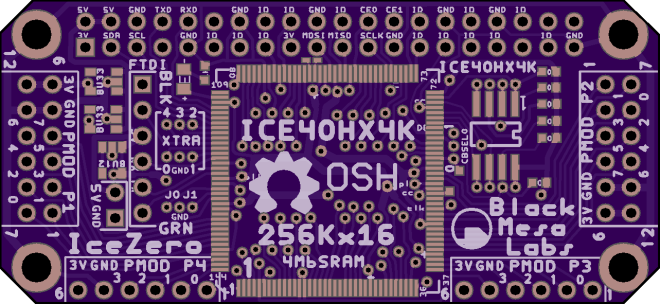
BML has been very much enchanted with the Lattice FPGA boards for Raspberry Pi, IcoBoard , BlackIce and IceHat. The IceZero board is a BML creation that attempts to combine the best features of all 3 boards into a single design.

screenshot-at-2017-02-11-12-23-44

IceZero features common with other designs

  • Fully Open-Source Hardware and Software Design.
  • Lattice ICE40HX4K FPGA that supports Clifford Wolf’s Project IceStorm tool chain.
  • Interfaces to Raspberry Pi 2×20 GPIO Header for both power and bus interfaces.
  • PROM programmable directly from Rasp Pi, no JTAG programmer required.
  • External SRAM, supporting soft CPU core designs ( code execution ).
  • Extra large SPI PROM, supporting soft CPU core designs ( code storage ).
  • Industry standard PMOD expansion headers

sump2_on_ice_zero

IceZero features that are BML specific

  • Mesa Bus Protocol 32 MHz SPI link between CPU and FPGA.
  • 2-Layer PCB design. Orderable via OSH-Park or Gerbers for Downloading.
  • FTDI 1×6 USB Serial Cable header for use with PC instead of Pi ( or as a soft CPU debug Trace Port ).
  • Single Pi UART plumbed to FPGA for muxing to multiple external serial devices.

BlackMesaLabs has shared the board on OSH Park:

bml_ice_zero_19_02.zip

BML IceZero Lattice ICE40 FPGA for RaspPi

db079498cc7f080afc8ce1732dc887d9

Order from OSH Park

IceZero FPGA Board for Raspberry Pi

Onion Omega2 Breakout

tumblr_ojbxowFrFv1tja38uo3_1280.jpg

Onion Omega2 Breakout

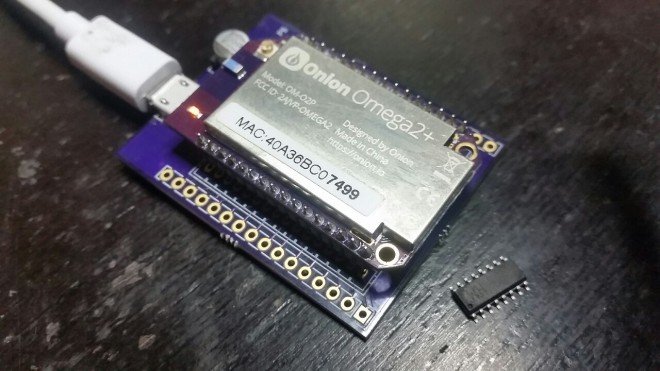
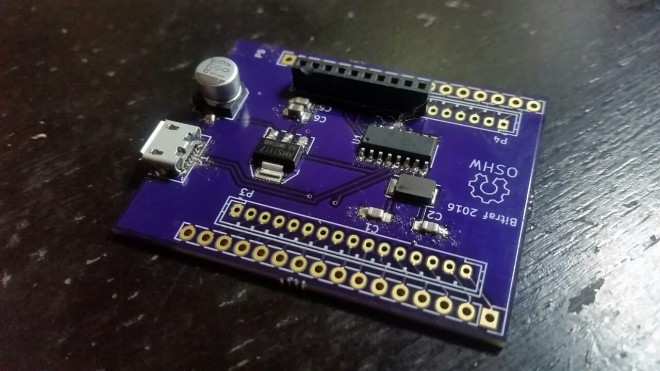
My Omega2 Onion shield, using a AMS1117 for 3.3V and CH340G for USB to serial. Kind of ugly soldering here as I didn’t have a tip for the syringe to dispense solder paste, so I just smeared it all over and hoped it reflowed well. It kind of did, but I had a solder blob short on pin 14 +15 on the CH340G, so I just lifted those two legs off the board. I was so eager to get this board tested that I forgot to check that I had these 2mm pin headers. I had just enough to get this thing tested. Time to order more 🙂

tumblr_ojbxowfrfv1tja38uo2_1280

Jensa has shared the board on OSH Park:

Onion Omega2 Breakout

fe1620694e5f9a5bb93bbfb970d31ff0
Order from OSH Park

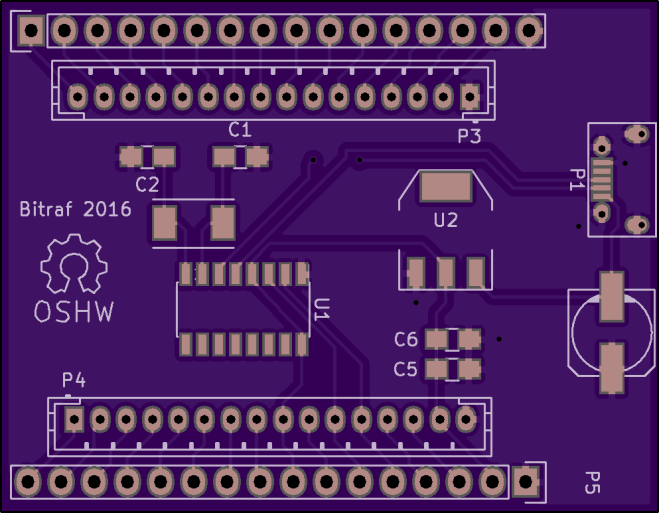
Simple breakout board using the dirt cheap IC’s CH340G ($0.30/each on ebay) for Serial and a AMS1117-3.3 ($0.025/each) for power. Breaks out all pins from 2mm to 2.54mm headers. Plugs nicely into two small breadboards for prototyping.

Onion Omega2 Breakout