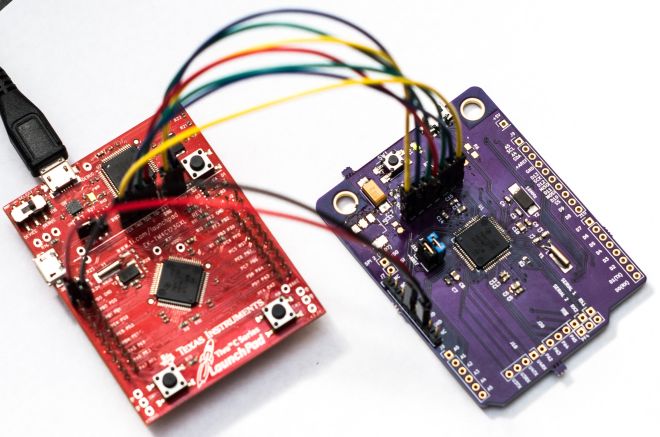
Texas Instruments’ Tiva C LaunchPad showcases TI’s ARM Cortex-M4F, a 32-bit, 80Mhz microcontroller based on the TM4C123GH6PM. The Tiva series of LaunchPads serve as TI’s equivalent of the Arduino Uno, and hovers at about the same price point, except with more processing power and a sane geometry for the GPIO pins. The Tiva’s processor runs five times…
Alex Albino, of the Femtoduino Store, is one of the original sellers on Tindie, with his store officially listed as opening on November 26, 2012. During this time, he’s sold well over 300 of his custom boards, and I was glad to catch up to him to ask a few questions.
Albino, who works as a software and web developer, first got into electronics after his NES was fried in a thunderstorm in junior high, and he got to take it apart. Eventually his interests led him to the Arduino and Fabio Varesano’s work, and multiple hardware platforms over the years.
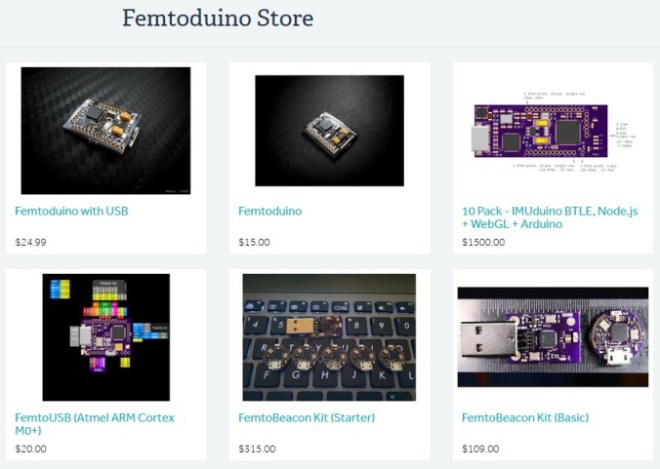
Albino’s store started with him asking Fabio Varesano if he could sell Femtoduino boards, which have the same outputs as an Arduino Uno in the size of one’s thumb. Since Varesano wasn’t interested in selling them himself, he generously gave Albino permission to run with this design. Albino then went to work assembling and selling these boards, and even made sure to give a portion of the money he made—though he didn’t have to—back to Varesano to promote his open source work.
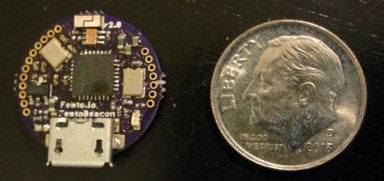
Of course, these tiny Arduino clones are still for sale, but Albino sells several other items, including the FemtoBeacon wireless IMU (inertial measurement unit) sensor. He even notes his store theme as providing the smallest open source IMU sensors in the world. You can see one in the image above next to a U.S. dime—quite small indeed. He hopes to grow the Femtobeacon business into a full-time job in the future.
Naturally, Albino has bought from other Tindarians in the past, which he says is always fun. He also notes that, “If you sell anything on Tindie, make sure to package carefully, take decent photos, and include videos of stuff in action!” As such, here’s a video of the tiny Femtoduino in action:
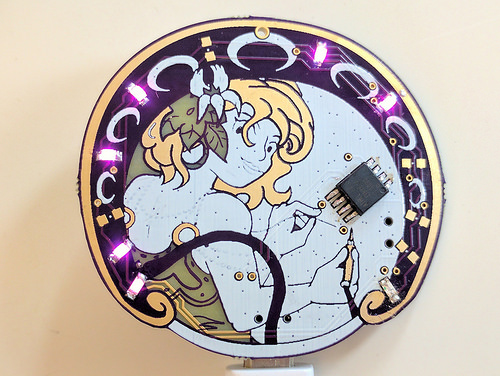
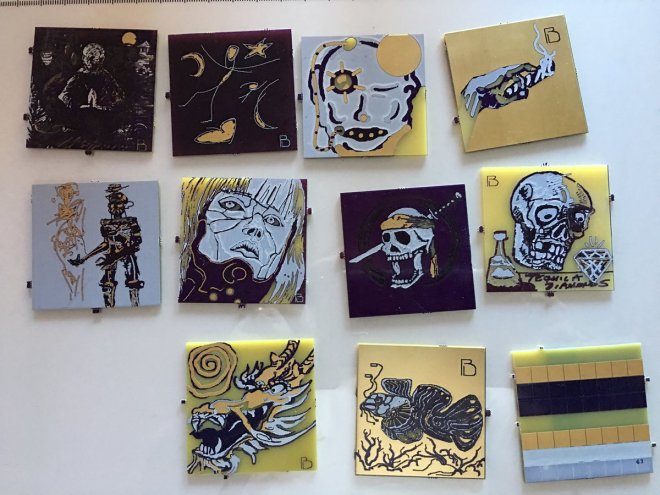
PCB art is getting better and better every year. This year, though, is knocking it out of the park. In March, Andrew Sowa turned me into money.
More recently, Trammell Hudson has explored the layers of OSH Park soldermask and silk to create a masterpiece.
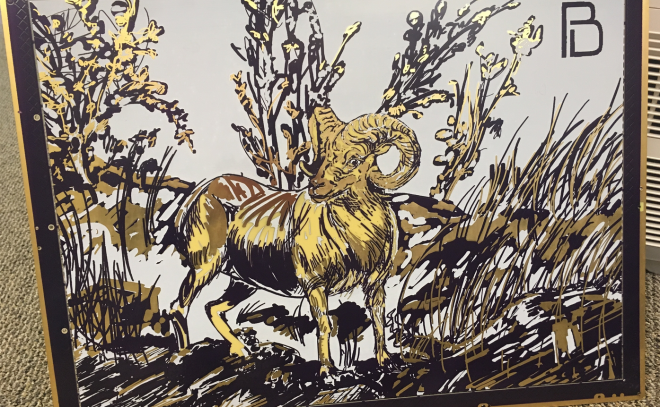
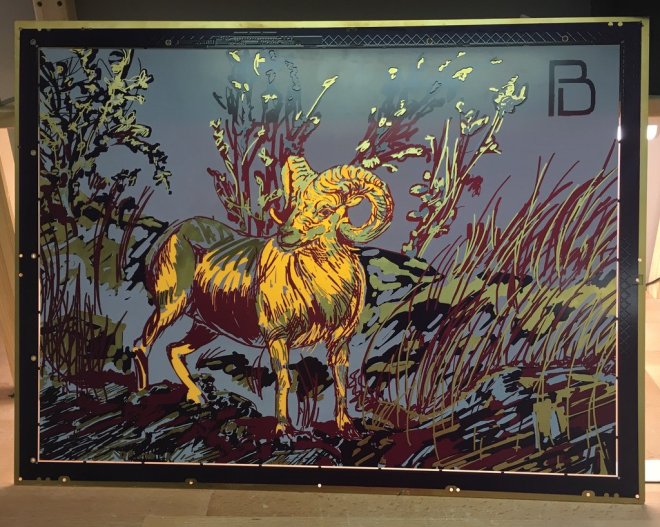
Now, we’re moving up to full-blown art. Blake Ramsdell worked with OSH Park to create a full panel of art in gold, fiberglass, soldermask, and silkscreen. It’s 22×16 inches, and it’s fantastic.
Modems have been around for longer than the web, and before we had Facebook we had the BBS scene. Somewhat surprisingly, people are still hosting BBSes, but have fun finding a landline these days. [Blake Patterson] is one of the leading aficionados of retocomputers, and recently he took it upon himself to review an interesting new…
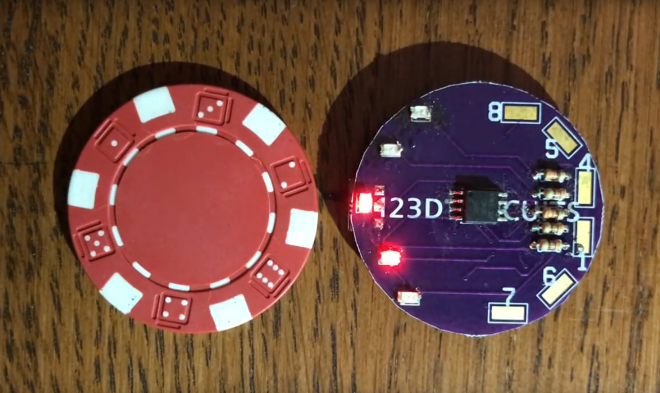
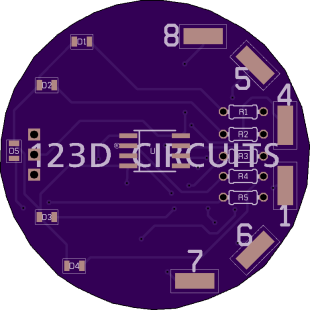
Spice up your poker games with these cool blinking chips. They can be programmed on the fly to have a certain number of the LEDs illuminated to indicate value, or you can have the lights blink in a cool pattern. They make great playing chips for championships or great prizes to hand out to the winners.
General Instrument’s AY-3-8910 is a chip associated with video game music and is became popular with arcade games and pinball machines. The chip tunes produced by this IC are iconic and are reminiscent of a great era for electronics. [Deater] has done an amazing job at creating a harmony between the old and new with his Raspberry…
For his Hackaday Prize entry, [Adam] is working on an open source, extensible 915 and 433 MHz radio designed for robotics, drones, weather balloons, and all the other fun projects that sub-Gigaherts radio enables.
The design of this radio module is based around the ADF7023 RF transceiver, a very capable and very cheap chip that transmits in the usual ISM bands. The rest of the circuit is an STM32 ARM Cortex M0+, with USB, UART, and SPI connectivity, with support for a battery for those mobile projects.
Tindie is a great place to find uncommon electronic components or weird/interesting boards. [Xose Pérez] periodically “stroll the isles” of Tindie to keep up on cool new components, and when he saw Panasonic’s Grid_EYE AMG88 infrared sensor, [Xose] knew that he had to build something with it. The awesome find is an 8×8 IR array…









 OSH Park