Internet of Fidget Spinners

writes on Hackaday:

4510681497110947870.png

Hackaday Prize Entry: Internet of Fidget Spinners

Last week, everyone on Hackaday.io was busy getting their four project logs and illustrations ready for the last call in this round of the Hackaday Prize. These projects are the best of what the Internet of Things has to offer because this is the Internet of Useful things [..]

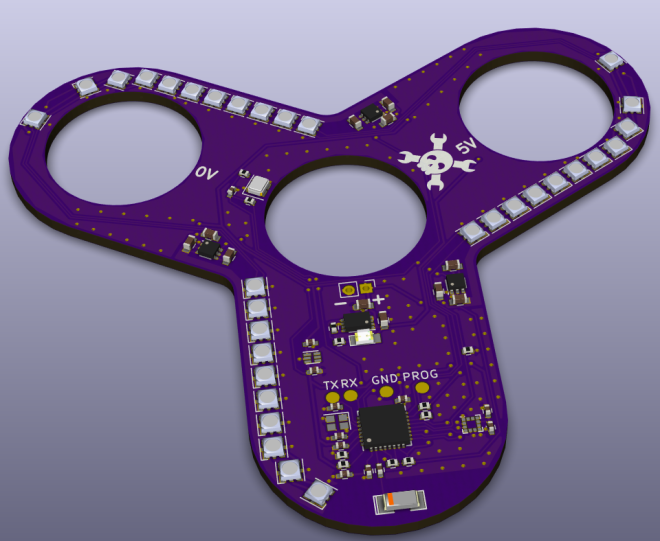
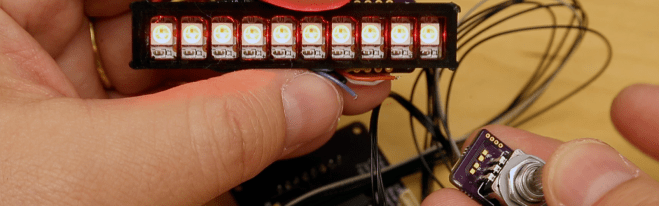
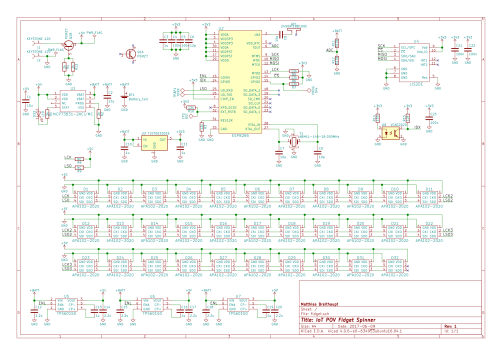
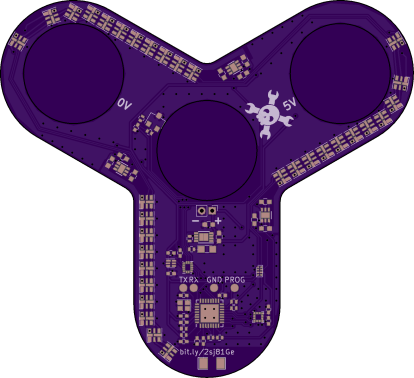
This is a PoV fidget spinner, which means the leading edges of this tricorn spinner are bedazzled with APA102 LEDs. Persistence-of-vision toys are as old as Hackaday, and the entire idea of a fidget spinner is to spin, so this at least makes sense.

Find out more on the Hackaday.io project page by Matthias:


IoT POV Fidget Spinner

A WiFi fidget spinner, taken from concept to ordering parts in one weekend
2171661497017947725

The KiCad design files are available on GitHub:

githubm-byte/fidget-pov

Screenshot from 2017-06-10 14-39-57

matthias has shared the board on OSH Park:

IoT POV Fidget Spinner (192a97b)
fcc74db070348dfd6a9ebd45c706b670.png
Order from OSH Park

Internet of Fidget Spinners

The Monolith Brings the Boom to Maker Faire

https://youtube.com/watch?v=gL5llIO3NcU%3Fversion%3D3

[Ross Fish], [Darcy Neal], [Ben Davis], and [Paul Stoffregen] created “the Monolith”, an interactive synth sculpture designed to showcase capabilities of the Teensy 3.6 microcontroller. The Monolith consists of a clear acrylic box covered in LED-lit arcade buttons. The forty buttons in front serve as an 8-step sequencer with five different voices, while touch sensors on the left…

via The Monolith Brings the Boom to Maker Faire — Hackaday

The Monolith Brings the Boom to Maker Faire

Multifunction Raspberry Pi Chiptune Player

https://youtube.com/watch?v=kB-iyDEXOrY%3Fversion%3D3

General Instrument’s AY-3-8910 is a chip associated with video game music and is became popular with arcade games and pinball machines. The chip tunes produced by this IC are iconic and are reminiscent of a great era for electronics. [Deater] has done an amazing job at creating a harmony between the old and new with his Raspberry…

via Multifunction Raspberry Pi Chiptune Player — Hackaday

Multifunction Raspberry Pi Chiptune Player

Hackaday Prize Entry: Sub Gigahertz RF

For his Hackaday Prize entry, [Adam] is working on an open source, extensible 915 and 433 MHz radio designed for robotics, drones, weather balloons, and all the other fun projects that sub-Gigaherts radio enables.

The design of this radio module is based around the ADF7023 RF transceiver, a very capable and very cheap chip that transmits in the usual ISM bands. The rest of the circuit is an STM32 ARM Cortex M0+, with USB, UART, and SPI connectivity, with support for a battery for those mobile projects.

via Hackaday Prize Entry: Sub Gigahertz RF — Hackaday

Hackaday Prize Entry: Sub Gigahertz RF

Hackaday: Show Us Your Internet of Useful Things by Monday

Don’t forget to get your connected device entered in the Hackaday Prize by Monday morning. The current challenge is IuT ! IoT, a clever tilt at the Internet of Things, which is so hot right now. We don’t just want things to connect, we want that connection to be useful, so save your Internet Toasters…

via Show Us Your Internet of Useful Things by Monday — Hackaday

Hackaday: Show Us Your Internet of Useful Things by Monday

Hackaday Prize Entry: MakerNet

https://youtube.com/watch?v=rZLKJq-t7fU%3Fversion%3D3

One of the biggest trends in whatever market ‘Maker’ stuff belongs to is the Legofication of electronics. Building electronics is hard, if you haven’t noticed. Anything that turns transmission lines, current loops, and RF wizardry into something a five-year-old can use has obvious applications to education. For his Hackaday Prize entry, [Jeremy Gilbert] is building…

via Hackaday Prize Entry: MakerNet — Hackaday

Hackaday Prize Entry: MakerNet

Hackaday: Ohm? Don’t Forget Kirchhoff!

https://youtube.com/watch?v=2lY757QaaKs%3Fversion%3D3%26rel%3D1%26fs%3D1%26autohide%3D2%26showsearch%3D0%26showinfo%3D1%26iv_load_policy%3D1%26wmode%3Dtransparent

It is hard to get very far into electronics without knowing Ohm’s law. Named after [Georg Ohm] it describes current and voltage relationships in linear circuits. However, there are two laws that are even more basic that don’t get nearly the respect that Ohm’s law gets. Those are Kirchhoff’s laws. In simple terms, Kirchhoff’s laws…

via Ohm? Don’t Forget Kirchhoff! — Hackaday

Hackaday: Ohm? Don’t Forget Kirchhoff!

Hack Your Hot Air Station

https://youtube.com/watch?v=videoseries%3Flist%3DPLONcxJMOrdyeYuEgM6qhCllZelN6gPjrT%26hl%3Den_US

It used to be hot air soldering gear was exotic, but not anymore. There are plenty of relatively inexpensive choices. Many of these appear to be the same despite having different brand names and model numbers. One that is common and inexpensive is the 858D. These run about $50. [Gabse] has one and decided to…

via Hack Your Hot Air Station — Hackaday

Hack Your Hot Air Station

KiCAD Best Practices: Library Management

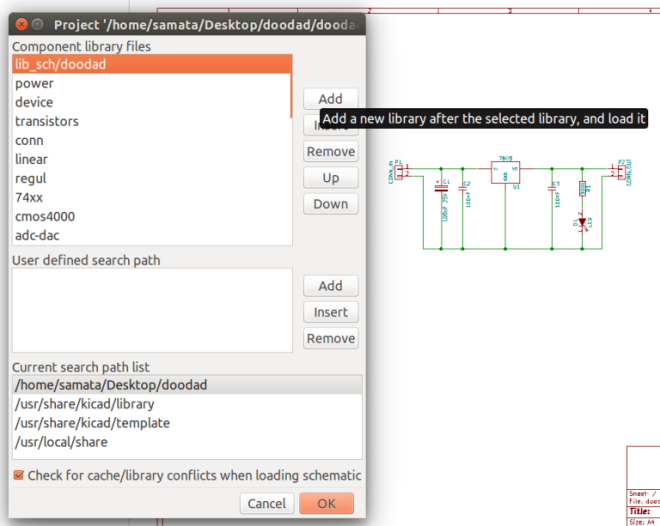
One common complaint we hear from most new KiCAD users relates to schematic and footprint libraries. The trick is to use just one schematic symbol and footprint library each with your project. This way any changes to the default schematic libraries will not affect your project and it will be easy to share your project with others without breaking…

via KiCAD Best Practices: Library Management — Hackaday

eeschema_lib.png

KiCAD Best Practices: Library Management

Wireless Terminal Over ESP8266

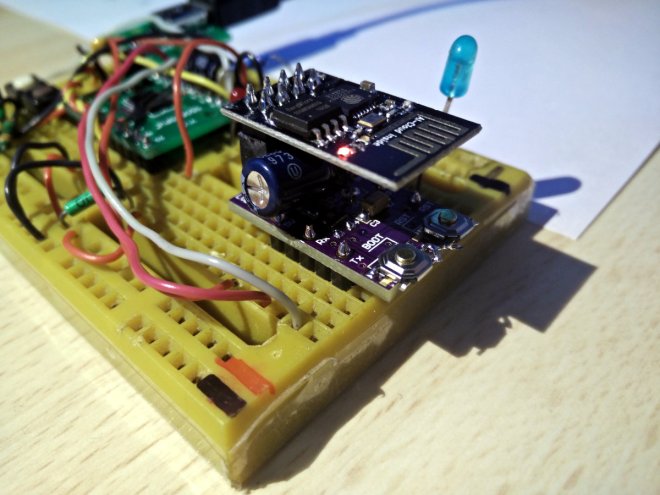
From debug messages to the fundamental ‘hello world’, serial communication does it all over three little wires. Now imagine being able to cut the cord to your next microcontroller project and use your phone as a VT100 terminal. This was the premise of [Ondřej Hruška]’s Wireless Terminal Project where he took an ESP8266 and added an in-browser terminal emulator which can be accessed…

via Wireless Terminal Over ESP8266 — Hackaday

assembled-on-bb.jpg

Wireless Terminal Over ESP8266