STM32L4 Sensor Tile

From Kris Winer on Hackaday.io:
316281486923705430.jpg

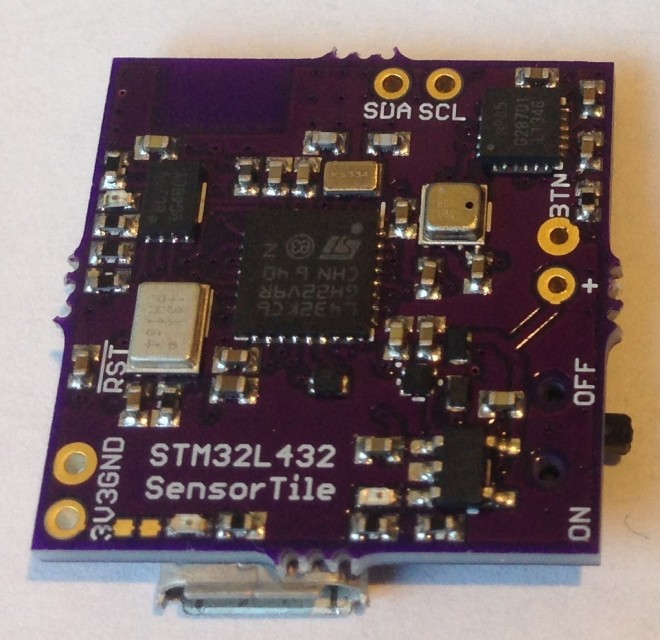
STM32L4 Sensor Tile

Small, connected device for smelling and hearing in any environment.

This is a 20 mm x 20 mm four-layer pcb tile full of interesting sensors (ICS43434 I2S Digital Microphone, MPU6500 acclerometer/gyro, BME280 pressure/temperature/humidity, and CCS811 air quality) with a Rigado BMD-350 UART BLE bridge for sending data to a smart phone all managed by a STM32L432 host MCU.

The STM32L432 is programmed using the Arduino IDE via the USB connector and serial data can be displayed on the serial monitor to verify performance and proper function, etc. But it is intended to be powered by a small 150 mAH LiPo battery for wireless sensing applications. The STM32L4 is a very low power MCU and with proper sensor and radio management it is possible to get the average power usage down to the ~100uA level, meaning a 150 mAH LiPo battery can run the device for two months on a charge.

A library for it is available on GitHub:

kriswiner/SensorTile

A collection of sketches to run the STM32L432-based (20 mm x 20 mm) sensor tile with an MPU6500 accel/gyro, ICS43434 I2S digital microphone, BME280 temperature/pressure/humidity sensor, and CCS811 air quality sensor. The sensor tile has an on-board MAX1555 LiPo battery charger, an on/off switch, and a Rigado BMD-350 nRF52 BLE module.


STM32L4 Sensor Tile

4CHord MIDI

From Sven Gregori on Hackaday.io:

5817401500854057027.jpg

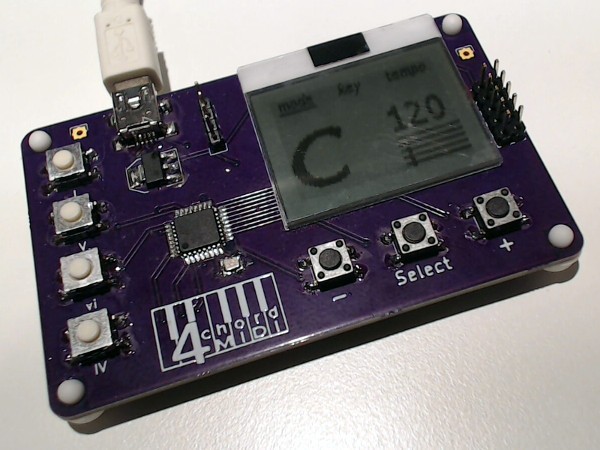
the USB MIDI keyboard dedicated to play all the four chord songs, from Adele via Green Day and Red Hot Chilli Peppers to U2 and Weezer. Thanks to MIDI, you can be any instrument – and all of them at once. Yay!
 Built around an AVR ATmega328 and Objective Development’s V-USB library, 4chord MIDI acts as a regular USB MIDI instrument. It supports playback in every key and five different playback modes:
  • simple triad chord (root, third, fifth)
  • triad chord + third + fifth + third as quarter notes
  • triad chord + third + fifth + octave as quarter notes
  • root note + third + fifth + third as quarter notes
  • root note + third + fifth + octave as quarter notes

The playback tempo can be set between 60 and 240 bpm.

Here is the board in action:

The design files and source code are available on GitHub:

sgreg/4chord-midi

4CHord MIDI

Hackaday Prize Entry: BeagleLogic

A few years ago, [Kumar] created the BeagleLogic, a 14-channel, 100 MSPS logic analyzer for the BeagleBone as an entry for the Hackaday Prize. This is a fantastic tool that takes advantage of the PRUs in the BeagleBone to give anyone with a BeagleBone a very capable logic analyzer for not much cash. This year,…

via Hackaday Prize Entry: BeagleLogic — Hackaday

Hackaday Prize Entry: BeagleLogic

Health-Monitoring Flexible Smartwatch

Hackaday Prize Entry: Health-Monitoring Flexible Smartwatch

[Nick Ames]’s Flexible Smartwatch project aims to create an Open Source smartwatch made out of a flexible, capacitive e-ink touchscreen that uses the whole surface of the band. This wraparound smartwatch displays information from the on-board pulse and blood oximetry sensor as well as the accelerometer and magnetometer, giving you a clear idea of how stressed…


Health-Monitoring Flexible Smartwatch

1Bitsy 1UP handheld game console

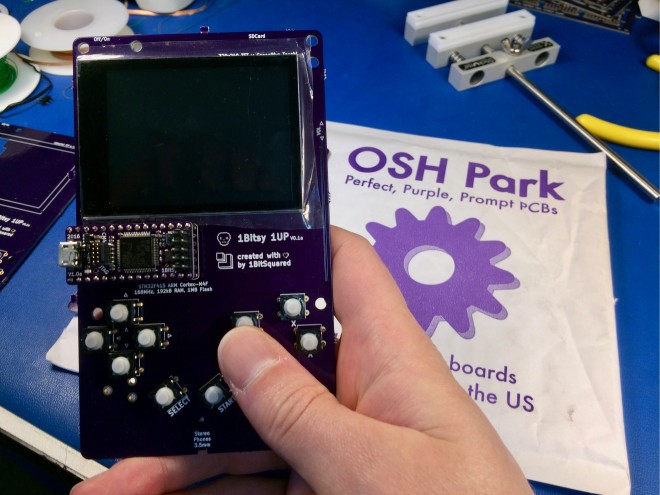
We’re excited about this new project from Piotr Esden-Tempski of 1BitSquared on Hackaday.io:
1641161499897782709.jpg

1Bitsy 1UP

1Bitsy 1UP is a retro inspired handheld game console, the design is based on the 1Bitsy STM32F415RGT6 ARM Cortex-M4F 168MHz 192kb RAM and 1MB Flash micro controller. 2.8″ TFT with capacitive touch, SDCard Reader and a few other components.

https://www.youtube.com/watch?v=pUUsK-pLtG4

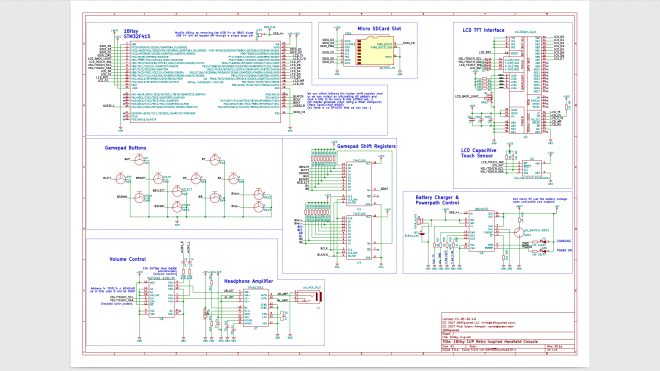
The display used is a TFT LCD with I2C CapTouch and ILI9341 driver. (should be compatible with the display sold by Adafruit on their breakouts as well as the buydisplay.com 2.8″ tft with CapTouch sensor)

Screenshot from 2017-07-13 21-08-58.png

The most basic design consists of:

  • 1Bitsy STM32F415RGT6 (168MHz, 192kb RAM, 1MB Flash)
  • 240×320 2.8″ TFT with capacitive touch and PWM backlight control
  • D-Pad, ABXY, Start, Select buttons
  • DAC audio out to headphones. (speakers optional)
  • SDCard connected over SDIO interface

The hardware design files and firmware source code are available on GitHub:

github1bitsy/1bitsy-1up

1Bitsy 1UP handheld game console

Pi0CKET-tiny

From moosepr on Hackaday.io:

1337181493368419073.JPG

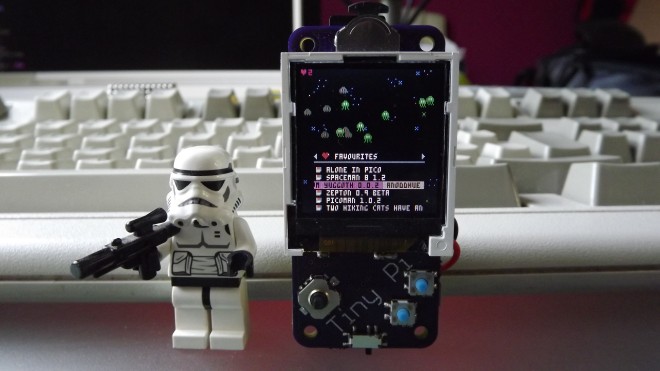
Pi0CKET-tiny

Possibly the worlds smallest Pi based gaming device!


Our 0.8mm thickness 2 layer service was used to make it as slim as possible:


The designs for a 3-D printed case are shared on the Hackaday.io project page:


Pi0CKET-tiny

Programming Surface Mounted Chips

Ken Olsen writes in a Surface Mount Challenge project log on Hackaday.io:

5429531497407265994

Programming Surface Mounted Chips

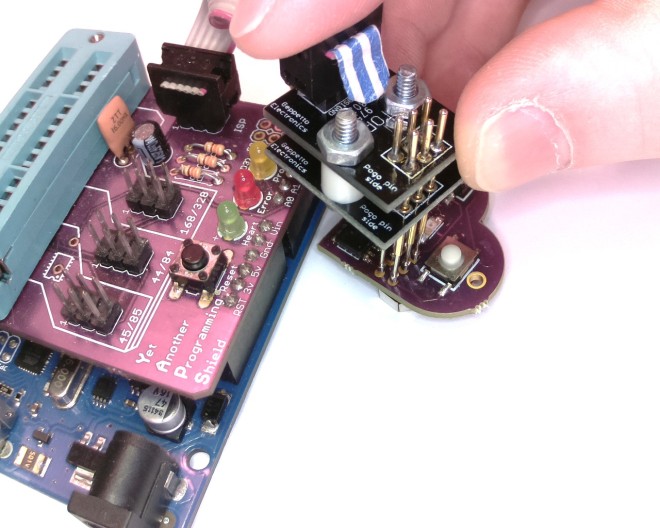
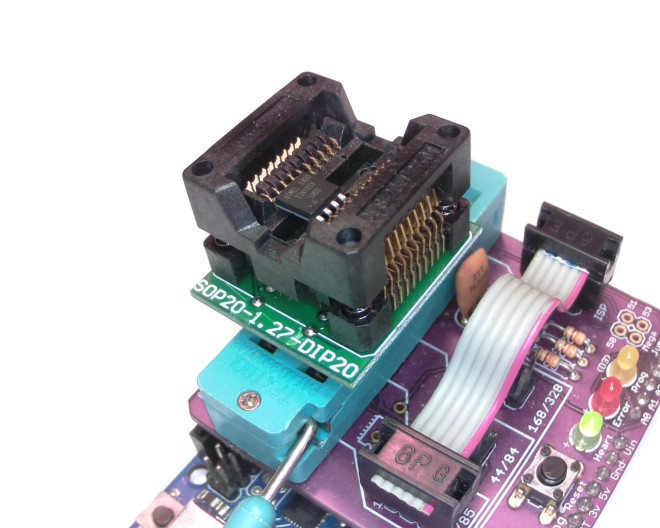
A majority of my projects to date have used DIP package Attiny85, 84, and Atmega328. These are usually programmed beforehand using a ISP shield on an Arduino, or afterwards using the ISP header. My first PCB design, was in fact, a shield which could be used to program the variety of AVR chips I was using. Breadboarding up an Arduino-as-ISP circuit time every time I needed one was error-prone and frustrating.

8494451497407448299.jpg

It occurred to me that since not all projects have ISP headers, there should be some way to program the chips prior to installation. With a little googling, I found SOIC to DIP adapters which can be used to mate up with a DIP ZIF fixture. A SOIC 20 allows me to program the AVR 8-pin, 14-pin, and 20-pin packages!

Programming Surface Mounted Chips

KiCad footprint for Nokia 5110 LCD

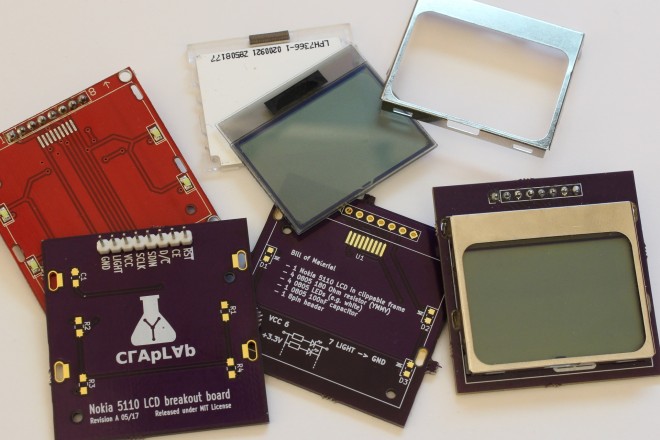
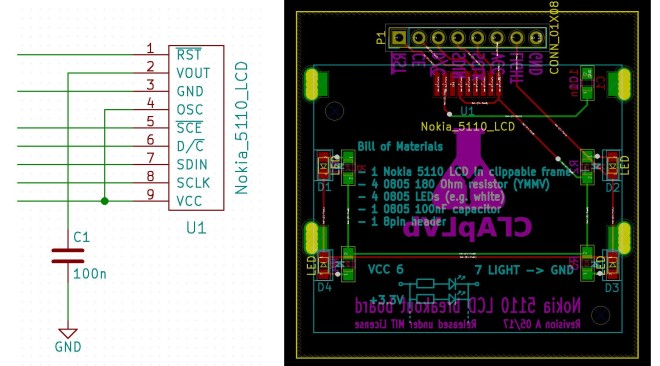
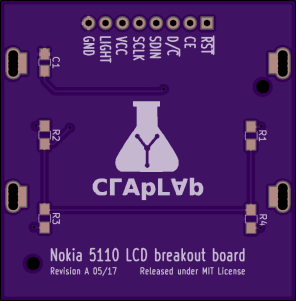
Sven Gregori on Hackaday.io created a KiCad component and footprint for the Nokia 5110 LCD and created this breakout board to test it:8695331498520943537

Yet another Nokia 5110 LCD breakout board

I just shamelessly measured all there was to measure and created my own KiCad PCB footprint, along with a schematic component.

Once done, I needed a way to verify it would actually work and fit the LCD, so despite how pointless it is, I created my own breakout board as proof of concept and ordered it from OSH Park.

2564051498753691661

The Nokia 5110/3310 LCD component and footprint are available on GitHub:

Screenshot from 2017-06-10 14-39-57

sgreg has shared the breakout board on OSH Park:

Nokia 5110 LCD Breakout Board Rev.A

19e63d03bf94e53b32eed69f1556c35b

Order from OSH Park

KiCad footprint for Nokia 5110 LCD

Tindie Seller Interview: Alex Albino

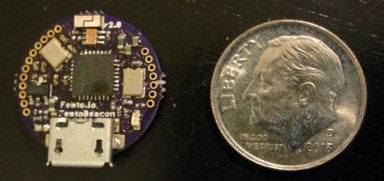
femtobeacon.jpg
interviewed Alex Albino of Femtoduino for the Tindie blog:

Alex Albino, of the Femtoduino Store, is one of the original sellers on Tindie, with his store officially listed as opening on November 26, 2012. During this time, he’s sold well over 300 of his custom boards, and I was glad to catch up to him to ask a few questions.

Albino, who works as a software and web developer, first got into electronics after his NES was fried in a thunderstorm in junior high, and he got to take it apart. Eventually his interests led him to the Arduino and Fabio Varesano’s work, and multiple hardware platforms over the years.

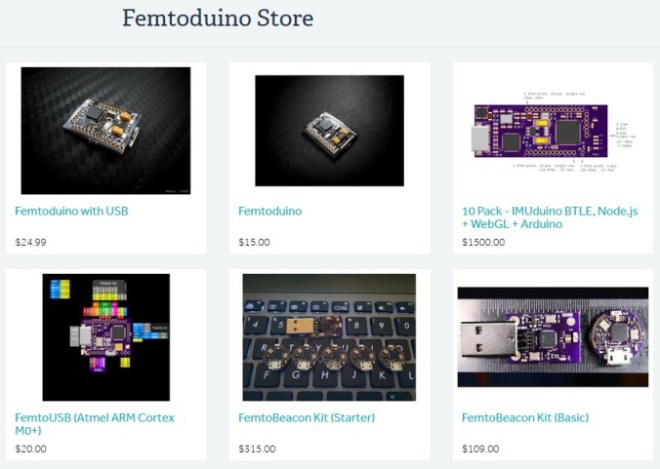
Albino’s store started with him asking Fabio Varesano if he could sell Femtoduino boards, which have the same outputs as an Arduino Uno in the size of one’s thumb. Since Varesano wasn’t interested in selling them himself, he generously gave Albino permission to run with this design. Albino then went to work assembling and selling these boards, and even made sure to give a portion of the money he made—though he didn’t have to—back to Varesano to promote his open source work.

femtoduino-store.jpg

Of course, these tiny Arduino clones are still for sale, but Albino sells several other items, including the FemtoBeacon wireless IMU (inertial measurement unit) sensor. He even notes his store theme as providing the smallest open source IMU sensors in the world. You can see one in the image above next to a U.S. dime—quite small indeed. He hopes to grow the Femtobeacon business into a full-time job in the future.

Naturally, Albino has bought from other Tindarians in the past, which he says is always fun. He also notes that, “If you sell anything on Tindie, make sure to package carefully, take decent photos, and include videos of stuff in action!” As such, here’s a video of the tiny Femtoduino in action:

Tindie Seller Interview: Alex Albino

555 Piano

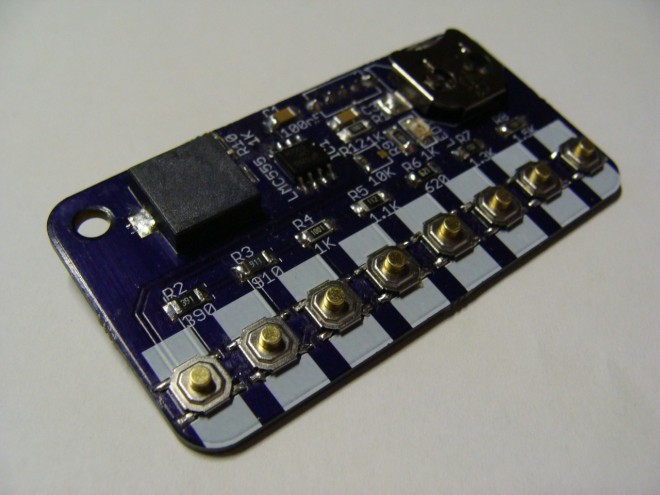
Alexander Ryzhkov created a small 555 timer-based piano:

8292011489438088927(1)

555 piano

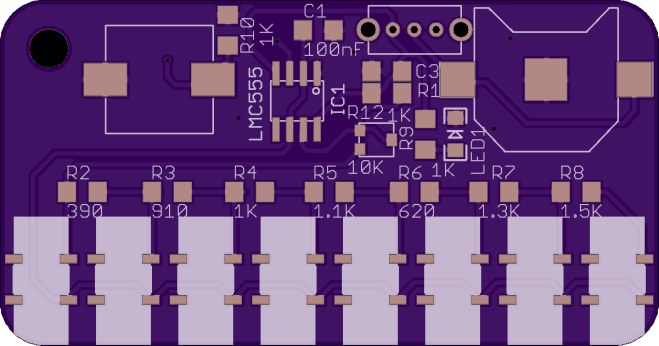
Main goal of this project has been creating pretty designed 555 based piano in small form-factor. Many 555 piano are using 9V battery for supply. I use CMOS timer and for timer need only 3V supply.
The design files are available on GitHub:

githubChirnoTech/555Piano

white
Here is a video of the board in action:
openidev has shared the board on OSH Park:

piano.toplayer.zip

b5996dba7ed411bedfa47a949f65eeb3.png

Order from OSH Park

555 Piano